File:HPIM3078_1.JPG · Wikimedia Commons · See Wikimedia Commons
Ebla was an ancient Syrian kingdom located near present-day Aleppo whose archaeological remains have revealed it to be one of the earliest centers of civilization in the region. Its discovery challenged the long-held belief that only Egypt and Mesopotamia were significant powers in the ancient Near East, demonstrating that the Levant was equally important during the Early Bronze Age.
AI-generated from the Wikipedia summary — may contain errors.
Key facts
- Country.era
- Bronze Age
- Country.common_name
- Ebla
- Ancient site.name
- Ebla
- Ancient site.alternate_name
- Tell Mardikh
- Ancient site.image
- HPIM3078 1.JPG
- Ancient site.caption
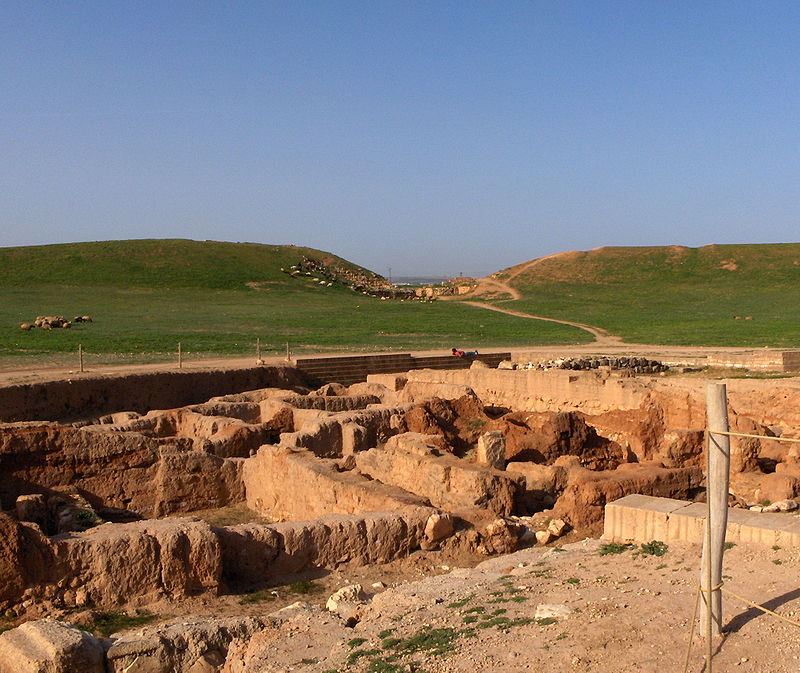
- Ruins of the outer wall and the "Damascus Gate"
- Ancient site.map_type
- Syria
- Ancient site.relief
- yes
- Ancient site.map_size
- 200
- Ancient site.location
- Idlib Governorate, Syria
- Ancient site.type
- settlement
- Ancient site.built
- BC
- Ancient site.abandoned
- 7th century AD
- Ancient site.epochs
- Bronze Age
- Ancient site.cultures
- Kish civilization, Amorite
- Ancient site.excavations
- 1964–2011
- Ancient site.archaeologists
- Paolo Matthiae
- Ancient site.condition
- Ruined
via Wikipedia infobox
Wikidata facts
- Instance of
- historical period
- Country
- Syria
- Located in
- Idlib Governorate
- Image
- Ebla.jpg
Show 8 more facts
- Commons category
- Ebla
- topic's main category
- Category:Ebla
- inception
- 3000-00-00
- dissolved, abolished or demolished date
- 2240-01-01
- heritage designation
- Tentative World Heritage Site
- language used
- Canaanite
- different from
- Elbe
- on focus list of Wikimedia project
- Wikipedia:Vital articles/Level/4
via Wikidata · CC0
Article · Nederlands
Ebla (Arabisch: إبلا) was een oude stad in het noordwesten van het huidige Syrië, zo'n 55 km ten zuidwesten van Aleppo. Het was een belangrijke stadstaat in twee perioden: eerst in het late 3e millennium v.Chr. (rond 2500 v.Chr. - 2350 v.Chr.), dan daarna nog een keer tussen 1800 en 1650 v.Chr. De plaats is tegenwoordig bekend als Tell Mardikh (Arabisch: تل مرديخ), en zij is vooral beroemd om de paleisarchieven van kleitabletten, inmiddels om en bij de 20.000 stuks, daterend van rond 2250 v.Chr., in het Sumerisch en het Eblaïtisch - een voorheen onbekende lokale Semitische taal. De tabletten gebruiken een vroege vorm van het spijkerschrift ontleend aan dat van Sumer. De inhoud van het archief omspant de geschiedenis van deze stad over een tijdperk van zo'n 140 jaar.
Abstract from DBpedia / Wikipedia · CC BY-SA
Gallery (40)
On the map
3 mapped locations