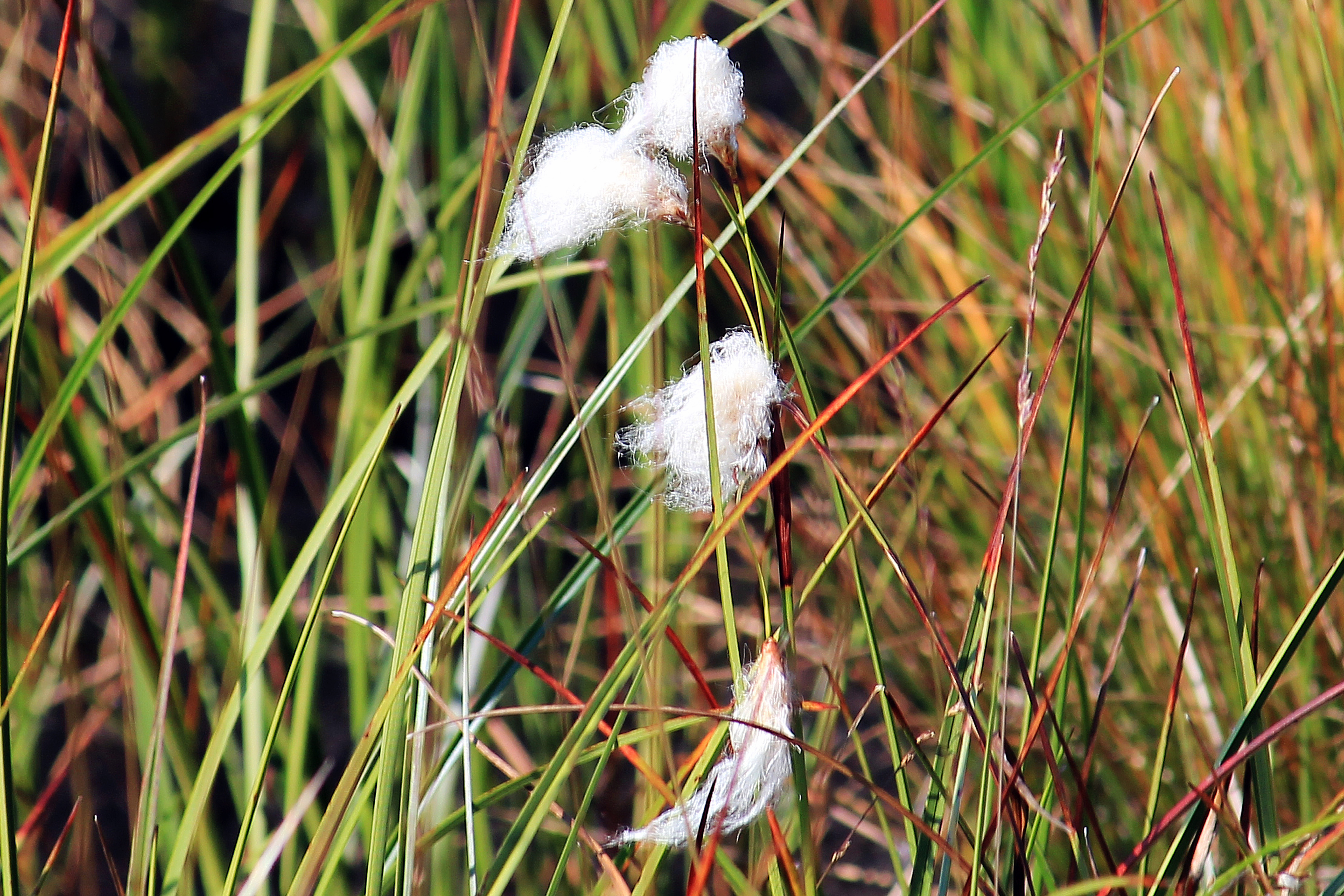
Eriophorum angustifolium
Also known as common cottongrass, common cottonsedge, bog cotton
species of plant
Species
Least ConcernSPECIES
- KingdomPlantae
- PhylumTracheophyta
- ClassLiliopsida
- OrderPoales
- FamilyCyperaceae
Native toAlaska, Albania, Alberta, Aleutian Is., Altay, Amur, Austria, Baltic States, Belarus, Belgium, British Columbia, Bulgaria
Царство: Растения Подцарство: Зелёные растения Отдел: Цветковые Класс: Однодольные[1] Надпорядок: Lilianae Порядок: Злакоцветные Семейство: Осоковые Подсемейство: Сытевые Триба: Камышовые Род: Пушица Вид: Пушица узколистная Международное научное название Eriophorum angustifolium Honck. (1782) Синонимы См. текст Подвиды Eriophorum angustifolium subsp. angustifolium Eriophorum angustifolium subsp. komarovii (V.N.Vassil.) Vorosch. (1985)[2] Eriophorum angustifolium subsp. triste (T.C.E.Fr.) Hultén (1962)[3] Ареал вида Систематикана ВикивидахИзображенияна Викискладе ITIS 40080NCBI 100292EOL 1119459GRIN t:456006IPNI 307335-1TPL kew-244512 Пуши́ца узколи́стная (лат. Erióphorum angustifólium) — многолетнее травянистое растение, вид рода Пушица (Eriophorum) семейства Осоковые (Cyperaceae). Торфообразователь[4]. В литературе нередко упоминается под названием, которое, согласно современным представлениям, входит в синонимику вида — Пушица многоколоско́вая (Eriophorum polystáchyon). Одно из народных названий растения — «заячий хвостик». Содержание 1 Распространение 2 Описание 3 Значение 4 Систематика 5 Синонимы 6 Примечания 7 Литература Пушица узколистная (слева, с несколькими колосками) и пу
Article
Eriophorum angustifolium, commonly known as common cottongrass or common cottonsedge, is a species of flowering plant in the sedge family, Cyperaceae. Native to North America, North Asia, and Europe, it grows on peat or acidic soils, in open wetland, heath or moorland. It begins to flower in April or May and, after fertilisation in early summer, the small, unremarkable brown and green flowers develop distinctive white bristle-like seed-heads that resemble tufts of cotton; combined with its ecological suitability to bog, these characteristics give rise to the plant's alternative name, bog cotton.
Eriophorum angustifolium is a hardy, herbaceous, rhizomatous, perennial sedge, able to endure in a variety of environments in the temperate, subarctic and arctic regions of Earth. Unlike Gossypium, the genus from which cotton is derived, the bristles of E. angustifolium are unsuited to textile manufacturing. Nevertheless, in Northern Europe, they were used as a substitute in the production of paper, pillows, candle-wicks, and wound-dressings. The indigenous peoples of North America use the plant in cooking and in the treatment of digestive problems. Following a vote in 2002, Plantlife International designated E. angustifolium the County Flower of Greater Manchester, as part of its British County Flowers campaign.