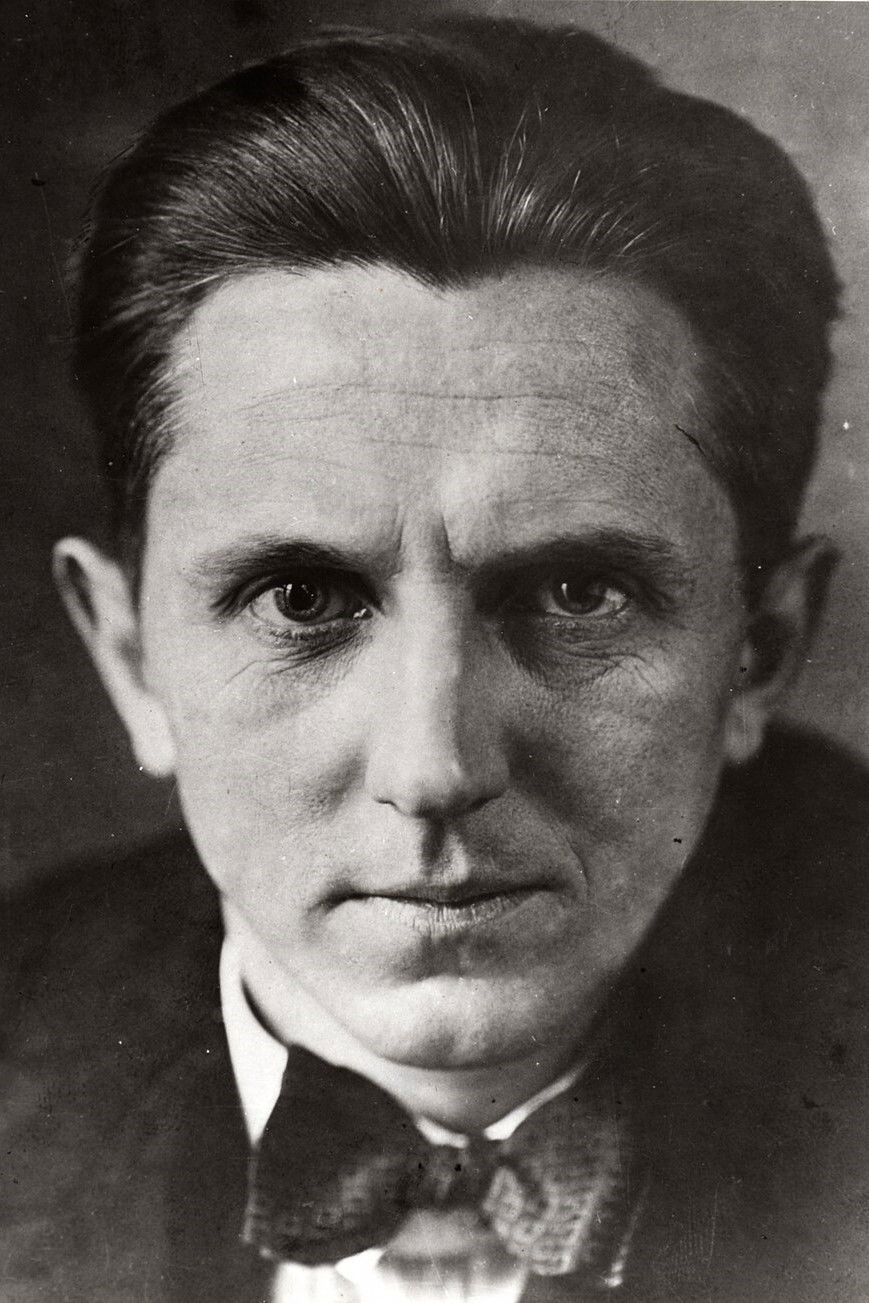
Profile via TMDB · Courtesy of TMDB
Erwin Piscator
Sign in to saveAlso known as Erwin Friedrich Maximilian Piscator
deutscher Theaterintendant, Regisseur und Schauspiellehrer (1893–1966)
OverviewAI-generated
Erwin Piscator was a German theatrical and film director. Born in Greifenstein in 1893, he served in World War I. He was a member of the Communist Party of Germany. His professional activities included work in Paris and New York City. He was a student of Arthur Kutscher.
Piscator died in Starnberg in 1966 and was buried in Zehlendorf Forest Cemetery. His notable works include *Das politische Theater*, *American tragedy*, and *Sayoku gekijō*. He was associated with the Nazi book burnings. His students included Tennessee Williams, Marlon Brando, Elaine Stritch, and Harry Belafonte. He spoke German.
Synthesized by Vinony from 34 facts across 5 sources: Wikidata, Open Library, Firecrawl, Europeana Sparql, TMDb. Generated from structured data (not the Wikipedia text) and checked against those facts — may still contain errors.
Person · Open Library
- Born
- 1893
- Died
- 1966
- Works
- 26
Top works
- Das politische Theater
- Milḥamah ṿe-shalom
- American tragedy
- Sayoku gekijō
- Erwin Piscator
via Open Library + Wikidata
Film & TV
Known for
- Legends of Cinema — Self (archive footage)2016
- Das Jahrhundert des Theaters — Self (archive footage)2002
- Ein Mann namens Pis1991
via TMDB
Key facts
- Born
- Erwin Friedrich Max Piscator , ( 1893-12-17 ) 17 December 1893, Greifenstein-Ulm , German Empire
- Died
- 30 March 1966 (1966-03-30) (aged 72), Starnberg , West Germany
- Education
- Gymnasium Philippinum (1907) LMU Munich
- Occupations
- Theatre director, producer
- Known for
- Founded the Dramatic Workshop at The New School for Social Research (1940).
- Notable work
- The Political Theatre (1929)
- Style
- Epic Theatre , Documentary theatre
- Spouse s
- Hildegard Jurczyk (m. 1919) , Maria Ley (m. 1937)
- Relatives
- Johannes Piscator
via Wikipedia infobox
Official website

Link to the official site · 40,000 chars · not written by Vinony
Described at

About: Erwin Piscator
dbpedia.org →Link to a page describing this subject · 40,000 chars · not written by Vinony
Wikidata facts
- Instance of
- human
- Given name
- Erwin
- Gender
- male
- Citizenship
- Russian Empire
- Place of death
- Starnberg
- Occupation
- film producer
- Political party
- Communist Party of Germany
- Languages spoken
- German
- Student of
- Arthur Kutscher
- Conflict
- World War I
- Official website
- www.erwin-piscator.de
- Image
- Piscator-Portrait.jpg
- Work location
- New York City
- Significant event
- Nazi book burnings
Show 11 more facts
- Commons category
- Erwin Piscator
- date of birth
- 1893-00-00
- date of death
- 1966-00-00
- name in native language
- Erwin Piscator
- place of burial
- Zehlendorf Forest Cemetery
- Commons gallery
- Erwin Piscator
- student
- Rod Steiger
- name in kana
- エルヴィン・ピスカトール
- P8168
- zotepine
- described at URL
- dbpedia.org/resource/Erwin_Piscator
via Wikidata · CC0
Works in European collections
4 objects attributed to Erwin Piscator, held across European museums, libraries & archives · via Europeana
Article · Deutsch
Erwin Friedrich Max Piscator (* 17. Dezember 1893 in Ulm, heute zu Greifenstein gehörig; † 30. März 1966 in Starnberg) war ein deutscher Theaterintendant, Regisseur und Theaterpädagoge. Piscator war ein einflussreicher Avantgardist der Weimarer Republik, der das Theater unter Ausweitung der bühnentechnischen Möglichkeiten zum ‚politischen Tribunal‘ umfunktionierte. Mit Hilfe komplexer Arrangements von Filmdokumenten, Bildprojektionen, laufenden Bändern und Fahrstühlen kommentierte er das theatrale Geschehen und erweiterte die Bühne zum epischen Panorama. Das an den Piscator-Bühnen der Weimarer Republik entwickelte politische Theater erzielte breite Resonanz, veranlasste die Zeitgenossen jedoch angesichts der Abgrenzung des Regisseurs von einer Bühnenästhetik des reinen Kunstschönen zu sehr widersprüchlichen Einschätzungen. Piscators Inszenierungen wirkten auch auf die Theatertheorie Bertolt Brechts ein, der mit seinem epischen Theater Anleihen bei Piscator machte. Nach langjähriger Emigration in der Sowjetunion, Frankreich und den Vereinigten Staaten traf Piscator in den 1950er und 1960er Jahren in der Bundesrepublik erneut den Nerv der Zeit mit Inszenierungen von Gegenwartsstücken zur NS-Vergangenheit. Damit leitete er eine Phase des Gedächtnis- und Dokumentartheaters ein, die auf breiter Ebene zu gesellschaftlichen Debatten um Fragen der Geschichtspolitik führte.
Abstract from DBpedia / Wikipedia · CC BY-SA