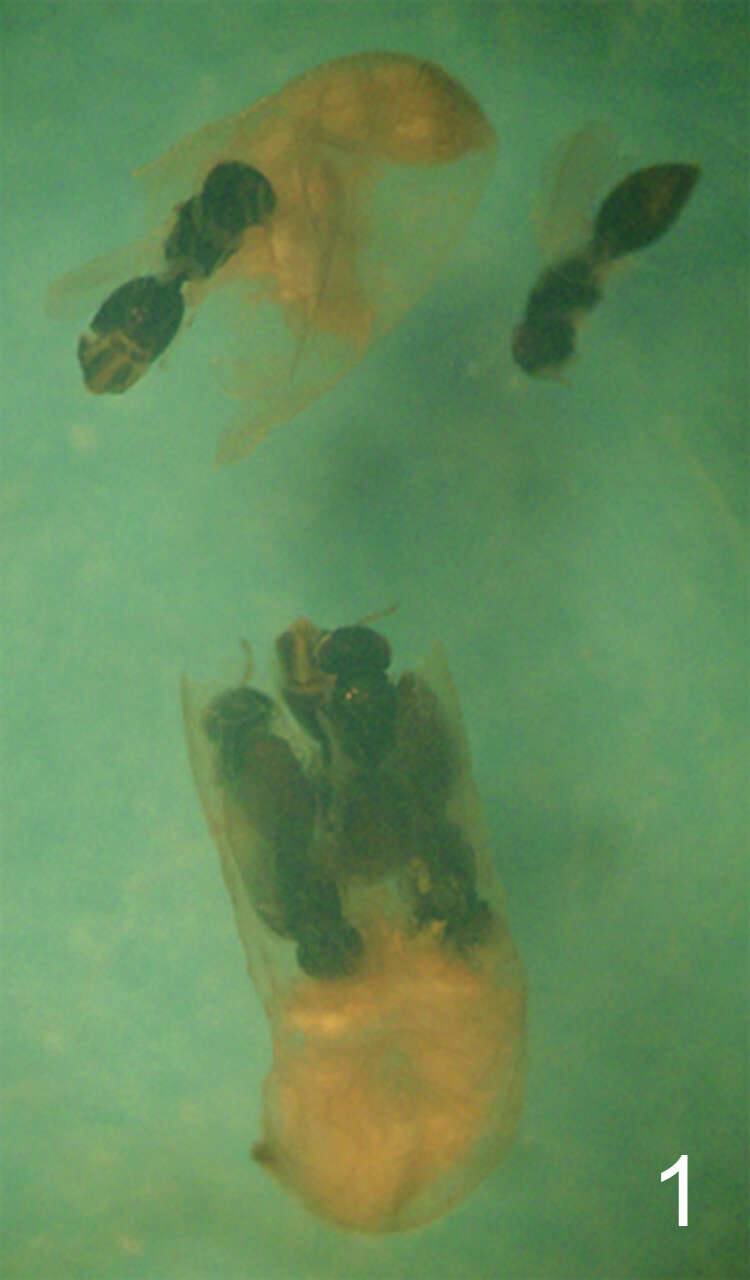
Encyclopedia of Life · EOL (see source)
Eulophidae
Sign in to saveThe Eulophidae is a large family of hymenopteran insects, with over 4,300 described species in some 300 genera. The family includes the genus Elasmus, which used to be treated as a separate family, "Elasmidae", and is now treated as a subfamily of Eulophidae. These minute insects are challenging to study, as they deteriorate rapidly after death unless extreme care is taken (e.g., preservation in ethanol), making identification of most museum specimens difficult. The larvae of very few species feed on plants, but the majority are primary parasitoids on a huge range of arthropods at all stages o
Species
FAMILY
- KingdomAnimalia
- PhylumArthropoda
- ClassInsecta
- OrderHymenoptera
- FamilyEulophidae
Eulophidae sunt magna familia perparvorum insectorum ordinis Hymenopterorum, cui sunt plus quam 4300 species in 300 fere generibus descriptae (vide Indicem generum Eulophidarum). Inter familiam nunc definitam est genus Elasmus, olim Elasmidae, familia separata et nunc subfamilia Eulophidarum habitus. Investigatio horum insectorum est difficilis quia corpora celerrime post mortem corrumpuntur nisi diligentissime curentur (h.e., in ethanol praeservatum), unde plurima specimina in museis curata sunt incerta. Larvae nonnullarum specierum plantis vescuntur, sed plurimae sunt primaria parasitoida in magna varietate arthropodorum in omnium evolutionis gradibus. Inveniuntur Eulophidae omnem per orbem terrarum in paene omnibus habitationibus; una etiam est aquatica, quae Psephenidas inter Coleoptera parasitizat. Eulophidae a plurimis aliis Chalcidoideis distinctae sunt ob solum quattuor tarsomera in quoque crure, parvum rectumque calcar protibiale (contra calcar maius et curvatum in plerisque aliis Chalcoideis), et antennas quibus sunt 2-4 segmenta funiculorum et usque ad decem antennomera. Nexus interni Aprostocetus In "Featured Creatures," situ Universitatis Floridae / IFAS Cirrospilus in
via GBIF
Museum specimens
- Specimen records
- 26,530
- With media
- 354
- Family
- Eulophidae
- Collections
- MHNCA, UAM, UCMP
- Recorded in
- Mexico, United States
Wikidata facts
- Instance of
- taxon
- Parent taxon
- Chalcidoidea
- Image
- Colpoclypeus florus (female). Stinger will inject toxin, causes the leafroller to spin extra-thick webbing, K10910-1.jpg
- Has use
- biological pest control
Show 6 more facts
- topic's main category
- Category:Eulophidae
- taxon name
- Eulophidae
- taxon rank
- family
- Commons category
- Eulophidae
- taxon common name
- Zehrwespen
- main food source
- Pseudococcidae
Sources (2)
via Wikidata · CC0
~1 min read
Encyclopedic overview
3 sectionsContents
- See also
- References
- External links
The Eulophidae is a large family of hymenopteran insects, with over 4,300 described species in some 300 genera. The family includes the genus Elasmus, which used to be treated as a separate family, "Elasmidae", and is now treated as a subfamily of Eulophidae. These minute insects are challenging to study, as they deteriorate rapidly after death unless extreme care is taken (e.g., preservation in ethanol), making identification of most museum specimens difficult. The larvae of very few species feed on plants, but the majority are primary parasitoids on a huge range of arthropods at all stages of development. They are exceptional in that they are one of two hymenopteran families with some species that are known to parasitize thrips. Eulophids are found throughout the world in virtually all habitats (one is even aquatic, parasitising water-penny beetles).
Eulophids are separable from most other Chalcidoidea by the possession of only four tarsomeres on each leg, a small, straight protibial spur (as opposed to the larger, curved one in most other chalcidoids), and by antennae with two to four funicle segments and at most 10 antennomeres.
Excerpted from Wikipedia’s “Eulophidae” article, available under the CC BY-SA 4.0 licence.