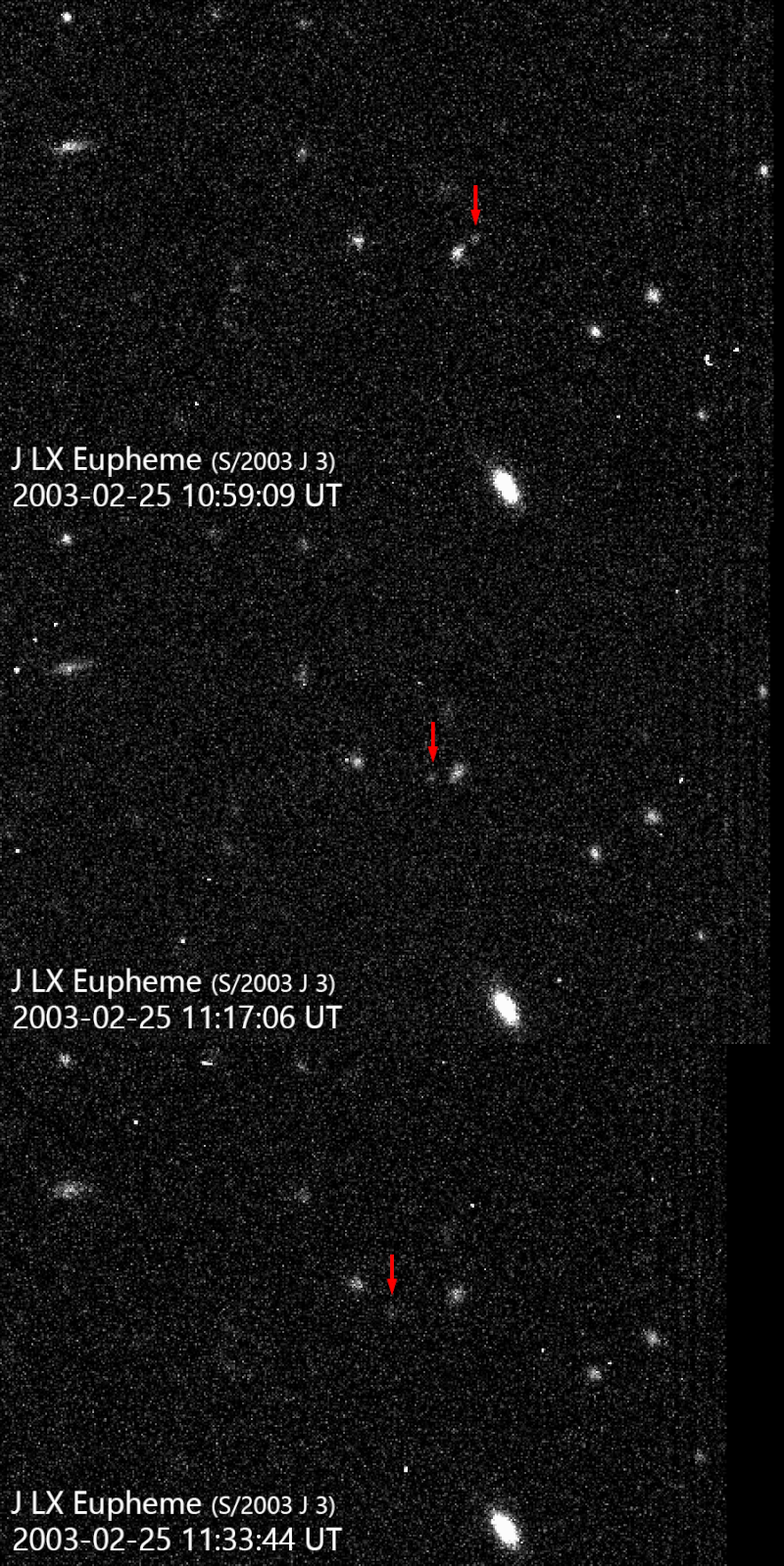
File:Eupheme_CFHT_2003-02-25_annotated.gif · Wikimedia Commons · See Wikimedia Commons
AI overview
Eupheme is a small moon that orbits Jupiter. It matters because studying Jupiter's many moons helps scientists understand the formation and structure of the Jovian system.
AI-generated from the Wikipedia summary — may contain errors.
Key facts
- Discovered by
- Scott S. Sheppard
- Designation
- Jupiter LX
- Pronunciation
- / juː ˈ f iː m iː /
- Named after
- Ευφήμη Eyphēmē
- Alternative names
- S/2003 J 3
- Adjectives
- Euphemean / juː f ɪ ˈ m iː ə n /
- Observation arc
- 21 years, 2024-12-03 (last obs)
- Periapsis
- 12.7 million km
- Apoapsis
- 27.7 million km, (2026-Jan-23)
- Semi major axis
- 20.2 million km
- Orbital period sidereal
- −587.7 days
- Average orbital speed
- 2.5 km/s
- Mean anomaly
- 164°
- Inclination
- 148.0°
- Longitude of ascending node
- 325°
- Argument of perihelion
- 119°
- Satellite of
- Jupiter
- Group
- Ananke group
via Wikipedia infobox
Wikidata facts
- Instance of
- irregular moon
- Parent body
- Jupiter
- Diameter
- 2
- Orbital period
- -628.06
- Image
- Eupheme CFHT 2003-02-25 annotated.gif
Show 13 more facts
- time of discovery or invention
- 2003-02-05
- discoverer or inventor
- Yanga R. Fernández
- provisional designation
- S/2003 J 3
- albedo
- 0.04
- orbital eccentricity
- 0.1969
- semi-major axis of an orbit
- 19621800
- apparent magnitude
- 23.4
- orbital inclination
- 148.0
- longitude of ascending node
- 292.0
- argument of periapsis
- 109.0
- mean anomaly
- 168.7
- name
- Jupiter LX
- Commons category
- Eupheme (moon)
Sources (2)
via Wikidata · CC0
~1 min read
Encyclopedic overview
Eupheme /juːˈfiːmiː/, also Jupiter LX, originally known as S/2003 J 3, is an outer irregular satellite of Jupiter, 2 km in diameter. It orbits Jupiter at an average distance of 20 million km, but gets as far away as 27.7 million km.
Discovery
Excerpted from Wikipedia’s “Eupheme” article, available under the CC BY-SA 4.0 licence.