
File:Federico_García_Lorca._Huerta_de_San_Vicente,_Granada.jpg · Wikimedia Commons · See Wikimedia Commons
Federico García Lorca
Sign in to saveAlso known as García Lorca, García Lorca, Federico, G. F. Lorca, Phenteriko Gkarthia Lorka, Lorka, F. García Lorca, F. G. Lorca, Lorca
Spanish poet, dramatist and prose writer (1898–1936)
Federico García Lorca was a Spanish poet, dramatist, and prose writer who lived from 1898 to 1936 and became one of the most influential literary figures of his time. His works are celebrated for their innovative use of language and imagery, and his tragic death during the Spanish Civil War cemented his status as a cultural icon.
AI-generated from the Wikipedia summary — may contain errors.
Film & TV
Fuente Vaqueros, Granada, Andalusia, Spain
Known for
- The Prado Museum: A Collection of Wonders — Self - Writer (archive footage)2019
- La Barraca. Lorca por los caminos de España — (archive footage)1994
- El balcón abierto — (archive footage)1984
- La Barraca1932
via TMDB
Wikidata facts
- Instance of
- human
- Family name
- García
- Gender
- male
- Citizenship
- Spain
- Place of birth
- Fuente Vaqueros
- Place of death
- Víznar
- Occupation
- theatre manager
- Position held
- theatre manager
- Employer
- La Barraca
- Languages spoken
- Slovene
- Native language
- Spanish
- Notable work
- The Shoemaker's Prodigious Wife
- Student of
- Fernando de los Ríos Urriti
- Genre
- art
- Movement
- Generation of ‘27
- Instrument
- piano
- Image
- Federico García Lorca. Huerta de San Vicente, Granada.jpg
- Residence
- Valderrubio
Show 16 more facts
- Commons category
- Federico García Lorca
- date of birth
- 1898-06-05
- topic's main category
- Category:Federico García Lorca
- manner of death
- mass murder
- Commons gallery
- Federico García Lorca
- Commons Creator page
- Federico García Lorca
- sexual orientation
- homosexuality
- birth name
- Federico del Sagrado Corazón de Jesús García Lorca
- has works in the collection
- Memoria Chilena
- on focus list of Wikimedia project
- Wikipedia:Vital articles/Level/4
- cause of death
- mass shooting
- date of death
- 1936-08-00
- writing language
- Spanish
- P12674
- Ludwig Schiedermair
- P12749
- Morbio Inferiore
- name in native language
- Federico García Lorca
Sources (8)
via Wikidata · CC0
Works in European collections
34 objects attributed to Federico García Lorca, held across European museums, libraries & archives · via Europeana
Romancero gitano
Romancero gitano
Libro de poemas
Canciones (1921-1924)
La zapatera prodigiosa
Bodas de sangre
Antología selecta
Poema del cante jondo
Mariana Pineda ; Doña Rosita la soltera o El lenguaje de las flores
Canciones ; Poemas sueltos ; Varia
Mariana Pineda : romance popular en tres estampas
Yerma : poema trágico en tres actos ; y Mariana Pineda : romance popular en tres estampas
Romancero gitano : (1924-1927)
Romancero gitano : (1924-1927)
Primeras canciones
Romancero gitano ; Poema del cante jondo ; Llanto por Ignacio Sánchez Mejías
Impresiones y paisajes
Chosen poems by Federico García Lorca
Yerma : poema trágico en 3 actos, dividido en 2 cuadros cada uno, en prosa y verso
Blood Weddings: (tragedy in three acts and seven pictures)
Oda a Walt Whitman
Canciones, 1921-1924
Primer romancero gitano : (1924-1927)

Untitled
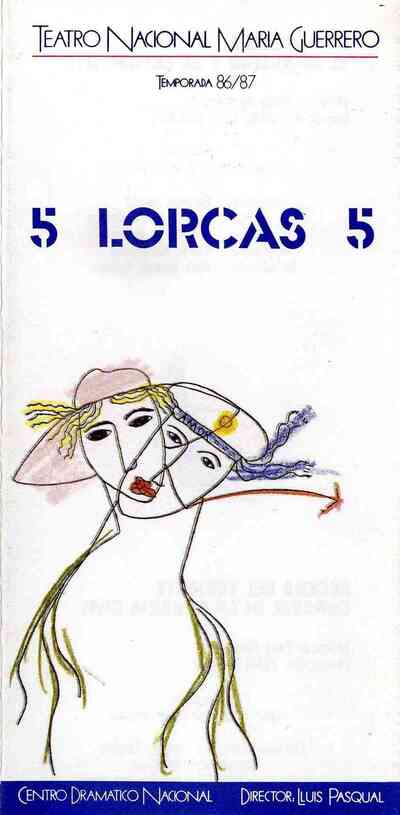
Untitled
Untitled
Untitled
Untitled
Untitled
Untitled
Untitled
Untitled

Untitled

Untitled
~34 min read
Encyclopedic overview
Federico del Sagrado Corazón de Jesús García Lorca (5 June 1898 – 19 August 1936) was a Spanish poet, playwright, and theatre director. García Lorca achieved international recognition as an emblematic member of the Generation of '27, a group consisting mostly of poets who introduced the tenets of European movements (such as symbolism, futurism, and surrealism) into Spanish literature.
He initially rose to fame with Romancero gitano (Gypsy Ballads, 1928), a book of poems depicting life in his native Andalusia. His poetry incorporated traditional Andalusian motifs and avant-garde styles. After a sojourn in New York City from 1929 to 1930—documented posthumously in Poeta en Nueva York (Poet in New York, 1942)—he returned to Spain and wrote his best-known plays, Blood Wedding (1932), Yerma (1934), and The House of Bernarda Alba (1936).
Excerpted from Wikipedia’s “Federico García Lorca” article, available under the CC BY-SA 4.0 licence.
Gallery (12)
Available in 110 languages
- Español
- Français
- Deutsch
- 中文
- 日本語
- Русский
- Português
- Italiano
- العربية
- हिन्दी
- Abkhazian
- Afrikaans
- Albanian
- Albanian
- Aragonese
- Armenian
- Asturian
- Aymara
Show 91 more
- Azerbaijani
- Bahasa Indonesia
- Bangla
- Bashkir
- Basque
- be_x_old
- Belarusian
- Bislama
- Bosnian
- Breton
- Bulgarian
- Catalan
- Central Kurdish
- Cornish
- Croatian
- Czech
- Danish
- Egyptian Arabic
- Esperanto
- Estonian
- Extremaduran
- Fiji Hindi
- Filipino
- Finnish
- Galician
- Georgian
- Greek
- Hebrew
- Hungarian
- hyw
- Icelandic
- Ido
- Iloko
- Irish
- Kabyle
- Kannada
- Kurdish
- Kyrgyz
- Latin
- Latvian
- Lingua Franca Nova
- Lithuanian
- Lojban
- Lombard
- Luxembourgish
- Macedonian
- Malagasy
- Malayalam
- Maltese
- Marathi
- Mazanderani
- Mongolian
- nah
- Nederlands
- Norwegian
- Norwegian Nynorsk
- Occitan
- Piedmontese
- Polski
- ppl
- Punjabi
- Quechua
- Romanian
- Sardinian
- Scots
- Serbian
- Serbian (Latin)
- Sicilian
- simple
- Slovak
- Slovenian
- Svenska
- Tajik
- Tamil
- Tiếng Việt
- Türkçe
- Ukrainian
- Uzbek
- Volapük
- Waray
- Welsh
- West Flemish
- Western Frisian
- Western Mari
- Wu Chinese
- Zaza
- zh_min_nan
- zh_yue
- فارسی
- ไทย
- 한국어
via Wikidata sitelinks · CC0