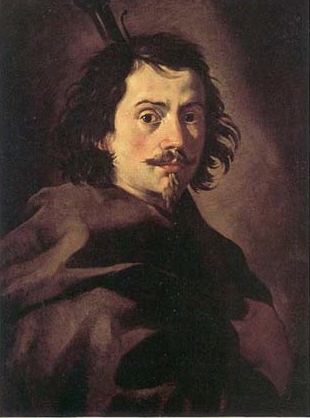
File:Borromini.jpg · Wikimedia Commons · See Wikimedia Commons
Francesco Borromini
Sign in to saveAlso known as Francesco Castelli, Francesco Castello, Francesco Borromino, Francesco Boromino, Francesco Boromini, Fr. Borromini
Italian architect from Ticino and leading figure in Roman Baroque architecture (1599-1667), sculptor, engineer, stonemason and draughtsman (1599–1667)
Francesco Borromini was an Italian architect and sculptor from the late 1600s who became one of the most important figures in Baroque architecture, particularly in Rome. His innovative designs and technical skill as both a builder and artist made him a transformative influence on how churches and other buildings were designed during his era.
AI-generated from the Wikipedia summary — may contain errors.
Wikidata facts
- Instance of
- human
- Given name
- Francesco
- Gender
- male
- Citizenship
- Switzerland
- Place of birth
- Bissone
- Place of death
- Rome
- Occupation
- draftsperson
- Languages spoken
- Italian
- Religion
- Catholicism
- Notable work
- Saint Charles at the Four Fountains
- Student of
- Carlo Maderno
- Field of work
- baroque architecture
- Movement
- Baroque
- Image
- Borromini.jpg
- Work location
- Rome
Show 17 more facts
- date of birth
- 1599-01-01
- relative
- Carlo Maderno
- Commons category
- Francesco Borromini
- Commons Creator page
- Francesco Borromini
- topic's main category
- Category:Francesco Borromini
- described by source
- The Catholic Encyclopedia
- Commons gallery
- Francesco Borromini
- place of burial
- Basilica of San Giovanni dei Fiorentini
- has works in the collection
- Swedish Centre for Architecture and Design
- date of death
- 1667-01-01
- on focus list of Wikimedia project
- Wikipedia:Vital articles/Level/4
- name in native language
- Francesco Borromini
- start of work period
- 1608-01-01
- end of work period
- 1667-01-01
- manner of death
- Suicide
- birth name
- Francesco Castelli
- municipal affiliation of a Swiss national
- Bissone
Sources (7)
via Wikidata · CC0
~16 min read
Encyclopedic overview
Francesco Borromini (/ˌbɒrəˈmiːni/, Italian: [franˈtʃesko borroˈmiːni]), byname of Francesco Castelli (Italian: [kaˈstɛlli]; 25 September 1599 – 2 August 1667), was an Italian architect born in the modern Swiss canton of Ticino who, with his contemporaries Gian Lorenzo Bernini and Pietro da Cortona, was a leading figure in the emergence of Roman Baroque architecture.
A keen student of the architecture of Michelangelo and the ruins of Antiquity, Borromini developed an inventive and distinctive, if somewhat idiosyncratic, architecture employing manipulations of Classical architectural forms, geometrical rationales in his plans, and symbolic meanings in his buildings. His soft lead drawings are particularly distinctive. He seems to have had a sound understanding of structures that perhaps Bernini and Cortona lacked, as they were principally trained in other areas of the visual arts. He appears to have been a self-taught scholar, amassing a large library by the end of his life.
Excerpted from Wikipedia’s “Francesco Borromini” article, available under the CC BY-SA 4.0 licence.
Gallery (9)
Available in 63 languages
- Español
- Français
- Deutsch
- 中文
- 日本語
- Русский
- Português
- Italiano
- العربية
- Armenian
- Asturian
- Bashkir
- Basque
- be_x_old
- Belarusian
- Bosnian
- Bulgarian
- Catalan
Show 44 more
- Croatian
- Czech
- Egyptian Arabic
- Esperanto
- Estonian
- Fiji Hindi
- Filipino
- Finnish
- Galician
- Greek
- Hebrew
- Hungarian
- Ido
- Kazakh
- Latin
- Lithuanian
- Macedonian
- Malagasy
- Nederlands
- Norwegian
- Piedmontese
- Polski
- Punjabi
- Romanian
- Sardinian
- Serbian
- Serbian (Latin)
- Sicilian
- simple
- Slovak
- Slovenian
- Svenska
- Tajik
- Tiếng Việt
- Türkçe
- Ukrainian
- Urdu
- Uzbek
- Waray
- West Flemish
- zh_yue
- فارسی
- ไทย
- 한국어
via Wikidata sitelinks · CC0