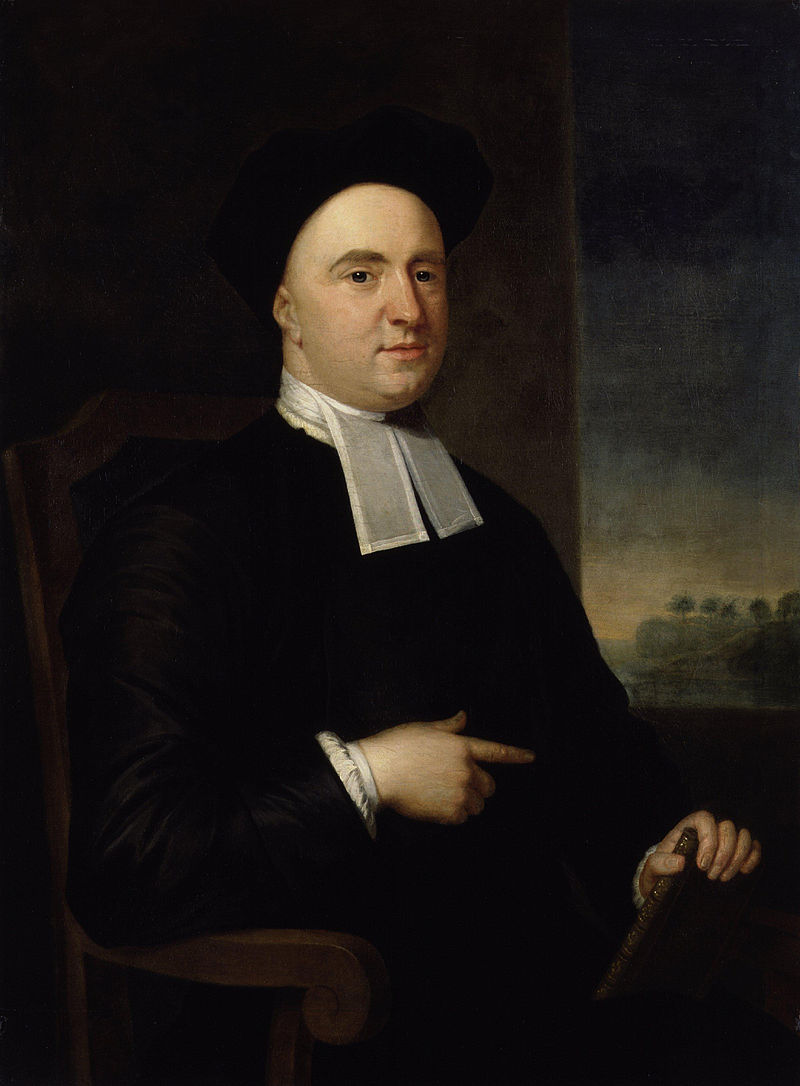
File:George_Berkeley_by_John_Smibert.jpg · Wikimedia Commons · See Wikimedia Commons
George Berkeley
Sign in to saveAlso known as Bishop Berkeley, Bishop George Berkeley
obispo anglicano, teólogo y filósofo irlandés
George Berkeley was an Irish philosopher and Anglican bishop who lived from 1685 to 1753 and developed a major philosophical position called idealism, which holds that reality consists of minds and their ideas rather than physical matter. His work fundamentally challenged how people think about the nature of existence and perception, making him one of the most influential thinkers in Western philosophy.
AI-generated from the Wikipedia summary — may contain errors.
Wikidata facts
- Instance of
- human
- Given name
- George
- Gender
- male
- Citizenship
- Kingdom of Ireland
- Place of death
- Oxford
- Occupation
- Christian minister
- Languages spoken
- English language
- Religion
- Episcopal Church
- Field of work
- theology
- Movement
- Immaterialism
- Image
- George Berkeley by John Smibert.jpg
Show 11 more facts
- date of death
- 1753-01-01
- place of burial
- Christ Church Cathedral, Oxford
- Commons category
- George Berkeley
- date of birth
- 1684-01-01
- topic's main category
- Category:George Berkeley
- influenced by
- Nicolas Malebranche
- name in native language
- George Berkeley
- writing language
- English language
- different from
- George Berkeley
- Commons Creator page
- George Berkeley
- maintained by WikiProject
- WikiProject Mathematics
Sources (9)
via Wikidata · CC0
Works in European collections
11 objects attributed to George Berkeley, held across European museums, libraries & archives · via Europeana
Siris a chain of philosophical reflexions and inquiries concerning the virtues of tar water ..
Recherches sur les vertus de l'eau de goudron où l'on a joint des reflexions philosophiques sur divers autres sujets importants
Recherches sur les vertus de l'eau de goudron où l'on a joint des reflexions philosophiques sur divers autres sujets importants
Untitled
Untitled
Untitled
Untitled
Untitled
Untitled

Untitled

Untitled
Article · Español
George Berkeley (Inglés británico:/ˈbɑː.kli/; Inglés irlandés: /ˈbɑɹ.kli/) (Dysert, Irlanda, 12 de marzo de 1685 - Cloyne, id., 14 de enero de 1753), también conocido como el obispo Berkeley, fue un filósofo irlandés muy influyente cuyo principal logro fue el desarrollo de la filosofía conocida como idealismo subjetivo o inmaterialismo, dado que negaba la realidad de abstracciones como la . Escribió un gran número de obras, entre las que se pueden destacar el Tratado sobre los principios del conocimiento humano (1710) y Los tres diálogos entre Hylas y Philonus (1713) (Philonus, el «amante de la mente», representa a Berkeley, e Hylas, que toma su nombre de la antigua palabra griega para designar a la materia, representa el pensamiento de Locke). En 1734 publicó , una crítica a los fundamentos de la ciencia, que fue muy influyente en el desarrollo de la matemática. La ciudad de Berkeley, California toma su nombre de este filósofo, en cuyo honor fue denominada la universidad en torno a la que creció. También han tomado su nombre una residencia universitaria de la Universidad de Yale y la biblioteca del Trinity College de Dublín.
Abstract from DBpedia / Wikipedia · CC BY-SA
Gallery (5)
Available in 88 languages
- Español
- Français
- Deutsch
- 中文
- 日本語
- Русский
- Português
- Italiano
- العربية
- हिन्दी
- Afrikaans
- Albanian
- Armenian
- Asturian
- Azerbaijani
- Bahasa Indonesia
- Bangla
- Basque
Show 69 more
- Belarusian
- Bosnian
- Bulgarian
- Catalan
- Central Kurdish
- Chuvash
- Cornish
- Croatian
- Czech
- Danish
- Egyptian Arabic
- Esperanto
- Estonian
- Finnish
- Galician
- Georgian
- Greek
- Hebrew
- Hungarian
- Icelandic
- Irish
- Kazakh
- Kurdish
- Kyrgyz
- Latin
- Latvian
- Lingua Franca Nova
- Lithuanian
- Lombard
- Macedonian
- Malagasy
- Malayalam
- Nederlands
- Newari
- Norwegian
- Norwegian Nynorsk
- Occitan
- Papiamento
- Pashto
- Piedmontese
- Polski
- Punjabi
- Romanian
- Scots
- Serbian
- Serbian (Latin)
- simple
- Sindhi
- Slovak
- Slovenian
- Svenska
- Swahili
- Tajik
- Tamil
- Tatar
- Tiếng Việt
- Türkçe
- Ukrainian
- Uzbek
- Volapük
- Waray
- Welsh
- Western Panjabi
- Wu Chinese
- Yoruba
- zh_yue
- فارسی
- ไทย
- 한국어
via Wikidata sitelinks · CC0