
George Harrison
Sign in to saveAlso known as Carl Harrison, Spike Wilbury, Nelson Wilbury, George O'Hara, George O'Hara Smith, George O'Hara-Smith
George Harrison was an English musician who achieved international fame as the lead guitarist of the Beatles. Known as "the quiet Beatle", Harrison played a significant role in shaping the band's musical direction and established a successful solo career, particularly through his interest in non-Western musical influences.
OverviewAI-generated
George Harrison (1943–2001) was a British guitarist, singer, songwriter, and actor born in Liverpool. He held citizenship in the United Kingdom and was a vegetarian who practiced mysticism. His musical career spanned genres including rock, psychedelic rock, pop, and world music. He played guitar, violin, bass guitar, and sitar.
Harrison was recognized with the Billboard Music Awards, induction into the Rock and Roll Hall of Fame, a star on the Hollywood Walk of Fame, and the title Member of the Order of the British Empire. His notable works include the songs "Taxman," "While My Guitar Gently Weeps," "My Sweet Lord," and "Here Comes the Sun." He was married to Pattie Boyd and Olivia Harrison and had a child named Dhani Harrison.
Harrison died of natural causes in Los Angeles due to lung cancer and a brain tumor. In 1997, he appeared on television to discuss faith and death. His official website is georgeharrison.com.
Synthesized by Vinony from 38 facts across 6 sources: Wikidata, Open Library, MusicBrainz, Firecrawl, Vinony collections, Vinony graph. Generated from structured data (not the Wikipedia text) and checked against those facts — may still contain errors.
In the Vinony graph
George Harrison appears in Vinony's Rock & Roll Hall of Fame collection — one of 410 entries. It also appears in Hollywood Walk of Fame.
Within Vinony's link graph, George Harrison is referenced by 4,491 other articles, and connects out to Apple Corps, Olivia Harrison and The Dells.
It is catalogued under topics including 1943 births, 2001 deaths and 20th-century English guitarists.
Its subject is documented across 110 Wikipedia language editions.
Person · Open Library
- Works
- 39
Top works
- Ageless Body, Timeless Mind: The Quantum Alternative to Growing Old (Deepak Chopra)
- An abstract of the act lately passed for consolidating the former acts for the redemption of the land tax
- Aviation in Poland
- Philadelphia, July 14. 1746. Advertisement
- Season
via Open Library + Wikidata
Film & TV
Liverpool, England, UK
George Harrison, MBE (February 25, 1943 – November 29, 2001) was an English rock guitarist, singer-songwriter, actor and film producer who achieved international fame as lead guitarist of The Beatles. Often referred to as "the quiet Beatle", Harrison became over time an admirer of Indian mysticism, and introduced it to the other Beatles, as well as those of their Western audience. Following the…
Known for
- Man on the Run — Self (archive footage)2026
- Evolver 62 — Self (archive footage)2026
- The Beatles — Self (archive footage)2025
- TWST / Things We Said Today — Self (archive footage)2025
- A Love Letter to the Beatles — Self (archive footage)2025
- The Beatles - Free As A Bird: A Song Reborn — Self2025
- The Beatles: The Sound of a Revolution — Self2025
- The Beatles: Here, There and Everywhere — Self (archive footage)2025
- David Frost Vs — self (archive footage)2025
- The Beach Boys — Self (archive footage)2024
via TMDB
Music · MusicBrainz
- Type
- Person
- Gender
- Male
- Origin
- United Kingdom
- Active from
- 1943
- Active to
- 2001
Discography
Member of
- The Quarrymen1958–1960
- The Beatles1960–1970
- The Silver Beatles1960–1960
- The Silver Beatles1960–1960
- Traveling Wilburys1988–1990
- The Beat Brothers
- Delaney & Bonnie
- The Singing Rebels’ Band
- The Singing Rebels’ Band
via MusicBrainz · CC0
Wikipedia views (30d)
268,404 totalvia Wikimedia Pageviews API
Described at
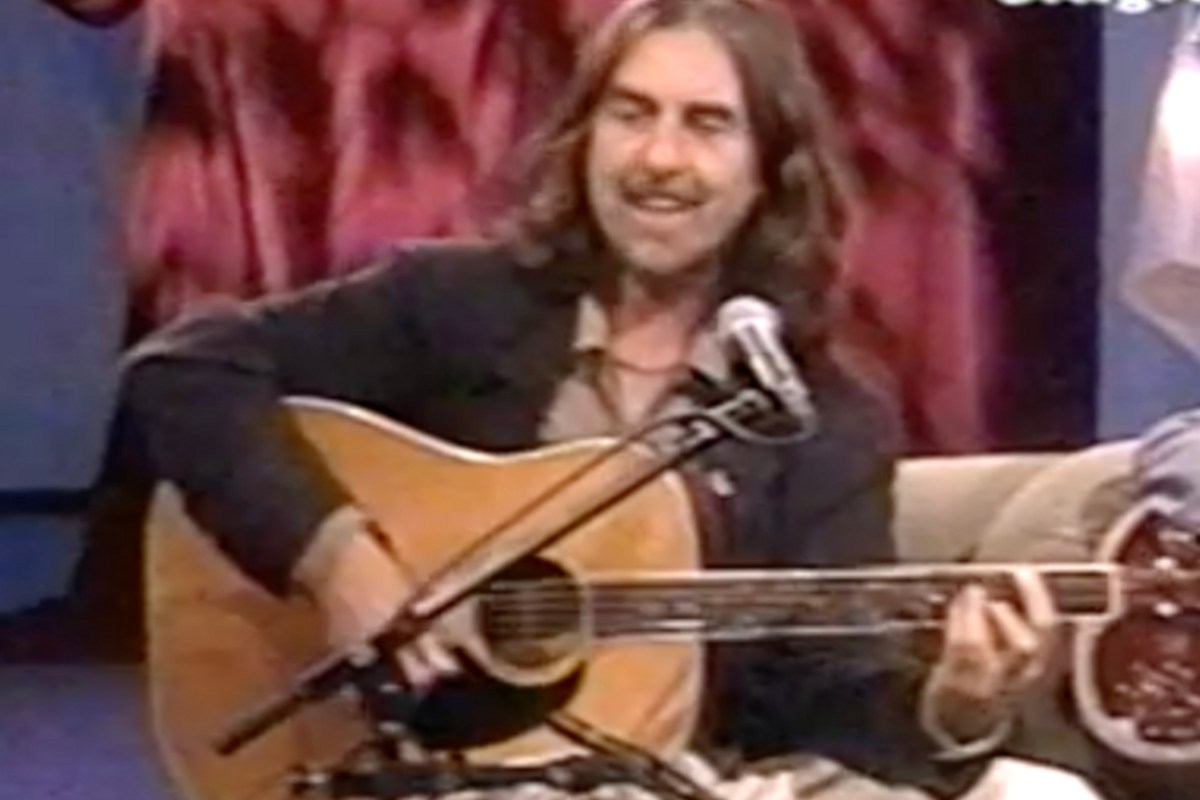
George Harrison's Last TV Appearance Became a Meditation on Dying
George Harrison ended up discussing faith and death on July 24, 1997, during what would be his last TV appearance.
ultimateclassicrock.com →Personal data may be processed to do the following: use precise geolocation data and actively scan device characteristics for identification. When George Harrison stopped by VH1 on July 24, 1997 to plug a new project for his old friend Ravi Shankar, it was almost as if he somehow knew this would be his last time on television. The former Beatles star turned expansive on his faith and what happens when we die. Most of that, as you'd expect, was initially left on the cutting-room floor. VH1 chose to focus instead on the musical portion of his conversation with John Fugelsang, rather than his more intuitive line of questioning. Then Harrison was diagnosed with throat cancer later that year, and during the period before he succumbed , the network reedited this segment to include his meditation on death. VH1 aired the expanded version on the day Harrison died, finally giving full voice to a remarkably deep conversation on the end of life and salvation. Song performances included "Any Road," a previously unheard number that later appeared on 2002's Brainwashed ; "If You Belonged to Me," from the Traveling Wilburys ' 1990 album, Vol. 3 ; and, most touchingly, the title track from All Things Must Pass . How Harrison got there was pure happenstance: He showed up unannounced with Shankar, then agreed to answer a couple of questions. "George had just produced the Shankar project Chants of India , and they were going to come and give us a little 10-minute sound bite and then take off," Fugelsang told Chuck Daly in 2013. But there were plenty of musical things to discuss. Harrison spoke at length about Chants of India – even referencing the Beatles' 1966 song "Tomorrow Never Knows " – and also delved deeply into the Concert for Bangladesh , a groundbreaking benefit concert held in conjunction with Shankar. All along, Fugelsang wanted to delve into deeper subjects with his hero. He decided to just keep going, engaging Harrison as long as he could – and that meant talking about more than the Fab Four. It was an unplanned but very prescient impulse. The results ended up serving as a perfect summation of Harrison's approach to death. "I wanted to talk about God, and meditation, and what happens when you die, and the soul," Fugelsang said. "And the whole time the producer’s in my ear saying, 'Get him to talk about John Lennon!' Which, you know, George, he doesn’t really like talking about the Beatles all that much. So we talked about all this stuff that was frustrating my producers, but he did take a guitar in hand ... and it wound up being the last time he ever played in public." In some cases, Fugelsang said he didn't like the interviewing approach used by his younger self – "I was making inappropriate jokes, I was cutting him off; I was stammering, I couldn’t shut up," he recalled – but Fugelsang remains proud of the complex thoughts they ultimately shared. "I think it was my lack of polish that made him enjoy the experience, actually," Fugelsang told Daly. "And the fact that I was into the stuff he was into talking about. And I went through many years of being ashamed of myself for finally meeting my idol and being a twit, and it wasn’t until many years later that, when the show aired, they put all the footage back in. "So the day George died, VH1 aired, all day long, an interview with George and some 25-year-old kid talking about God and the soul, and what happens when you die," Fugelsang added. "It helped me realize, 'Oh, I’m not that same young person anymore.' And it helped me grow, spiritually — the experience of meeting George and doing that."
Excerpt from a page describing this subject · 11,819 chars · not written by Vinony
Wikidata facts
- Instance of
- human
- Given name
- Harold
- Family name
- Harrison
- Gender
- male
- Citizenship
- United Kingdom
- Place of birth
- 12 Arnold Grove
- Place of death
- Los Angeles
- Spouse
- Olivia Harrison
- Child
- Dhani Harrison
- Occupation
- television actor
- Languages spoken
- English language
- Religion
- Christianity
- Notable work
- If I Needed Someone
- Genre
- beat music
- Instrument
- synthesizer
- Record label
- Parlophone
- Discography
- George Harrison discography
- Official website
- georgeharrison.com
- Image
- George Harrison 1974 (cropped).jpg
Show 24 more facts
- Commons category
- George Harrison
- cause of death
- brain tumor
- date of birth
- 1943-01-01
- date of death
- 2001-11-29
- topic's main category
- Category:George Harrison
- lifestyle
- vegetarianism
- manner of death
- natural causes
- nominated for
- Golden Raspberry Award for Worst Original Song
- influenced by
- Carl Perkins
- name in native language
- George Harold Harrison
- start of work period
- 1958-00-00
- pseudonym
- Magpie
- topic has template
- Template:George Harrison
- last words
- Love one another.
- member of
- Delaney & Bonnie
- social media followers
- 1201755
- nickname
- The quiet Beatle
- unmarried partner
- Maureen Starkey Tigrett
- end of work period
- 2001-00-00
- birth name
- George Harrison
- short name
- George Harrison
- described at URL
- ultimateclassicrock.com/george-harrison-last-tv-interview
- P12749
- Rosławowice
Sources (12)
via Wikidata · CC0
~40 min read
Encyclopedic overview
George Harrison (25 February 1943 – 29 November 2001) was an English musician who achieved international fame as the lead guitarist of the Beatles. Known as "the quiet Beatle", Harrison played a significant role in shaping the band's musical direction and established a successful solo career, particularly through his interest in non-Western musical influences.
Although most of the band's songs were written by John Lennon and Paul McCartney, most Beatles albums from 1965 onwards contained at least two Harrison compositions, including "Taxman", "Within You Without You", "While My Guitar Gently Weeps", "Something" and "Here Comes the Sun". Harrison's earliest musical influences included George Formby and Django Reinhardt; subsequent influences were Carl Perkins, Chet Atkins and Chuck Berry. By 1965, he had begun to lead the Beatles into folk rock through his interest in Bob Dylan and the Byrds, and towards Indian classical music through his use of Indian instruments, such as the sitar, which he had become acquainted with on the set of the film Help!. He played sitar on numerous Beatles songs, starting with "Norwegian Wood (This Bird Has Flown)". Having initiated the band's embrace of Transcendental Meditation in 1967, he subsequently developed an association with the Hare Krishna movement. Harrison's first marriage, to model Pattie Boyd in 1966, ended in divorce in 1977. In the following year he married Olivia Arias, with whom he had a son, Dhani.
Excerpted from Wikipedia’s “George Harrison” article, available under the CC BY-SA 4.0 licence.
Gallery (14)
Available in 110 languages
- Español
- Français
- Deutsch
- 中文
- 日本語
- Русский
- Português
- Italiano
- العربية
- हिन्दी
- Albanian
- ami
- Aragonese
- Armenian
- Asturian
- Aymara
- azb
- Azerbaijani
Show 91 more
- Bahasa Indonesia
- Balinese
- Bangla
- Basque
- be_x_old
- Belarusian
- Bislama
- Bosnian
- Breton
- Bulgarian
- Catalan
- Chechen
- Croatian
- Czech
- Danish
- Egyptian Arabic
- Esperanto
- Estonian
- Faroese
- Filipino
- Finnish
- Galician
- Georgian
- Greek
- Guarani
- Hebrew
- Hungarian
- Icelandic
- Ido
- Interlingua
- Irish
- Kannada
- Kazakh
- Kongo
- Latin
- Latvian
- Lithuanian
- Low German
- Macedonian
- Malay
- Malayalam
- Manx
- Marathi
- Mari
- Mingrelian
- Mongolian
- nah
- nds_nl
- Nederlands
- Nepali
- Norwegian
- Norwegian Nynorsk
- Occitan
- Pampanga
- Piedmontese
- Polski
- ppl
- Quechua
- Romanian
- Sardinian
- Scottish Gaelic
- Serbian
- Serbian (Latin)
- Sicilian
- simple
- Slovak
- Slovenian
- Sundanese
- Svenska
- Swahili
- Tamil
- Tiếng Việt
- Toki Pona
- Türkçe
- Ukrainian
- Upper Sorbian
- Urdu
- Uzbek
- Venetian
- Waray
- Welsh
- Western Frisian
- Wu Chinese
- Yiddish
- Zaza
- zh_min_nan
- zh_yue
- Zulu
- فارسی
- ไทย
- 한국어
via Wikidata sitelinks · CC0