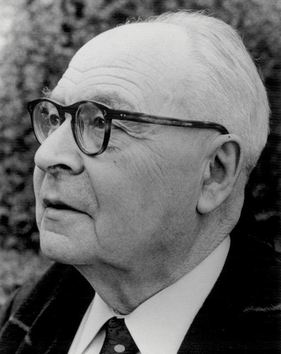
File:Georges_Dumézil.jpg · Wikimedia Commons · See Wikimedia Commons
Georges Dumézil
Sign in to saveAlso known as Georges Marcenay, Georges Edmond Raoul Dumézil
French philologist (1898-1986)
OverviewAI-generated
Georges Dumézil was a French linguist, anthropologist, and military personnel born in the 12th arrondissement of Paris in 1898. He served in World War I and was educated at Lycée Louis-le-Grand and the École Normale Supérieure. His professional career included positions at the Collège de France, École pratique des hautes études, Uppsala University, and the University of Warsaw. He worked in the fields of philology and mythology, writing in French.
Dumézil was a member of the Académie Française, the Académie des Inscriptions et Belles-Lettres, the Royal Academy of Science, Letters and Fine Arts of Belgium, and Freemasonry. He received the Officer of the Legion of Honour, the Croix de guerre 1914–1918, and the Prix mondial Cino Del Duca. He died in the 5th arrondissement of Paris in 1986 from cerebrovascular disease. His archives are held at the Collège de France.
Synthesized by Vinony from 23 facts across 2 sources: Wikidata, Vinony collections. Generated from structured data (not the Wikipedia text) and checked against those facts — may still contain errors.
Key facts
- Born
- Georges Edmond Raoul Dumézil , ( 1898-03-04 ) 4 March 1898, Paris, France
- Died
- 11 October 1986 (1986-10-11) (aged 88), Paris, France
- Occupations
- Philologist , linguist , religious studies scholar
- Spouse
- Madeleine Legrand ( after 1925 )
- Education
- École normale supérieure
- Thesis
- Le festin d'immortalité (1924)
- Doctoral advisor
- Antoine Meillet
- Other advisor
- Michel Bréal
- Influences
- Max Müller James George Frazer Ernst Kuhn Émile Durkheim Marcel Granet Hermann Güntert Jan de Vries Otto Höfler Émile Benveniste Stig Wikander
- Discipline
- Philology
- Sub discipline
- Comparative mythology Indo-European studies
- Institutions
- Istanbul University École pratique des hautes études Collège de France
- Main interests
- Proto-Indo-European mythology and society
- Notable works
- Mythe et epopee (1968–1973)
- Notable ideas
- Trifunctional hypothesis
- Influenced
- Jan de Vries Otto Höfler Stig Wikander Émile Benveniste Mircea Eliade Claude Lévi-Strauss Gabriel Turville-Petre Werner Betz Edgar C. Polomé Jaan Puhvel C. Scott Littleton Dean A. Miller Nicholas Allen
via Wikipedia infobox
Wikidata facts
- Instance of
- human
- Given name
- Georges
- Gender
- male
- Citizenship
- France
- Place of birth
- 12th arrondissement of Paris
- Place of death
- 5th arrondissement of Paris
- Occupation
- military personnel
- Educated at
- École Normale Supérieure
- Employer
- Istanbul University
- Languages spoken
- Turkish
- Doctoral advisor
- Antoine Meillet
- Student of
- Antoine Meillet
- Doctoral student
- Jaan Puhvel
- Field of work
- mythology
- Conflict
- World War I
- Image
- Dumezil Georges.jpg
Show 14 more facts
- date of birth
- 1898-03-04
- date of death
- 1986-10-11
- Commons category
- Georges Dumézil
- member of
- Freemasonry
- name in native language
- Georges Dumézil
- pseudonym
- Georges Marcenay
- cause of death
- cerebrovascular disease
- archives at
- Collège de France
- writing language
- French
- described at URL
- prosopo.ephe.fr/georges-dum%C3%A9zil
- relative
- Bruno Dumézil
- place of burial
- Nuits-Saint-Georges
- birth name
- Georges Edmond Raoul Dumézil
- manner of death
- natural causes
Sources (11)
via Wikidata · CC0
~33 min read
Encyclopedic overview
Georges Edmond Raoul Dumézil ( French: [dymezil]; 4 March 1898 – 11 October 1986) was a French philologist, linguist, and religious studies scholar who specialized in comparative linguistics and mythology.
He was a professor at Istanbul University, École pratique des hautes études and the Collège de France, and a member of the Académie Française. Dumézil is well known for his formulation of the trifunctional hypothesis on Proto-Indo-European mythology and society. His research has had a major influence on the fields of comparative mythology and Indo-European studies. In the 1930s he was a supporter (though not a formal member) of the far-right group Action Française, leading to criticism from left-wing scholars in the 1980s and afterwards.
Excerpted from Wikipedia’s “Georges Dumézil” article, available under the CC BY-SA 4.0 licence.