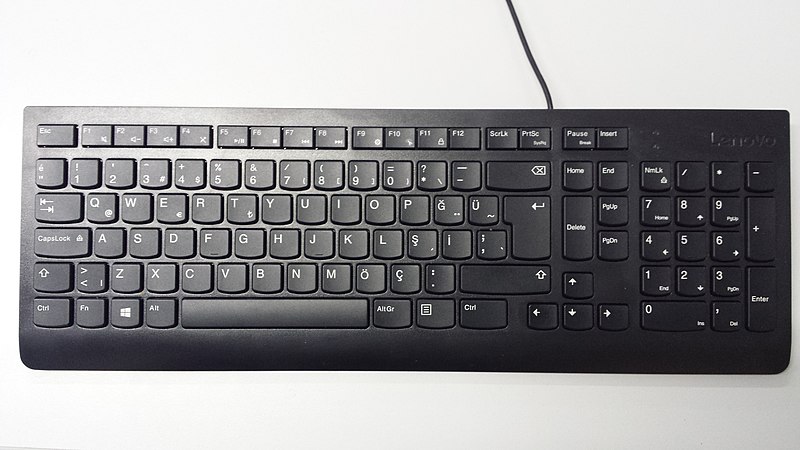
File:Turkish_Q_computer_keyboard.jpg · Wikimedia Commons · See Wikimedia Commons
Turkish
Sign in to saveAlso known as Turkish of Turkey, Istanbul Turkish, Türkçe, Anatolian Turkish, Turkish language
Oghuz Turkic language of the Turkish people
OverviewAI-generated
Turkish is a natural and modern language belonging to the Turkic family. It is primarily spoken in Turkey, Bulgaria, Cyprus, and Greece. The language is native to Turks and is associated with the regions of Burgas, Kardzhali, and Smolyan. Its native label is Türkçe.
The language uses the Turkish alphabet, Arabic alphabet, and Turkish Braille. It follows a subject–object–verb word order and is classified as an agglutinative, syllabic, and synthetic language. Turkish has present, past, and future tenses, along with admirative, imperative, and indicative moods. It uses capitalization for proper nouns and days of the week. The Turkish Language Association serves as its regulatory body.
Turkish is based on Old Anatolian Turkish. It is studied through Turkology. The language has approximately 82,231,620 speakers, writers, or signers. It is referenced by 15,555 other encyclopedia articles. Films in this language are categorized under Turkish-language films.
Synthesized by Vinony from 24 facts across 3 sources: Wikidata, Vinony graph, Geo. Generated from structured data (not the Wikipedia text) and checked against those facts — may still contain errors.
~40 min read
Encyclopedic overview
Turkish (Türkçe [ˈtyɾctʃɛ], Türk dili, also known as Türkiye Türkçesi 'Turkish of Turkey') is the most widely spoken of the Turkic languages, with around 90 million speakers. It is the national language of Turkey and one of two official languages of Cyprus. Significant smaller groups of Turkish speakers also exist in Germany, Austria, Bulgaria, North Macedonia, Greece, other parts of Europe, the South Caucasus, and some parts of Central Asia, Iraq, and Syria. Turkish is the 18th-most spoken language in the world.
To the west, the influence of Ottoman Turkish—the variety of the Turkish language that was used as the administrative and literary language of the Ottoman Empire—spread as the Ottoman Empire expanded. In 1928, as one of Atatürk's reforms in the early years of the Republic of Turkey, the Perso-Arabic script-based Ottoman Turkish alphabet was replaced with the Latin script-based Turkish alphabet.
Excerpted from Wikipedia’s “Turkish” article, available under the CC BY-SA 4.0 licence.
Gallery (12)
On the map
Available in 205 languages
- Español
- Français
- Deutsch
- 中文
- 日本語
- Русский
- Português
- Italiano
- العربية
- हिन्दी
- Abkhazian
- Achinese
- Adyghe
- Afrikaans
- Albanian
- Albanian
- Amharic
- Angika
Show 186 more
- Aragonese
- Aramaic
- Armenian
- Assamese
- Asturian
- Avaric
- azb
- Azerbaijani
- Bahasa Indonesia
- Balinese
- Bangla
- Bashkir
- Basque
- bat_smg
- Bavarian
- be_x_old
- Belarusian
- Bosnian
- Breton
- btm
- Bulgarian
- Buriat
- Burmese
- Catalan
- cbk_zam
- cdo
- Cebuano
- Central Dusun
- Central Kurdish
- Chechen
- Cherokee
- Chuvash
- Cornish
- Crimean Tatar
- Croatian
- Czech
- Danish
- Egyptian Arabic
- eml
- Erzya
- Esperanto
- Estonian
- Faroese
- Fiji Hindi
- Filipino
- Finnish
- Gagauz
- Galician
- Georgian
- Gilaki
- Goan Konkani
- Greek
- Guarani
- Gujarati
- Hakka Chinese
- Hausa
- Hebrew
- Hungarian
- hyw
- Iban
- Icelandic
- Ido
- Iloko
- Ingush
- Irish
- Javanese
- Kabardian
- Kabyle
- Kara-Kalpak
- Kashmiri
- Kashubian
- Kazakh
- kge
- Kinyarwanda
- Komi
- Komi-Permyak
- Kongo
- Kotava
- Kurdish
- Kyrgyz
- Ladino
- Lao
- Latin
- Latvian
- lbe
- Lezghian
- Limburgish
- Lingua Franca Nova
- Lithuanian
- lld
- Lombard
- Low German
- Lower Sorbian
- Luxembourgish
- Macedonian
- Madurese
- Malagasy
- Malay
- Malayalam
- Manipuri
- Manx
- Māori
- Marathi
- Mari
- Mazanderani
- Minangkabau
- Mingrelian
- Moksha
- Mongolian
- Moroccan Arabic
- nds_nl
- Nederlands
- Nepali
- Newari
- Northern Frisian
- Northern Sami
- Northern Sotho
- Norwegian
- Norwegian Nynorsk
- Occitan
- Ossetic
- Papiamento
- Pashto
- Picard
- Piedmontese
- Polski
- Punjabi
- Quechua
- Romanian
- Romansh
- Romany
- Rusyn
- Santali
- Sardinian
- Scots
- Scottish Gaelic
- Serbian
- Serbian (Latin)
- Shona
- Sicilian
- Silesian
- simple
- Sindhi
- Sinhala
- Slovak
- Slovenian
- Somali
- Sundanese
- Svenska
- Swahili
- Tajik
- Talysh
- Tamil
- Tatar
- Tiếng Việt
- Toki Pona
- Türkçe
- Turkmen
- Tuvinian
- Tyap
- Udmurt
- Ukrainian
- Upper Sorbian
- Urdu
- Uyghur
- Uzbek
- Venetian
- Veps
- Volapük
- Walloon
- Waray
- Welsh
- Western Frisian
- Western Mari
- Western Panjabi
- wikifunctions
- Wu Chinese
- Yakut
- Yiddish
- Yoruba
- Zaza
- zh_min_nan
- zh_yue
- فارسی
- ไทย
- 한국어
via Wikidata sitelinks · CC0