File:Cortisol2.svg · Wikimedia Commons · See Wikimedia Commons
glucocorticoid
Sign in to saveAlso known as glucocorticosteroid, glucocorticoids
Glucocorticoids (or, less commonly, glucocorticosteroids) are a class of corticosteroids, which are in turn a class of steroid hormones. Glucocorticoids are corticosteroids that bind to the glucocorticoid receptor that is present in almost every vertebrate animal cell. The name "glucocorticoid" is a portmanteau of "glucose", "cortex", and "steroid", referring to its role in regulating the metabolism of glucose, its synthesis in the adrenal cortex, and its steroidal structure.
Key facts
- Drug class.Image
- Cortisol2.svg
- Drug class.ImageClass
- skin-invert-image
- Drug class.Caption
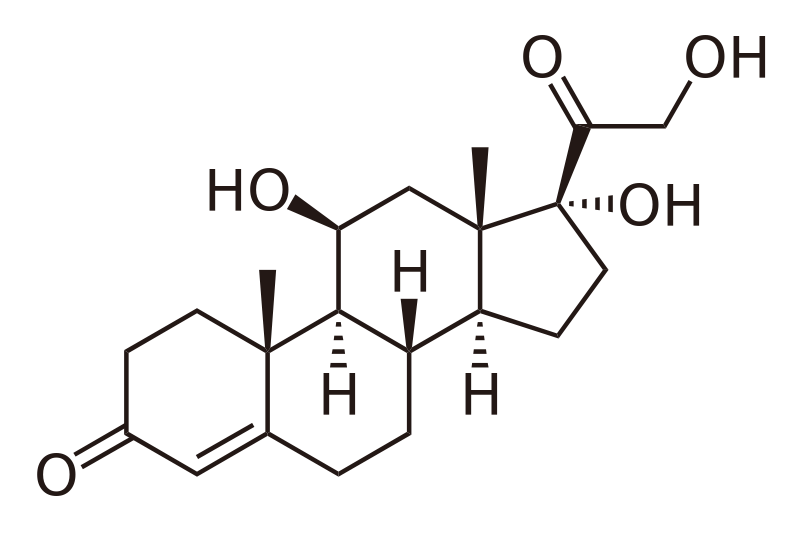
- Chemical structure of cortisol (hydrocortisone), an endogenous glucocorticoid as well as a medication.
- Drug class.Width
- 250px
- Drug class.Synonyms
- Corticosteroid; Glucocorticosteroid
- Drug class.Use
- Adrenal insufficiency; allergic, inflammatory, and autoimmune disorders; asthma; organ transplant
- Drug class.ATC_prefix
- H02AB
- Drug class.Biological_target
- Glucocorticoid receptor
- Drug class.Chemical_class
- Steroids
via Wikipedia infobox
Research
268,981 papersvia PubMed
Wikidata facts
- Subclass of
- hormone
- Image
- Steroidogenesis.svg
Show 4 more facts
- topic's main category
- Category:Glucocorticoids
- Commons category
- Glucocorticoids
- produced by
- zona reticularis
- NCI Thesaurus ID
- C2323
via Wikidata · CC0
~28 min read
Encyclopedic overview
25 sectionsContents
- Effects
- Immune
- Metabolic
- Developmental
- Arousal and cognition
- Body fluid homeostasis
- Mechanism of action
- Transactivation
- Transrepression
- Nongenomic effects
- Pharmacology
- Therapeutic use
- Replacement
- Therapeutic immunosuppression
- Anti-inflammatory
- Hyperaldosteronism
- Heart failure
- Resistance
- Side effects
- Immunodeficiency
- Withdrawal
- See also
- References
- Further reading
- External links
Glucocorticoids (or, less commonly, glucocorticosteroids) are a class of corticosteroids, which are in turn a class of steroid hormones. Glucocorticoids are corticosteroids that bind to the glucocorticoid receptor that is present in almost every vertebrate animal cell. The name "glucocorticoid" is a portmanteau of "glucose", "cortex", and "steroid", referring to its role in regulating the metabolism of glucose, its synthesis in the adrenal cortex, and its steroidal structure.
Glucocorticoids are part of the feedback mechanism in the immune system, which reduces certain aspects of immune function, such as inflammation. They are therefore used in medicine to treat diseases caused by an overactive immune system, such as allergies, asthma, autoimmune diseases, and sepsis. Glucocorticoids have many side effects, including adverse drug reactions. They also interfere with some of the abnormal mechanisms in cancer cells, so they are used in high doses to treat cancer. In particular, they inhibit lymphocyte proliferation, which is significant for lymphomas and leukemias. They can also lessen some side effects of chemotherapy (anticancer drugs).
Excerpted from Wikipedia’s “glucocorticoid” article, available under the CC BY-SA 4.0 licence.