
File:Conical_Tower_-_Great_Enclosure_III_(33736918448).jpg · Wikimedia Commons · See Wikimedia Commons
Great Zimbabwe
Sign in to saveAlso known as Zimbabye
ruined city in the south-eastern hills of Zimbabwe near Lake Mutirikwe and the town of Masvingo, was once the capital of the Kingdom of Zimbabwe during the country's Late Iron Age
Great Zimbabwe was a ruined medieval city in southeastern Zimbabwe that served as the capital of the Kingdom of Zimbabwe during the Late Iron Age. It matters as an important archaeological site that reveals the sophistication and power of an ancient African civilization.
AI-generated from the Wikipedia summary — may contain errors.
Described at
Veľké Zimbabwe: kamenné mesto, ktoré si Európa dlho nechcela vysvetliť správne - Zimbabwe - PlaceMania
Veľké Zimbabwe je rozsiahly komplex kamenných stavieb z 11.–15. storočia v južnej Afrike. Tvorili ho tri časti: Veľká ohrada s vysokým oválnym múrom, hradisko na kopci (akropola) a stavby v údolí. Mesto bolo významným obchodným centrom napojeným na diaľkové trasy.
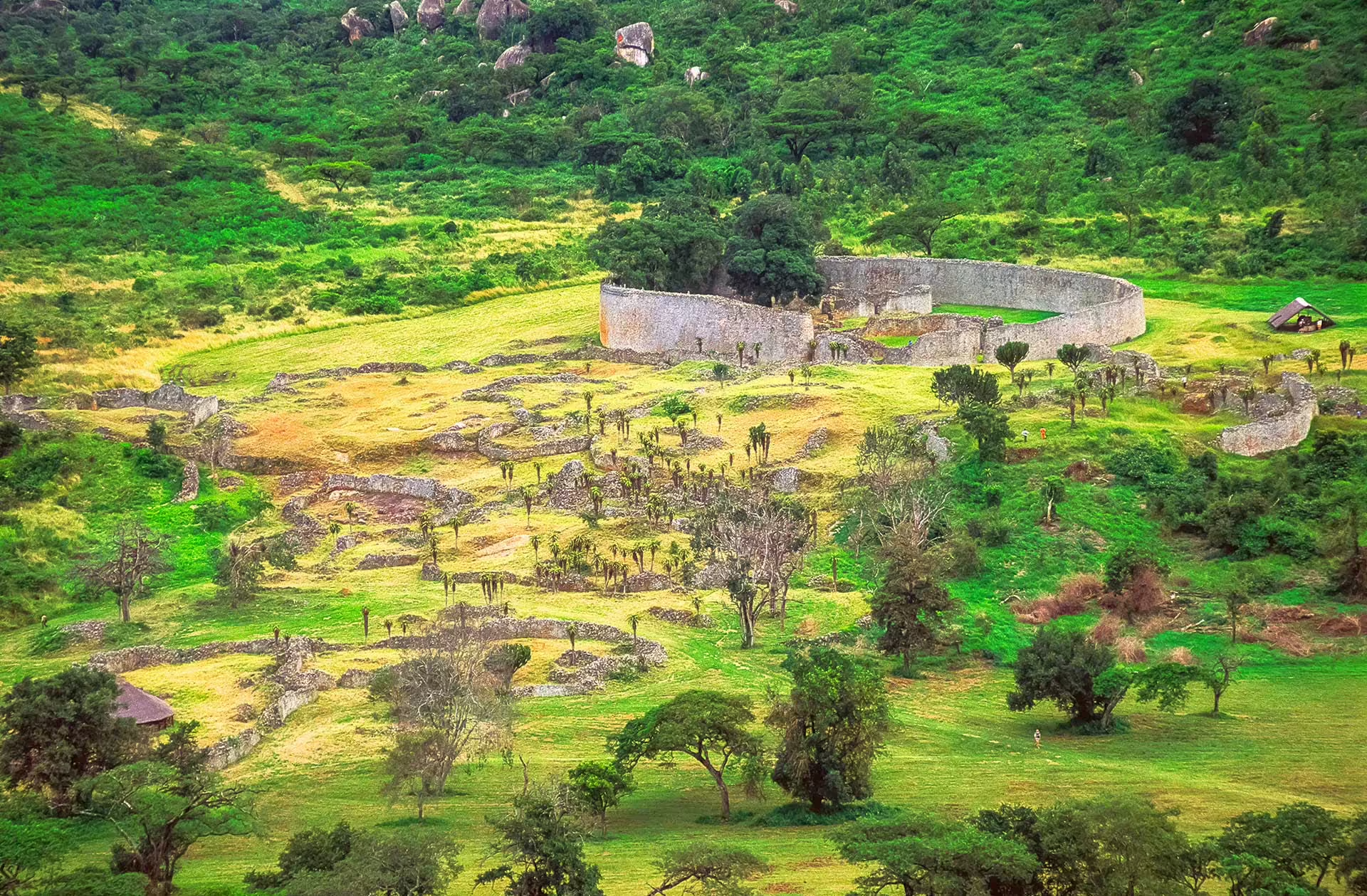
placemania.sk →Vysoké kamenné steny Veľkého Zimbabwe pôsobia aj dnes znepokojujúco. Nie pre svoju výšku, ale pre otázku, ktorú kladú už vyše sto rokov: kto a prečo dokázal v južnej Afrike postaviť niečo takéto bez malty, bez písma a bez zanechaného vysvetlenia? Komplex Veľkého Zimbabwe vznikal približne medzi 11. a 15. storočím a jeho pôvod sa dnes jednoznačne spája s bantuským obyvateľstvom regiónu medzi riekami Zambezi a Limpopo. Napriek tomu práve tento fakt patril dlho k tým najmenej prijateľným. Veľké Zimbabwe nebolo jedným kompaktným mestom, ale skôr súborom funkčne odlišných častí. Najznámejšia z nich je Veľká ohrada – oválny kamenný priestor s vonkajším múrom dlhým približne 250 metrov a vysokým miestami až 11 metrov. Múr je vystavaný zo žulových kvádrov ukladaných nasucho, bez použitia malty, s precíznosťou, ktorá je v Afrike výnimočná aj v širšom časovom kontexte. Druhou časťou je hradisko (Akropolis) na skalnatom kopci severne od ohrady. Úzke kamenné chodby, vnútorné priestory a zvyšky opevnenia naznačujú kontrolnú alebo rituálnu funkciu. Ide zároveň o najstaršiu časť celého komplexu. Tretiu vrstvu tvorili kamenné a hlinené stavby v údolí , kde pravdepodobne žila väčšina obyvateľstva. Veľké Zimbabwe nebolo izolovaným mestom. Archeologické nálezy – čínske porcelánové fragmenty, perzské sklo, arabské výrobky a zlaté predmety – potvrdzujú, že mesto bolo súčasťou rozsiahlej obchodnej siete smerujúcej k východoafrickému pobrežiu, najmä do oblasti Kilwy . Zlato zohrávalo kľúčovú úlohu. V okolí sa nachádzali staré banské diela a miestni obyvatelia boli zruční hutníci. Práve výskyt zlata viedol k vzniku starších európskych mýtov o „Šalamúnových zlatých baniach“ a o spojení so Sábskou kráľovnou – predstáv, ktoré dnes už nemajú odbornú oporu, no pretrvali v literatúre prekvapivo dlho. Medzi najznámejšie nálezy patrí osem mastencových sôch vtákov , dnes známych ako Vtáky zo Zimbabwe. Ich presný význam nie je istý, no predpokladá sa náboženská alebo symbolická funkcia – možno ochranná, možno dynastická. Faktom je, že práve tento motív sa stal moderným štátnym symbolom Zimbabwe a objavuje sa na vlajke, znaku aj bankovkách. Je to zaujímavý príklad toho, ako fragment minulosti, ktorému úplne nerozumieme, nadobudol v modernom štáte nový, politický a identitný význam. Mesto bolo pravdepodobne opustené v 15. storočí. Dôvody nie sú jednoznačné: vyčerpanie zdrojov, ekologický tlak, presun obchodných trás alebo politické zmeny. Neexistuje písomný záznam, ktorý by dal jasnú odpoveď. Zakladateľ projektu PlaceMania.sk a zodpovedá za jeho obsah, technické fungovanie a dlhodobý rozvoj. Cestovné zápisky na webe vychádzajú z vlastnej skúsenosti z ciest; faktografické záznamy o miestach vznikajú kombináciou verejných zdrojov, automatizovaného spracovania dát a redakčného overovania. Zameriava sa na netradičné lokality, ich historický a geografický kontext a menej známe súvislosti. Jaroslav Knirsch. Veľké Zimbabwe: kamenné mesto, ktoré si Európa dlho nechcela vysvetliť správne. PlaceMania. Dostupné na: Things to do near Veľké Zimbabwe: kamenné mesto, ktoré si Európa dlho nechcela vysvetliť správne, Great Zimbabwe National Monument, Great Zimbabwe, Masvingo eZimbabwe, Groß-Simbabwe, Monument national du Grand Zimbabwe, Gran Zimbabue, Grande Zimbabwe, Monument, Historické miesto, Pamätník, Historická pamiatka, Turistická atrakcia, Zimbabwe, Masvingo, Masvingo Province. Find tours, guided tours, local activities, attractions, tickets, excursions, sightseeing, day trips and travel experiences nearby. Coordinates: -20.2714635, 30.9327465. Časová kapsula z Rodézie z roku 1934, ktorá ukazuje pôvab a hanbu minulej éry. Ohromujúco modrá voda týchto nádherných jaskýň má za sebou aj násilnú minulosť. Tento kostol s freskami v talianskom štýle postavili európski internovaní obyvatelia Zimbabwe počas druhej svetovej vojny. Pozrite si ďalšie zaujímave miesta vo svete, ktoré stoja za naplánovanie ďalšej cesty. Nie je jasné, čo spôsobilo požiar, ktorý viedol
Excerpt from a page describing this subject · 18,380 chars · not written by Vinony
Wikidata facts
- Instance of
- city
- Part of
- Kingdom of Zimbabwe
- Official name
- Great Zimbabwe National Monument
- Country
- Zimbabwe
- Located in
- Masvingo Province
- Area
- 722
- Image
- Great-Zimbabwe-6.jpg
Show 8 more facts
- on focus list of Wikimedia project
- Wikipedia:Vital articles/Level/4
- described by source
- The Nuttall Encyclopædia
- Commons category
- Great Zimbabwe
- heritage designation
- World Heritage Site
- Commons gallery
- Great Zimbabwe
- native label
- Great Zimbabwe
- maintained by WikiProject
- WikiProject Anthropology
- described at URL
- www.placemania.sk/svetova-zaujimavost/velke-zimbabwe
Sources (2)
via Wikidata · CC0
~39 min read
Encyclopedic overview
Great Zimbabwe was a city in the south-eastern hills of the modern country of Zimbabwe, near Masvingo. It was settled from around 1000 CE, and served as the capital of the Kingdom of Great Zimbabwe from the 13th century. It is the largest stone structure in precolonial Southern Africa. Major construction on the city began in the 11th century until the 15th century, and it was abandoned in the 16th or 17th century. The edifices were erected by ancestors of the Shona people, currently located in Zimbabwe and nearby countries. The stone city spans an area of 7.22 square kilometres (2.79 mi). Population estimates vary. Earlier estimates suggest a peak population of around 20,000 people. A recent study using archaeological, ethnographic, and historical evidence, along with statistical modeling suggests that the sites population did not exceed 10,000 people. The Zimbabwe state centred on it likely covered 50,000 km² (19,000 sq mi). It is recognised as a World Heritage Site by UNESCO.
The site of Great Zimbabwe is composed of the Hill Complex, the Valley Complex, and the Great Enclosure (constructed at different times), and contained area for commoner housing within the perimeter walls. There is disagreement on the functions of the complexes among scholars. Some consider them to have been residences for the royals and elites at different periods of the site, while others infer them to have had separate functions. The Great Enclosure, with its 11 m (36 ft) high dry stone walls (that is, constructed without mortar), was built during the 13th and 14th centuries, and likely served as the royal residence, with demarcated public spaces for rituals.
Excerpted from Wikipedia’s “Great Zimbabwe” article, available under the CC BY-SA 4.0 licence.
Gallery (12)
On the map
Available in 71 languages
- Español
- Français
- Deutsch
- 中文
- 日本語
- Русский
- Português
- Italiano
- العربية
- हिन्दी
- Afrikaans
- Armenian
- Asturian
- Azerbaijani
- Bahasa Indonesia
- Bashkir
- Basque
- be_x_old
Show 52 more
- Belarusian
- Bulgarian
- Burmese
- Catalan
- Croatian
- Czech
- dag
- Danish
- Egyptian Arabic
- Esperanto
- Estonian
- Finnish
- Galician
- Georgian
- Greek
- Hebrew
- Hungarian
- Irish
- Kazakh
- Kotava
- Latin
- Latvian
- Lithuanian
- Maithili
- Malagasy
- Malay
- Maltese
- Nederlands
- Nepali
- Norwegian
- Norwegian Nynorsk
- Occitan
- Polski
- Romanian
- Serbian
- Serbian (Latin)
- Shona
- simple
- Slovenian
- Svenska
- Swahili
- Tamil
- Tatar
- Tiếng Việt
- Türkçe
- Ukrainian
- Waray
- Welsh
- Wu Chinese
- zh_yue
- فارسی
- 한국어
via Wikidata sitelinks · CC0