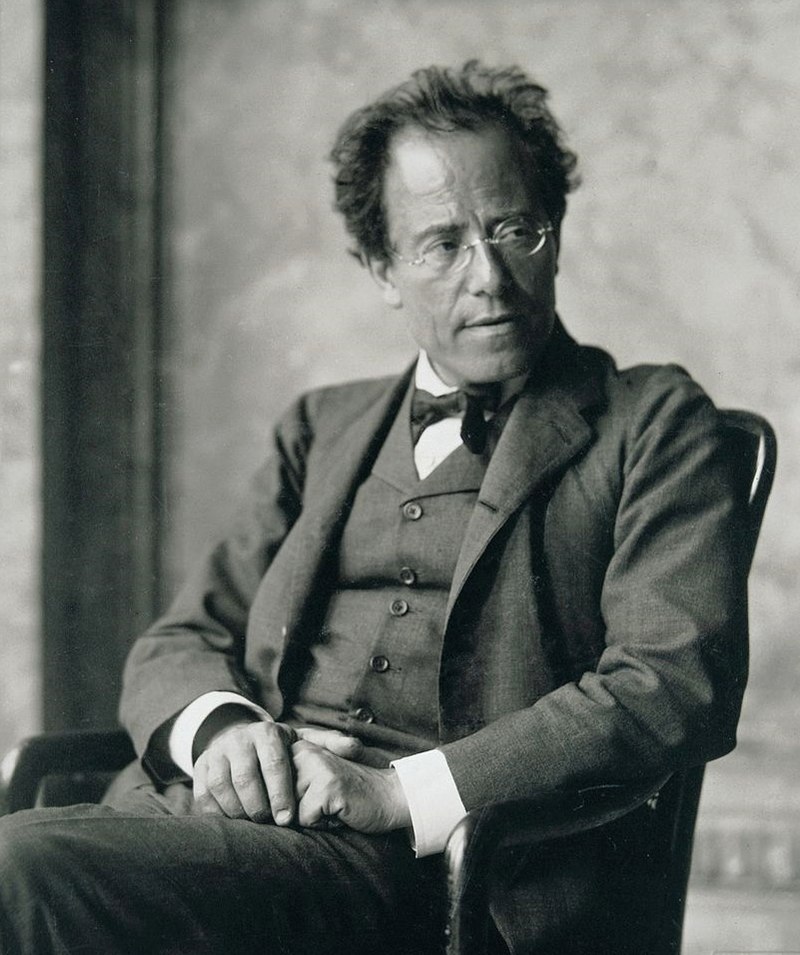
File:Photo_of_Gustav_Mahler_by_Moritz_Nähr_01.jpg · Wikimedia Commons · See Wikimedia Commons
Gustav Mahler
Sign in to saveAlso known as Mahler, Gustave Mahler
Austrian late-Romantic composer (1860–1911)
OverviewAI-generated
Gustav Mahler was an Austrian conductor, composer, bandleader, and theatre manager. Born in Kaliště in 1860, he studied at the University of Vienna and the University of Music and Performing Arts Vienna. He was married to Alma Mahler and had a daughter named Anna Mahler. His students included Anna von Mildenburg and Klaus Pringsheim. He spoke German.
Mahler composed classical music, symphonies, chamber music, art songs, and ballets. His notable works include Symphony No. 1, Symphony No. 2, Symphony No. 5, and Symphony No. 8. He is associated with similar artists such as Anton Bruckner, Richard Strauss, Ludwig van Beethoven, Johannes Brahms, and Franz Schubert.
He died in Vienna in 1911 from endocarditis and sepsis, which were natural causes. His last words were "Mozart !". He is described by the Jewish Encyclopedia of Brockhaus and Efron and the Brockhaus and Efron Encyclopedic Dictionary.
Synthesized by Vinony from 45 facts across 7 sources: Wikidata, MusicBrainz, Last.fm, TMDb, VIAF, Europeana Sparql, Firecrawl. Generated from structured data (not the Wikipedia text) and checked against those facts — may still contain errors.
Film & TV
Kalitsch, Bohemia, Austria-Hungary. [now in Czech Republic]
Gustav Mahler (7 July 1860 – 18 May 1911) was an Austro-Bohemian Romantic composer, and one of the leading conductors of his generation. As a composer he acted as a bridge between the 19th-century Austro-German tradition and the modernism of the early 20th century. While in his lifetime his status as a conductor was established beyond question, his own music gained wide popularity only after…
Known for
- Conducting Mahler — Self - Conductor2002
via TMDB
Listeners · Last.fm
- Listeners
- 791,894
- Total plays
- 9,163,996
Tags
Similar artists
Gustav Mahler (7 July 1860 – 18 May 1911) was an Austro-Bohemian composer and conductor, regarded as a key figure bridging 19th-century Austro-German traditions and early 20th-century modernism. While his reputation as a conductor was well established during his lifetime, his compositions gained wider recognition only after periods of neglect, including bans on their performance in much of Europe during the Nazi era. After 1945, his works were rediscovered and have since become frequently performed and recorded. <a href="https://www.last.fm/music/Gustav+Mahler">Read more on Last.fm</a>
Authority record · VIAF
- Lifespan
- 1860–1911
- Nationality
- AT, XY, DE, NF
- Role / Field
- Pianistes, Conductors music, Compositeurs, Composers, Chefs dorchestre, Conducting
- Language
- ger, deu
- Gender
- Male
Recorded by 43 libraries
via VIAF · OCLC
Wikidata facts
- Instance of
- human
- Given name
- Gustav
- Family name
- Mahler
- Gender
- male
- Citizenship
- Austria
- Place of birth
- Kaliště
- Place of death
- Vienna
- Spouse
- Alma Mahler
- Occupation
- bandleader
- Languages spoken
- German
- Notable work
- Symphony No. 9
- Student of
- Franz Krenn
- Genre
- chamber music
- Official website
- www.gustav-mahler.org
- Image
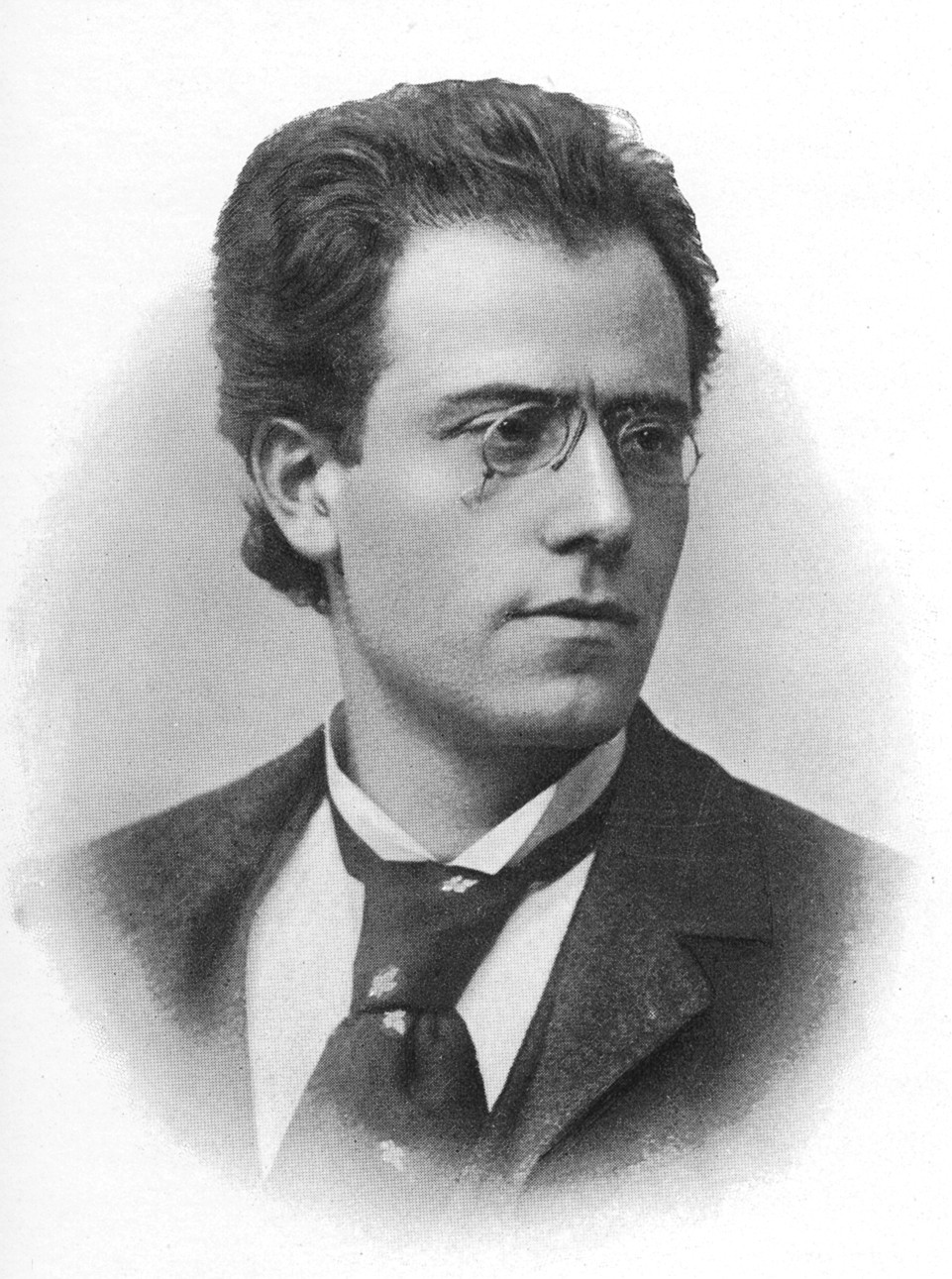
- Photo of Gustav Mahler by Moritz Nähr 01.jpg
- Work location
- New York City
Show 20 more facts
- cause of death
- sepsis
- Commons category
- Gustav Mahler
- date of birth
- 1860-07-07
- date of death
- 1911-05-18
- topic's main category
- Category:Gustav Mahler
- manner of death
- natural causes
- Commons gallery
- Gustav Mahler
- name in native language
- Gustav Mahler
- Commons Creator page
- Gustav Mahler
- on focus list of Wikimedia project
- Wikipedia:Vital articles/Level/4
- student
- Klaus Pringsheim
- last words
- Mozart !
- ethnic group
- Jewish people
- list of works
- list of compositions by Gustav Mahler
- copyright representative
- American Society of Composers, Authors and Publishers
- related category
- Category:Compositions by Gustav Mahler
- P8168
- Oleg Kornienko
- date of burial or cremation
- 1911-05-20
- archives at
- Bavarian State Library
Sources (14)
via Wikidata · CC0
Works in European collections
36 objects attributed to Gustav Mahler, held across European museums, libraries & archives · via Europeana
![“Kindertotenlieder” [Children’s Death Songs]: No. 5: In this weather, II. Teil/(Mahler-Rückert)](https://api.europeana.eu/thumbnail/v2/url.json?uri=http%3A%2F%2Fmedia.slub-dresden.de%2Ffon%2Fsnp%2Fa%2F009087%2Ffon_snp_a_009087_02.jpg&type=IMAGE)
“Kindertotenlieder” [Children’s Death Songs]: No. 5: In this weather, II. Teil/(Mahler-Rückert)

When my treasure makes a wedding: from “Songs of a Driving journeyman”/Gustav Mahler

The two blue eyes: from “Songs of a Driving journeyman”/Gustav Mahler

I have a glowing knife: from “Songs of a Driving journeyman”/Gustav Mahler

Rhine legendary: from “Des Knaben Wunderhorn”/(Mahler)

Going over the field tomorrow: from “Songs of a Driving journeyman”/Gustav Mahler

Thamboursgesell: Ballad from “Des Knaben Wunderhorn”/(Mahler)
Untitled

Untitled
Untitled
Untitled
Untitled
Untitled
Untitled
Untitled
Untitled
Untitled
Untitled
Untitled
Untitled
Untitled
Untitled
Untitled
Untitled
Untitled
Untitled
Untitled
Untitled
Untitled
Untitled
Untitled
Untitled
Untitled
Untitled
Untitled
Untitled
~40 min read
Encyclopedic overview
Gustav Mahler, photographed in 1907 by Moritz Nähr at the end of his period as director of the Vienna Hofoper Gustav Mahler ( German: [ˈɡʊstaf ˈmaːlɐ] ; 7 July 1860 – 18 May 1911) was an Austro-Bohemian Romantic composer, and one of the leading conductors of his generation. As a composer he acted as a bridge between the 19th-century tradition and the modernism of the early 20th century. While in his lifetime his status as a conductor was established beyond question, his own music gained wide popularity only after periods of relative neglect, which included a ban on its performance in much of Europe during the Nazi era. After 1945 his compositions were rediscovered by a new generation of listeners; Mahler then became one of the most frequently performed and recorded of all composers, a position he has sustained into the 21st century.
Born in Bohemia to Jewish parents of humble origins, the German-speaking Mahler displayed his musical gifts at an early age. After graduating from the Vienna Conservatory in 1878, he held a succession of conducting posts of rising importance in the opera houses of Europe, culminating in his appointment in 1897 as director of the Vienna Court Opera (Hofoper). During his ten years in Vienna, Mahler—who had converted to Catholicism to secure the post—experienced regular opposition and hostility from the anti-Semitic press. Nevertheless, his innovative productions and insistence on the highest performance standards ensured his reputation as one of the greatest of opera conductors, particularly as an interpreter of the stage works of Wagner, Mozart, and Tchaikovsky. Late in his life he was briefly director of New York's Metropolitan Opera and the New York Philharmonic.
Excerpted from Wikipedia’s “Gustav Mahler” article, available under the CC BY-SA 4.0 licence.
Gallery (14)
Available in 128 languages
- Español
- Français
- Deutsch
- 中文
- 日本語
- Русский
- Português
- Italiano
- العربية
- Afrikaans
- Albanian
- Albanian
- Amharic
- Aragonese
- Armenian
- Assamese
- Asturian
- Aymara
Show 109 more
- azb
- Azerbaijani
- Bahasa Indonesia
- Balinese
- Bangla
- Bashkir
- Basque
- bat_smg
- Bavarian
- be_x_old
- Belarusian
- Bislama
- Bosnian
- Breton
- btm
- Bulgarian
- Buriat
- Catalan
- Central Kurdish
- Chamorro
- Chechen
- Cornish
- Crimean Tatar
- Croatian
- Czech
- Danish
- Egyptian Arabic
- Esperanto
- Estonian
- Fiji Hindi
- Finnish
- Galician
- Georgian
- Greek
- Guarani
- Haitian Creole
- Hebrew
- Hungarian
- Icelandic
- Ido
- Iloko
- Interlingua
- Irish
- Javanese
- Jju
- Kabardian
- Kanuri
- Kara-Kalpak
- Kazakh
- kbp
- Latin
- Latvian
- Limburgish
- Lithuanian
- Lombard
- Low German
- Luxembourgish
- Macedonian
- Madurese
- Malagasy
- Malay
- Malayalam
- Marathi
- Mazanderani
- Mingrelian
- Mongolian
- Nederlands
- Newari
- Norwegian
- Norwegian Nynorsk
- Occitan
- Pampanga
- Picard
- Piedmontese
- Polski
- Punjabi
- Quechua
- Romanian
- Rusyn
- Sanskrit
- Saterland Frisian
- Serbian
- Serbian (Latin)
- simple
- Sindhi
- Slovak
- Slovenian
- Svenska
- Swahili
- Tajik
- Tamil
- Tatar
- Türkçe
- Ukrainian
- Urdu
- Uzbek
- Veps
- Volapük
- Waray
- Welsh
- Western Panjabi
- Wu Chinese
- Yiddish
- Zaza
- zh_min_nan
- zh_yue
- فارسی
- ไทย
- 한국어
via Wikidata sitelinks · CC0