Key facts
- Part of
- International Space Station
- Launch date
- October 23, 2007, 15:38:19 UTC
- Launch vehicle
- Space Shuttle Discovery
- Berthed
- October 26–November 12, 2007: Unity port November 14, 2007–present: Destiny forward
- Mass
- 14,300 kg (31,500 lb)
- Length
- 6.7 m (22 ft)
- Diameter
- 4.4 m (14 ft)
- Pressurized volume
- 70 m (2,500 cu ft)
via Wikipedia infobox
Described at
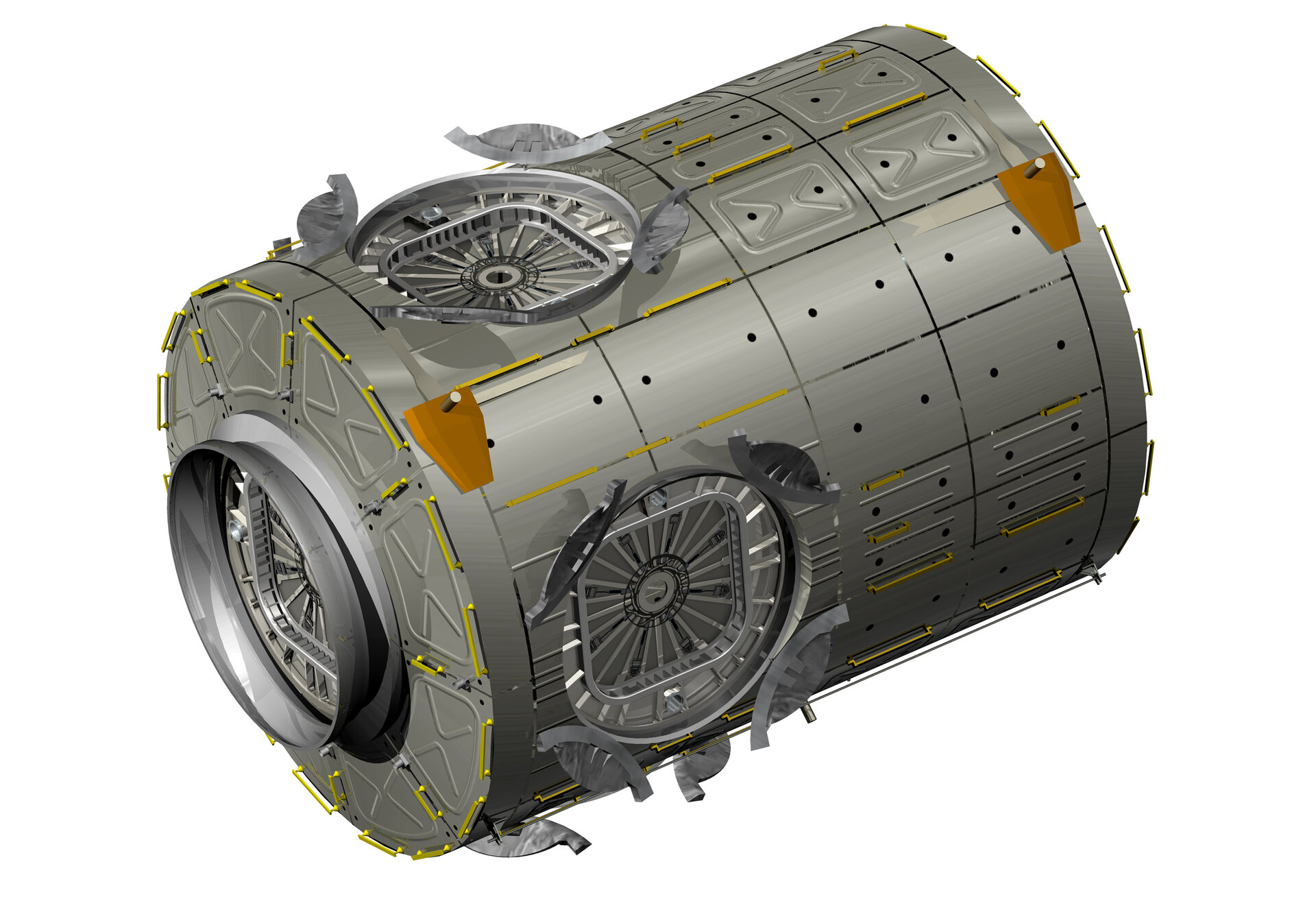
ESA - Node 2: Connecting Module
Node 2 is a pressurised module which serves as a connecting passage between the European Columbus laboratory, the US laboratory Destiny and the Japanese laboratory Kibo.
esa.int →The European Space Agency (ESA) is Europe’s gateway to space. Its mission is to shape the development of Europe’s space capability and ensure that investment in space continues to deliver benefits to the citizens of Europe and the world. Find out more about space activities in our 23 Member States, and understand how ESA works together with their national agencies, institutions and organisations. Space Transportation Ariane Vega Space Rider Future space transportation Boost! Europe's Spaceport Launches from Europe's Spaceport from 2012 Node 2 is a pressurised module which serves as a connecting passage between the European Columbus laboratory, the US laboratory Destiny and the Japanese laboratory Kibo. Node 2 also provides a docking port for the discontinued Space Shuttle and the Japanese HII transfer vehicle, while it also served as an attachment point for the Multi-Purpose Logistics Modules. Node 2 is a working base point for the Space Station robotic arm, Canadarm 2. Node 2 was developed for NASA under an ESA contract with European industry, with Alcatel-Alenia Space as the prime contractor. Responsibility for Node 2 development was assigned to the Italian space agency, ASI. The structural design is based on that of the Multi-Purpose Logistics Modules and the European Columbus laboratory. NASA held a competition amongst schoolchildren in the United States to find a name for the Node 2 module. On 15 March 2007 the new name Harmony was announced. Node 2, or Harmony, was launched in October 2007 on Space Shuttle flight STS-120 (ISS Assembly Flight 10A).
Excerpt from a page describing this subject · 27,346 chars · not written by Vinony
Wikidata facts
- Part of
- US Orbital Segment
- Operator
- NASA
- Country of origin
- Italy
- Diameter
- 4.480
- Mass
- 15300
- Manufacturer
- Thales Alenia Space
- Image
- Iss016e012617.jpg
- Length
- 6.706
- Significant event
- rocket launch
- Has parts of class
- common berthing mechanism
Show 6 more facts
- Commons category
- Harmony (ISS module)
- described at URL
- www.esa.int/Our_Activities/Human_Spaceflight/International_Space_Station/Node_2_Connecting_Module
- volume as quantity
- 70
- space launch vehicle
- Space Shuttle
- UTC date of spacecraft launch
- 2007-10-23
- start point
- Kennedy Space Center Launch Complex 39A
Sources (9)
via Wikidata · CC0
Article · Deutsch
Harmony (englisch für Harmonie) ist nach Unity das zweite Verbindungsmodul (früher Node 2 genannt) der Internationalen Raumstation (ISS). Am 8. Februar 2010 folgte mit Tranquility noch ein dritter und letzter Verbindungsknoten. Harmony ist 6,71 m lang, hat einen Durchmesser von 4,48 m und eine Startmasse von 14,5 t. Das druckbeaufschlagte Volumen beträgt ca. 75,5 m³. Das Modul verfügt über acht Racks, die zur Versorgung der Station mit Luft, Elektrizität und Wasser dienen, sowie andere lebensnotwendige Systeme enthalten. Harmony kontrolliert und verteilt die Ressourcen der Trägerstruktur und des US-Labors Destiny zu den verbundenen Segmenten; dem europäischen Columbus-Labor, dem Kopplungsadaptern PMA-2, dem japanischen Wissenschaftsmodul Kibō, dem Mehrzweck-Logistikmodul und dem HTV-Transportfahrzeug. Zudem dient es als Ausgangspunkt für das ISS Remote Manipulator System. Das Modul gehört zum US-amerikanischen Teil der Station und wurde von Alenia Spazio (Italien) im Auftrag der Europäischen Weltraumorganisation (ESA) und der Agenzia Spaziale Italiana für die NASA gebaut. Diese transportiert dafür im Gegenzug das Raumlabor Columbus zur ISS. Harmony wurde mit einem Airbus Beluga vom italienischen Turin in die USA geflogen und traf am 1. Juni 2003 am Kennedy Space Center ein. Am 18. Juni erfolgte die offizielle Übergabe an die NASA. Das Modul startete am 23. Oktober 2007 mit der Space-Shuttle-Mission STS-120 zur ISS und wurde drei Tage später vorläufig an Unity montiert. Am 14. November 2007 wurde es an seine endgültige Position, am Ende des Destiny Labors, verlagert.
Abstract from DBpedia / Wikipedia · CC BY-SA