Key facts
- Part of
- International Space Station
- Launch date
- October 23, 2007, 15:38:19 UTC
- Launch vehicle
- Space Shuttle Discovery
- Berthed
- October 26–November 12, 2007: Unity port November 14, 2007–present: Destiny forward
- Mass
- 14,300 kg (31,500 lb)
- Length
- 6.7 m (22 ft)
- Diameter
- 4.4 m (14 ft)
- Pressurized volume
- 70 m (2,500 cu ft)
via Wikipedia infobox
Described at
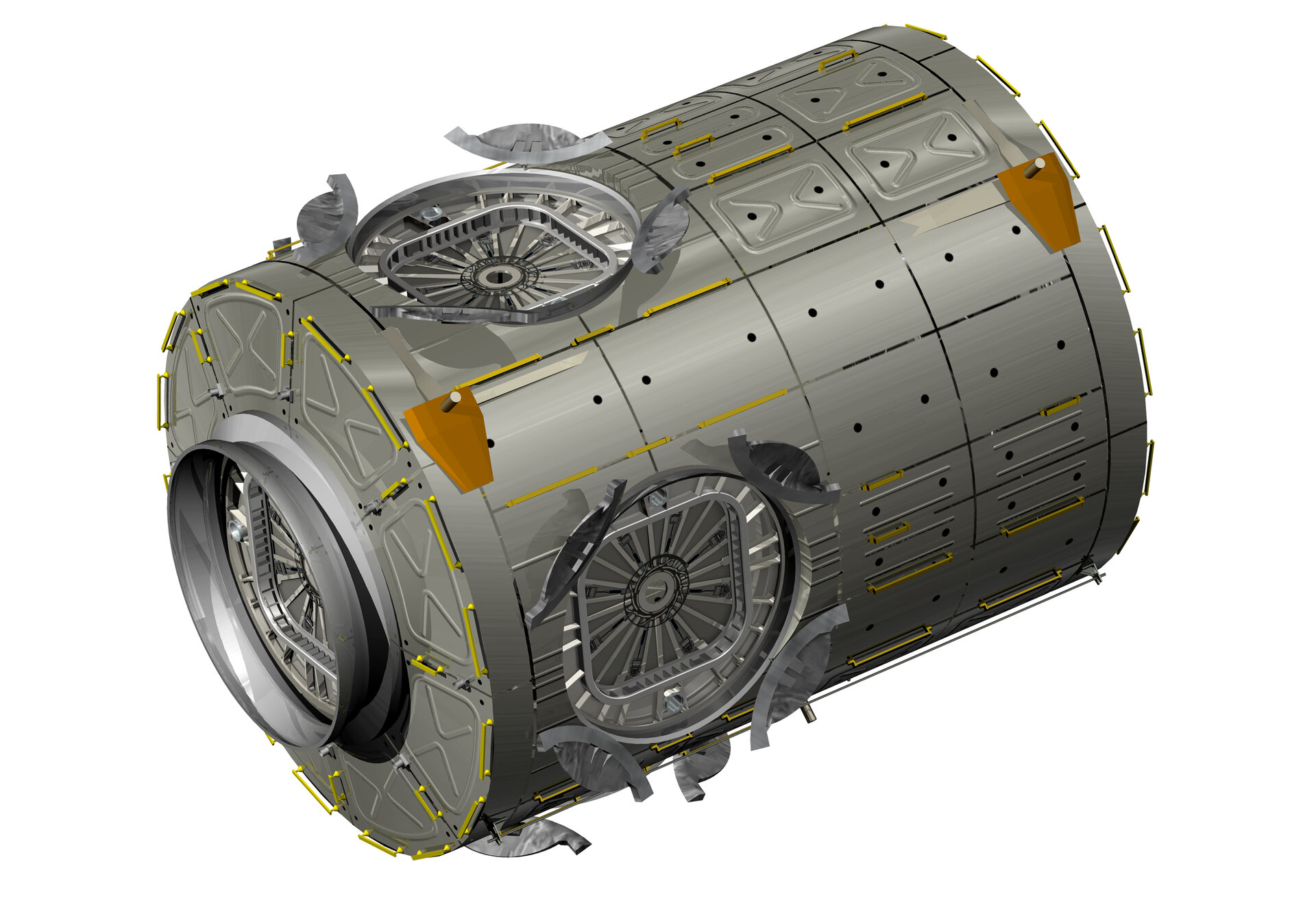
ESA - Node 2: Connecting Module
Node 2 is a pressurised module which serves as a connecting passage between the European Columbus laboratory, the US laboratory Destiny and the Japanese laboratory Kibo.
esa.int →The European Space Agency (ESA) is Europe’s gateway to space. Its mission is to shape the development of Europe’s space capability and ensure that investment in space continues to deliver benefits to the citizens of Europe and the world. Find out more about space activities in our 23 Member States, and understand how ESA works together with their national agencies, institutions and organisations. Space Transportation Ariane Vega Space Rider Future space transportation Boost! Europe's Spaceport Launches from Europe's Spaceport from 2012 Node 2 is a pressurised module which serves as a connecting passage between the European Columbus laboratory, the US laboratory Destiny and the Japanese laboratory Kibo. Node 2 also provides a docking port for the discontinued Space Shuttle and the Japanese HII transfer vehicle, while it also served as an attachment point for the Multi-Purpose Logistics Modules. Node 2 is a working base point for the Space Station robotic arm, Canadarm 2. Node 2 was developed for NASA under an ESA contract with European industry, with Alcatel-Alenia Space as the prime contractor. Responsibility for Node 2 development was assigned to the Italian space agency, ASI. The structural design is based on that of the Multi-Purpose Logistics Modules and the European Columbus laboratory. NASA held a competition amongst schoolchildren in the United States to find a name for the Node 2 module. On 15 March 2007 the new name Harmony was announced. Node 2, or Harmony, was launched in October 2007 on Space Shuttle flight STS-120 (ISS Assembly Flight 10A).
Excerpt from a page describing this subject · 27,346 chars · not written by Vinony
Wikidata facts
- Part of
- US Orbital Segment
- Operator
- NASA
- Country of origin
- Italy
- Diameter
- 4.480
- Mass
- 15300
- Manufacturer
- Thales Alenia Space
- Image
- Iss016e012617.jpg
- Length
- 6.706
- Significant event
- rocket launch
- Has parts of class
- common berthing mechanism
Show 6 more facts
- Commons category
- Harmony (ISS module)
- described at URL
- www.esa.int/Our_Activities/Human_Spaceflight/International_Space_Station/Node_2_Connecting_Module
- volume as quantity
- 70
- space launch vehicle
- Space Shuttle
- UTC date of spacecraft launch
- 2007-10-23
- start point
- Kennedy Space Center Launch Complex 39A
Sources (9)
via Wikidata · CC0
Article · 中文
和谐号节点舱(英語:Harmony、香港称「和谐号节点舱」)是国际空间站的一个组件,是该空间站总共三个节点舱中的第二个。该舱段在2007年10月23日由发现号航天飞机在STS-120任务中成功发射。在正式命名发射前,该舱段一直被代称为“节点舱2”。2007年11月14日,该舱与命运号实验舱对接成功。 和谐号节点舱由由欧洲空间局与意大利宇航局共同管理和拥有的泰雷兹阿莱尼亚宇航公司为美国国家航空航天局建造,并归属美国航空航天局所有和操纵。和谐号节点舱源于欧洲航天局与美国航空航天局之间的以物易物的合作协定,欧洲航天局保证出资建造节点舱2(和谐号节点舱)、节点舱3以及自动运送飞船,以换取使用美国航空航天局拥有的国际空间站上的组件。 和谐号將提供空氣、電能、水和其它系統支援國際太空站其他八個艙組,並和哥倫布實驗艙及希望號實驗艙組對接。
Abstract from DBpedia / Wikipedia · CC BY-SA