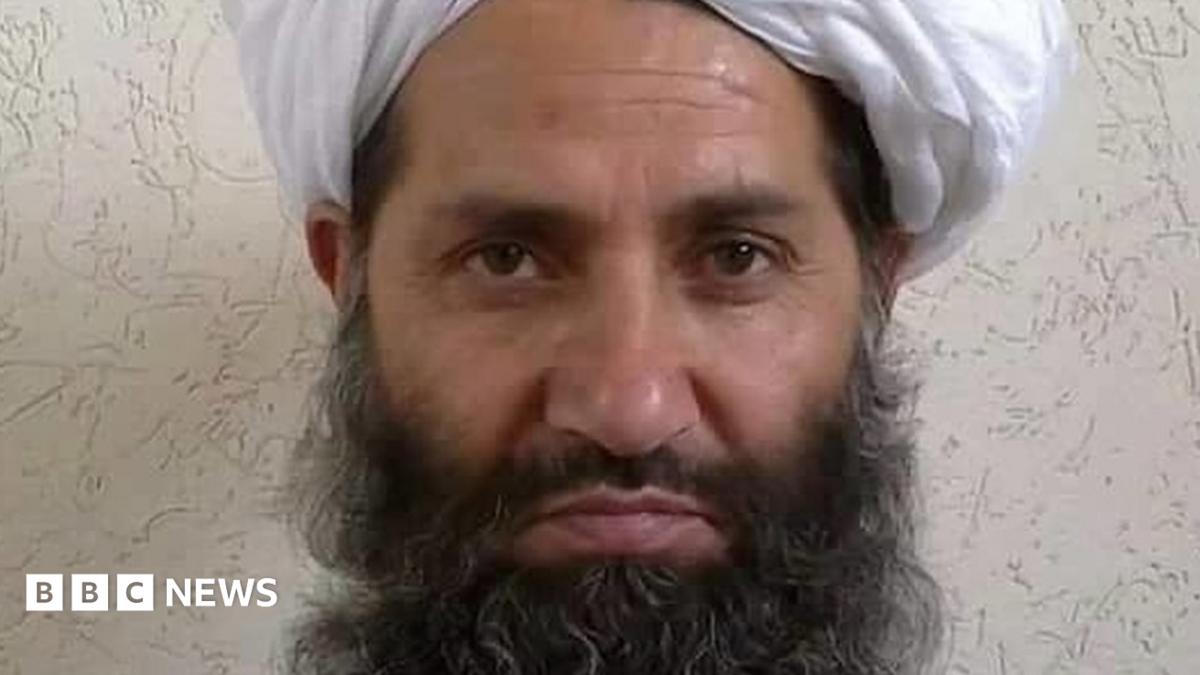
File:Hibatullah_Akhundzada.jpg · Wikimedia Commons · See Wikimedia Commons
Hibatullah Akhundzada
Also known as Haibatullah Akhunzada, Haybatullah Akhundzada
Supreme Leader of Afghanistan since 2021
AI overview
Hibatullah Akhundzada is the supreme leader of Afghanistan's Taliban government, a position he has held since 2021. As the top authority in the country, his decisions shape Afghanistan's policies and direction following the Taliban's return to power.
AI-generated from the Wikipedia summary — may contain errors.
Recent publications · Crossref
5 total works indexed
- Infection and mortality of healthcare workers worldwide from COVID-19: a systematic review
· 2020 · cited 510x
- Immunogenicity of standard and extended dosing intervals of BNT162b2 mRNA vaccine
· 2021 · cited 312x
- The Duration, Dynamics, and Determinants of Severe Acute Respiratory Syndrome Coronavirus 2 (SARS-CoV-2) Antibody Responses in Individual Healthcare Workers
· 2021 · cited 237x
- Two doses of SARS-CoV-2 vaccination induce robust immune responses to emerging SARS-CoV-2 variants of concern
· 2021 · cited 158x
- T-cell and antibody responses to first BNT162b2 vaccine dose in previously infected and SARS-CoV-2-naive UK health-care workers: a multicentre prospective cohort study
· 2022 · cited 139x
via Crossref · CC0
Quotes
- “A woman is not property, but a noble and free human being. No one can give her to anyone in exchange for a peace deal and/or to end animosity.”
~24 min read
Article
Mullah Hibatullah Akhundzada (born 19 October 1967), also alternatively spelled as Haibatullah Akhunzada, is an Afghan cleric who is the supreme leader of Afghanistan under the Taliban government. He has led the Taliban since 2016, and came to power with its victory over U.S.-backed forces in the 2001–2021 war. A highly reclusive figure, he has almost no digital footprint except for two photographs and several audio recordings of speeches.
Akhundzada is well known for his fatwas on Taliban matters. Unlike many Taliban leaders, Akhundzada does not have any experience in combat, although one of his sons was a suicide bomber. He was an Islamic judge of the Sharia courts of the 1996–2001 Taliban government. He was chosen to lead the Taliban’s shadow court system at the start of the Taliban insurgency, and remained in that post until being elected supreme leader of the Taliban in May 2016. Ayman al-Zawahiri, the leader of al-Qaeda, backed Akhundzada as the Amir al-Mu'minin, which strengthened Akhundzada's jihadist reputation among the Taliban's allies. In 2019, Akhundzada appointed Abdul Ghani Baradar to lead peace talks with the U.S., which led to the 2020 signing of the Doha Agreement that cleared the way for the full withdrawal of United States troops from Afghanistan.
Gallery (3)
Connections
Categories
1967 births20th-century births21st-century heads of state of AfghanistanAfghan anti-communistsAfghan expatriates in PakistanAfghan IslamistsAfghan judgesAfghan revolutionariesAfghan Sunni MuslimsEmirsFugitives wanted by the International Criminal CourtHibatullah AkhundzadaLeaders who took power by coup