Encyclopedia of Life · EOL (see source)
Histiophryne
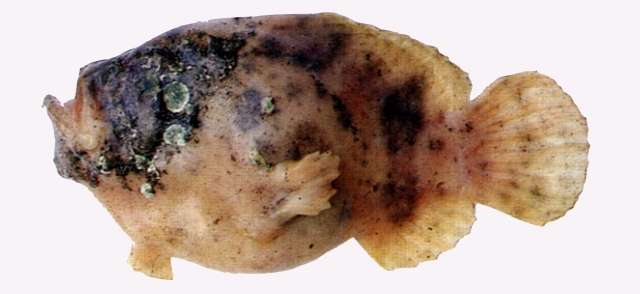
Sign in to saveHistiophryne is a genus of marine ray-finned fishes, the only member of the subfamily Histiophryninae in the family Antennariidae, the frogfishes.'''''' These fishes are found in waters ranging from Taiwan to South Australia. There are currently five known species. These fishes are easily distinguished from other anglerfishes as having a reduced (or missing) luring appendage, a highly evolved form of the first dorsal fin spine.
Species
GENUS
- KingdomAnimalia
- PhylumChordata
- ClassTeleostei
- OrderLophiiformes
- FamilyAntennariidae
Histiophryne es un género de peces que pertenece a la familia Antennariidae, vive en aguas que comprenden Taiwán y Australia del sur.
via GBIF
Museum specimens
- Specimen records
- 5
- Family
- Antennariidae
- Collections
- WAM, AM, MNHN
- Recorded in
- Philippines, Indonesia, Unknown Or Invalid, Nouvelle-Caledonie
Wikidata facts
- Instance of
- taxon
- Image
- Psychedelic frogfish 08Am6A1b.jpg
Show 4 more facts
- topic's main category
- Category:Histiophryne
- Commons category
- Histiophryne
- taxon name
- Histiophryne
- taxon rank
- genus
Sources (1)
via Wikidata · CC0
~6 min read
Encyclopedic overview
12 sectionsContents
- Taxonomy
- Etymology
- Species
- Features
- General Body Plan
- Dorsal Spines
- Dermal Spinules
- Movement
- Feeding
- Reproduction
- Location
- References
Histiophryne is a genus of marine ray-finned fishes, the only member of the subfamily Histiophryninae in the family Antennariidae, the frogfishes.'''' These fishes are found in waters ranging from Taiwan to South Australia. There are currently five known species. These fishes are easily distinguished from other anglerfishes as having a reduced (or missing) luring appendage, a highly evolved form of the first dorsal fin spine.
==Taxonomy== Histiophryne was first proposed as a monospecific genus in 1863 by the American biologist Theodore Gill with Chironectes bougainvilli designated as its type species. C. bougainvilli was first formally described by the French zoologist Achille Valenciennes with its type locality given as "Indian seas". Some authorities classify this genus in the subfamily Histiophryninae within the family Antennariidae., while others recognise it as the family Histiophrynidae. However, the 5th edition of Fishes of the World does not recognise subfamilies within the Antennariidae, classifying the family within the suborder Antennarioidei within the order Lophiiformes, the anglerfishes.
Excerpted from Wikipedia’s “Histiophryne” article, available under the CC BY-SA 4.0 licence.