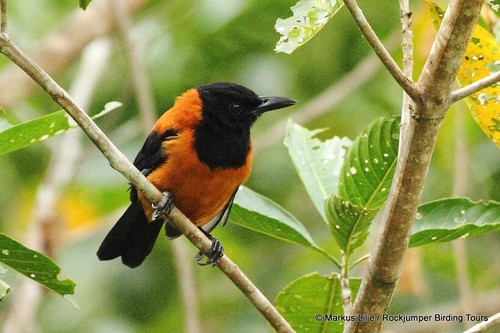
(c) Markus Lilje, some rights reserved (CC BY-NC-ND), uploaded by Markus Lilje · cc-by-nc-nd
OverviewAI-generated
The hooded pitohui, scientifically named *Pitohui dichrous*, is a species within the *Pitohui* genus. It belongs to the class Aves and is also referred to by the common names pitohwi penddu, Zweifarbenpitohui, and Pitohuí Bicolor. This bird has a recorded mass of 93 and a litter size of 1.
Its IUCN conservation status is listed as Least Concern, a designation recorded in 2018. The species has 45 observations documented on iNaturalist.
Synthesized by Vinony from 18 facts across 4 sources: Wikidata, iNaturalist, IUCN Red List, Vinony graph. Generated from structured data (not the Wikipedia text) and checked against those facts — may still contain errors.
Species
Least ConcernHooded Pitohui
species
黑头林鵙鹟(学名:Pitohui dichrous)是新几内亚的一种鸣禽,是林鵙鶲屬的一种,头部、翅膀和尾羽为黑色,其它部分为橙色。皮肤和羽毛能分泌树蛙毒素(亦见于箭毒蛙体内)族神经毒性生物碱。这被认为是一种化学防护避免体表寄生虫和视觉掠食者如蛇或人类,毒素可能来自他们的食用的甲虫。
via IUCN
Wikidata facts
Show 7 more facts
- taxon rank
- species
- IUCN conservation status
- Least Concern
- taxon name
- Pitohui dichrous
- Commons category
- Pitohui dichrous
- taxon common name
- pitoui-de-capuz
- litter size
- 1
- short name
- P. dichrous
via Wikidata · CC0
~15 min read
Encyclopedic overview
The hooded pitohui (Pitohui dichrous) is a species of bird in the genus Pitohui found in New Guinea. It was long thought to be a whistler (Pachycephalidae) but is now known to be in the Old World oriole family (Oriolidae). Within the oriole family, this species is most closely related to the variable pitohuis in the genus Pitohui, and then the figbirds.
A medium-sized songbird with reddish-brown and black plumage, this species is one of the few known poisonous birds, containing a range of batrachotoxin compounds in its skin, feathers and other tissues. These toxins are thought to be derived from their diet and may function both to deter predators and to protect the bird from parasites. The close resemblance of this species to other unrelated birds also known as pitohuis which are also poisonous is an example of convergent evolution and Müllerian mimicry. Their appearance is also mimicked by unrelated non-poisonous species, a phenomenon known as Batesian mimicry. The toxic nature of this bird is well known to local hunters, who avoid it. It is one of the most poisonous species of pitohui, but the toxicity of individual birds can vary geographically.
Excerpted from Wikipedia’s “hooded pitohui” article, available under the CC BY-SA 4.0 licence.