
File:David_Collins_and_Eoin_Kelly_(Tipperary).jpg · Wikimedia Commons · See Wikimedia Commons
Key facts
- Sport.image
- David Collins and Eoin Kelly (Tipperary).jpg
- Sport.caption
- David Collins of Galway holds off Tipperary's Eoin Kelly in the 2014 National Hurling League
- Sport.union
- Gaelic Athletic Association
- Sport.first
- Pre-medieval origins; first codified match played 27 January 1883 in Dublin, Ireland
- Sport.contact
- Yes
- Sport.team
- 26 (15 and 11 substitutes)
- Sport.mgender
- Camogie is the female variant
- Sport.equipment
- '''', hurley, helmet
- Sport.olympic
- Demonstration sport 1904
- Sport.paralympic
- No
- Intangible heritage.ICH
- Hurling
- Intangible heritage.Countries
- Ireland
- Intangible heritage.ID
- 01263
- Intangible heritage.Region
- ENA
- Intangible heritage.Year
- 2
- Intangible heritage.Session
- 13th
- Intangible heritage.List
- Representative
via Wikipedia infobox
Described at
Hurling - UNESCO Intangible Cultural Heritage
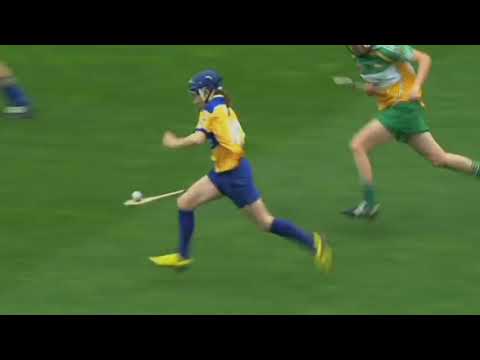
ich.unesco.org →Hurling, or Camogie (a form of Hurling played by women), is a field game played by two teams which dates back 2,000 years and features strongly in Irish mythology, most notably in the epic saga of Cú Chulainn. It is played throughout the island of Ireland, particularly in more fertile agricultural areas, as well as overseas. Traditionally, the number of players in the game was unregulated and games were played across open fields. Nowadays, there are fifteen players on adult teams and the game is played on a clearly marked pitch. Players use a wooden stick (hurley), similar to a hockey stick but with a flat end, and a small ball (sliotar), with the aim being to use the hurley to strike the sliotar and hit it between the opposing team’s goalposts. The primary bearers and practitioners are the players, known as ‘hurlers’ (male) and ‘camógs’ (female). Hurling is considered as an intrinsic part of Irish culture and plays a central role in promoting health and wellbeing, inclusiveness and team spirit. Today, the skills are promoted and transmitted through coaching and games in schools and clubs. As the custodians of Hurling, the Gaelic Athletic Association and the Camogie Association, both volunteer-led organizations, play a central role in transmitting the skills and values associated with Hurling. 1. Knowledge and practices concerning nature and the universe (308) 2. Oral traditions and expressions (384) 3. Performing arts (411) 4. Social practices, rituals and festive events (584) 5. Traditional craftsmanship (460)
Excerpt from a page describing this subject · 7,262 chars · not written by Vinony
Wikidata facts
- Subclass of
- Gaelic games
- Country of origin
- Republic of Ireland
- Duration
- 70
- Image
- Scoring in Gaelic games - H shaped posts.png
Show 6 more facts
- Commons category
- Hurling
- topic's main category
- Category:Hurling
- Commons gallery
- Hurling
- indigenous to
- Ireland
- different from
- cammag
- described at URL
- nationalinventoryich.chg.gov.ie/hurling-iomanaiocht
via Wikidata · CC0
Article · Deutsch
Hurling (irisch: Iomáint, Iománaíocht) ist eine Mannschaftssportart keltischen Ursprungs, die mit Schlägern und einem Ball gespielt wird. Sie wird hauptsächlich in Irland gespielt und ist eine der schnellsten Mannschaftssportarten der Welt. Es gibt Parallelen zum schottischen Shinty. Die Frauenvariante des Hurling heißt Camogie. Das Ziel des Spiels ist es, mehr Tore und Punkte zu erzielen als die gegnerische Mannschaft. Eine Mannschaft besteht aus 15 Spielern. Seit 2018 ist Hurling immaterielles Weltkulturerbe der UNESCO.
Abstract from DBpedia / Wikipedia · CC BY-SA