Hydriastele · Kew POWO · Kew Plants of the World Online
Hydriastele
Sign in to saveHydriastele is a diverse and widespread genus of flowering plant in the palm family found throughout northern Australia, Melanesia, Polynesia, and Southeast Asia. It consisted of just nine species until 2004, when molecular research, supported by morphologic similarities, led taxonomists to include the members of the Gulubia, Gronophyllum, and Siphokentia genera. About 40 species are now recognized.
Species
GENUS
- KingdomPlantae
- PhylumTracheophyta
- ClassLiliopsida
- OrderArecales
- FamilyArecaceae
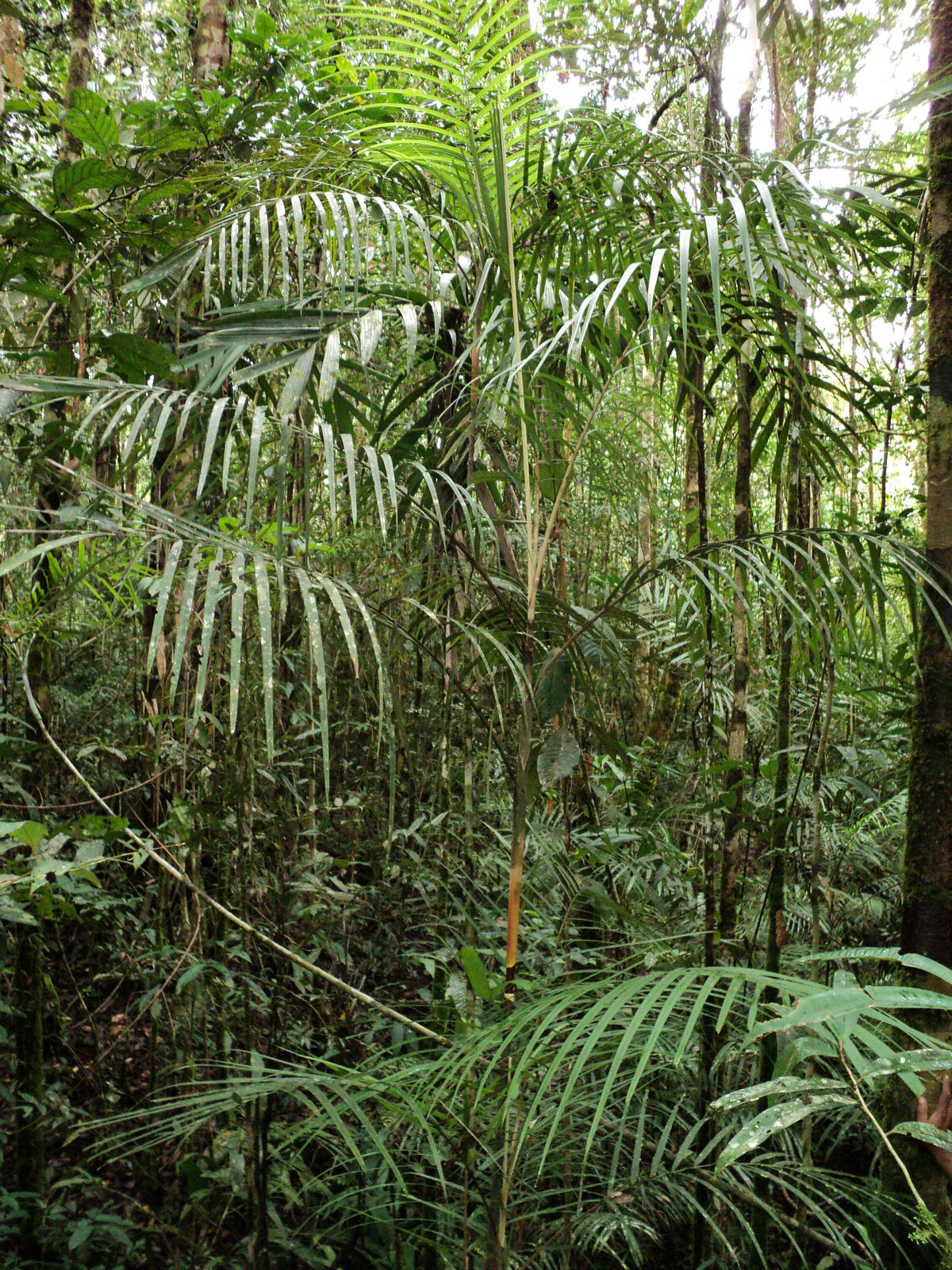
General: Hydriastele species range from slender understorey palms
via GBIF · Kew POWO
Museum specimens
- Specimen records
- 156
- With media
- 153
- Family
- Arecaceae
- Collections
- MO
- Recorded in
- Indonesia, Papua New Guinea
Wikidata facts
- Instance of
- taxon
- Parent taxon
- Arecaceae
- Image
- Gronophyllum pinangoides - Denver Botanic Gardens - DSC00902.JPG
Show 6 more facts
- Commons category
- Hydriastele
- taxon name
- Hydriastele
- taxon rank
- genus
- topic's main category
- Category:Hydriastele
- taxon common name
- 丛生槟榔属
Sources (1)
via Wikidata · CC0
~5 min read
Encyclopedic overview
8 sectionsContents
- Description
- Taxonomy
- Species list
- Distribution and habitat
- Cultivation and uses
- References
- External links
- Notes
Hydriastele is a diverse and widespread genus of flowering plant in the palm family found throughout northern Australia, Melanesia, Polynesia, and Southeast Asia. It consisted of just nine species until 2004, when molecular research, supported by morphologic similarities, led taxonomists to include the members of the Gulubia, Gronophyllum, and Siphokentia genera. About 40 species are now recognized.
==Description== The palms now classified in this genus have uniting traits but are nonetheless diverse. Pleonanthy, monoecy, crownshafts, peduncular bracts, and the lack of armament characterize all members. The trunks may be solitary or suckering and may be diminutive to robust, spanning a range of heights. The leaves are pinnate and widely varied. The inflorescences are branched to three orders with both male and female flowers, some of which are beetle-pollinated. The fruit may be ellipsoidal or spherical and colored yellow, orange, red, purple, or black when ripe, each with a single seed.
Excerpted from Wikipedia’s “Hydriastele” article, available under the CC BY-SA 4.0 licence.