File:ThreeGorgesDam-China2009.jpg · Wikimedia Commons · See Wikimedia Commons
hydroelectricity
Sign in to saveAlso known as hydroelectric power
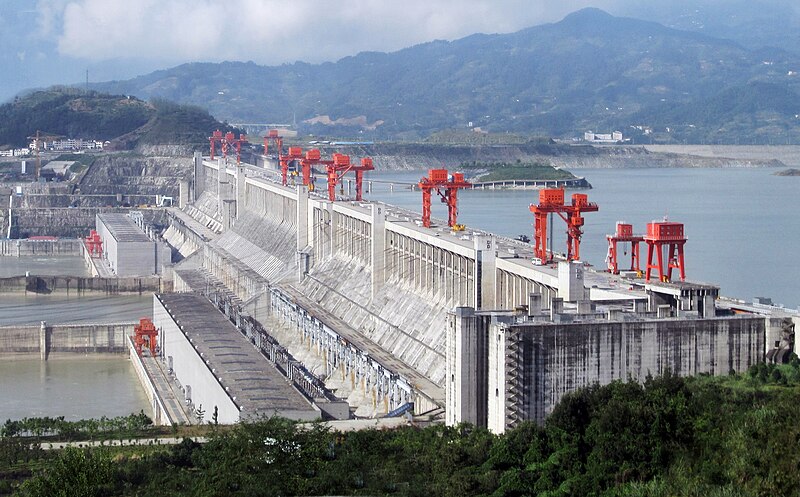
upright=1.35|thumb|The Three Gorges Dam in [[Central China is the world's largest power-producing facility of any kind.]]
Hydroelectricity is power generated by flowing or falling water, and the Three Gorges Dam in Central China demonstrates the scale this technology can reach, as it is the world's largest power-producing facility of any kind. It matters because it represents a major source of electrical energy that can be produced on an enormous scale.
AI-generated from the Wikipedia summary — may contain errors.
Wikidata facts
- Instance of
- industry
- Subclass of
- sustainable energy
- Part of
- energy industry
- Image
- ThreeGorgesDam-China2009.jpg
Show 5 more facts
- different from
- hydropower
- Commons category
- Hydroelectricity
- topic's main category
- Category:Hydroelectricity
- carbon footprint
- 24
- on focus list of Wikimedia project
- WikiProject Climate change
via Wikidata · CC0
~34 min read
Encyclopedic overview
39 sectionsContents
- History
- Future potential
- Modernization of existing infrastructure
- Generating methods
- Conventional (dams)
- Pumped-storage
- Run-of-the-river
- Tide
- Conduit
- Sizes, types and capacities of hydroelectric facilities
- Large facilities
- Small
- Micro
- Pico
- Underground
- Calculating available power
- Properties
- Advantages
- Flexibility
- High value power
- Suitability for industrial applications
- Reduced CO<sub>2</sub> emissions
- Other uses of the reservoir
- Disadvantages
- Ecosystem damage and loss of land
- Drought and water loss by evaporation
- Siltation and flow shortage
- Methane emissions (from reservoirs)
- Relocation
- Failure risks
- Comparison and interactions with other methods of power generation
- Nuclear power
- Wind power
- Hydro power by country
- Economics
- See also
- References
- Sources
- External links
upright=1.35|thumb|The Three Gorges Dam in [[Central China is the world's largest power-producing facility of any kind.]]
Hydroelectricity, or hydroelectric power, is electricity generated from hydropower. Hydropower supplies 15% of the world's electricity, almost 4,210 TWh in 2023, which is more than all other renewable sources combined and also more than nuclear power. Hydropower can provide large amounts of low-carbon electricity on demand, making it a key element for creating secure and clean electricity supply systems. A hydroelectric power station that has a dam and reservoir is a flexible source, since the amount of electricity produced can be increased or decreased in seconds or minutes in response to varying electricity demand. Once a hydroelectric complex is constructed, it produces no direct waste, and almost always emits considerably less greenhouse gas than fossil fuel-powered energy plants. However, when constructed in lowland rainforest areas, where part of the forest is inundated, substantial amounts of greenhouse gases may be emitted.
Excerpted from Wikipedia’s “hydroelectricity” article, available under the CC BY-SA 4.0 licence.
Gallery (36)
On the map
21 mapped locations
Available in 79 languages
- Español
- Français
- 中文
- 日本語
- Русский
- Português
- Italiano
- العربية
- हिन्दी
- Afrikaans
- Albanian
- Armenian
- Assamese
- Azerbaijani
- Bahasa Indonesia
- Bangla
- Basque
- Bikol
Show 60 more
- Bosnian
- Burmese
- Catalan
- Chuvash
- Croatian
- Czech
- Esperanto
- Estonian
- Filipino
- gcr
- Greek
- Hebrew
- Ido
- Inuktitut
- Irish
- Kannada
- Kazakh
- Kurdish
- Lao
- Latin
- Latvian
- Lithuanian
- Malay
- Malayalam
- Manx
- Marathi
- Mongolian
- Nederlands
- Nepali
- Newari
- Odia
- Pashto
- Piedmontese
- Punjabi
- Quechua
- Romanian
- Scots
- Scottish Gaelic
- Serbian
- simple
- Sindhi
- Sinhala
- Svenska
- Swahili
- Tajik
- Tamil
- Telugu
- Tiếng Việt
- Türkçe
- Ukrainian
- Urdu
- Waray
- Western Panjabi
- Wu Chinese
- Yiddish
- zh_min_nan
- zh_yue
- فارسی
- ไทย
- 한국어
via Wikidata sitelinks · CC0