Encyclopedia of Life · EOL (see source)
Hymenophyllaceae
Sign in to saveThe Hymenophyllaceae, the filmy ferns and bristle ferns, are a family of two to nine genera (depending on classification system) and about 650 known species of ferns, with a subcosmopolitan distribution, but generally restricted to very damp places or to locations where they are wetted by spray from waterfalls or springs. Fossil evidence shows that ferns of the family Hymenophyllaceae have existed since at least the Upper Triassic.
Species
FAMILY
- KingdomPlantae
- PhylumTracheophyta
- ClassPolypodiopsida
- OrderHymenophyllales
- FamilyHymenophyllaceae
コケシノブ科 分類 界 : 植物界 Plantae 門 : シダ植物門 Pteridophyta 綱 : シダ綱 Pteridopsida 目 : コケシノブ目 Hymenophyllales 科 : コケシノブ科 Hymenophyllaceae 属 本文参照 コケシノブ科 (Hymenophyllaceae) は、小型の、ごく薄い葉をもつシダ植物の一群である。 特徴[編集] コケシノブ科は、シダ植物門に属するシダの一群で、独特の外見をもつ。大部分は小型で、日本本土で見かけるものは、長い匍匐茎を持っており、湿潤な岩や樹皮に着生する。葉はごく薄く、ほとんど半透明で、乾燥すると丸まる。木陰でコケと混じって岩面を覆っているのを見かけることが多い。英語では葉の形状からfilmy ferns、つまり「フィルム状のシダ」と呼ばれ、イングランドの中核的植物園であるキューガーデンにはこの仲間のみを保存栽培および展示している温室が備えられている。 葉が薄く見えるのは、葉身の細胞層が一層から成っているためである。そのため、気孔や細胞間隙と言った一般の葉にあるような構造はない。そもそもこうした組織構造は、表裏両面を表皮に包まれた多層構造の葉に於いて、内側の葉肉にある光合成組織に向けて効率的に大気中の二酸化炭素を拡散させる必要性から進化してきたもので、そうした多層構造をもった光合成組織を喪失したコケシノブ科植物にとって必要性を欠いているわけである。また、胞子のう群の形も変わっていて、多くのシダ類のように葉の裏ではなく、葉脈の先端、葉の縁にあり、種によってはそこから葉の表面側に出る。包膜は二枚の弁に包まれた形(二弁状)やコップ型と、これも特殊である。 茎は、日本本土のものでは長く匍匐するものが多いが、必ずしもそうとは限らず、ごく短く這うもの、短く直立するものなど、さまざまである。いずれにせよ、たいていは毛を生やしている。葉は大小様々で、小さいものでは丸い単葉のものもある。大きいものはたいてい細かく分かれ、五回羽状複葉などというのもある。葉柄は細くて木質化して硬い。また、茎との間に関節がない。 配偶体たる前葉体はシダ植物に広くみられるハート形の構造をとらず、分岐を繰り返す糸状からリボン状で、非常に成長が遅いことが知られている。 分布と系統[編集] 世界の、主に熱帯域を中心に分布する。世界で約600種が知られ、日本では30種ほどが知られている。 先述のように、特殊な点が多い群である。胞子のう群が葉の縁に出る点などからタカワラビ科に近いとも言われる。しかし、他のシダ類との類縁関係については定説がない。いずれにせよ、熱帯雨林を中心に着生植物などの方向へ進化して大きく分化した群であると言われる。 分類[編集] ウィキメディア・コモンズには、コケシノブ科に関連するカテゴリがあります。 ウィキス
via GBIF · Kew POWO
Museum specimens
- Specimen records
- 502
- With media
- 221
- Family
- Hymenophyllaceae
- Collections
- YPM, INECOL, BRIT, RSA, CAS, WIS
- Recorded in
- United States, Mexico, Philippines, New Caledonia, Malaysia, New Zealand, Madagascar, Peru
Wikidata facts
- Instance of
- taxon
- Parent taxon
- Hymenophyllales
- Image
- WP-Hymenophyllum-Exkursion nach Berdorf (Luxemburgexkursion) 011.jpg
Show 7 more facts
- taxon common name
- 膜蕨科
- Commons category
- Hymenophyllaceae
- taxon rank
- family
- taxon name
- Hymenophyllaceae
- topic's main category
- Category:Hymenophyllaceae
- described by source
- Encyclopædia Britannica 11th edition
Sources (1)
via Wikidata · CC0
~6 min read
Encyclopedic overview
5 sectionsContents
- Description
- Taxonomy
- Genera
- Distribution and habitat
- References
The Hymenophyllaceae, the filmy ferns and bristle ferns, are a family of two to nine genera (depending on classification system) and about 650 known species of ferns, with a subcosmopolitan distribution, but generally restricted to very damp places or to locations where they are wetted by spray from waterfalls or springs. Fossil evidence shows that ferns of the family Hymenophyllaceae have existed since at least the Upper Triassic.
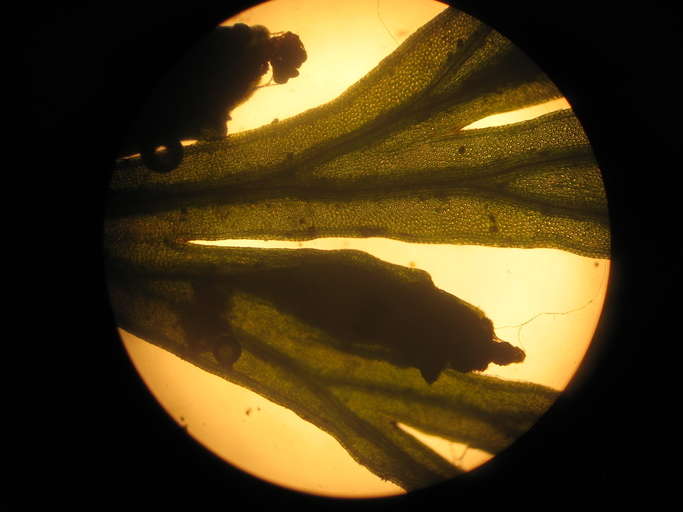
==Description== They often appear as very dark green or even black clumps and may be mistaken for a robust moss or liverwort. The rhizome is usually thin and wiry and the fronds variously pinnate with a single strand ("nerve") of vascular tissue. As in most ferns, young fronds have circinate vernation. In most species, the frond, apart from the vascular tissue, is only a single cell thick, and they do not have any stomata. The cuticle is also greatly reduced or absent, leaving filmy ferns poikilohydric and very susceptible to desiccation where a reliable water supply is not present. The leaves occasionally bear hairs, but scales are generally not present. The sori are borne at the leaf margins at the end of the nerve. They are protected by conical, bivalvate, or tubular indusia. Within the sori, sporangia mature starting at the apex of the sorus and progressing to the base. They have a continuous, oblique annulus and release round, green trilete spores. The spores grow into thread- or ribbon-like gametophytes; in many species, the gametophyte has an extended, independent lifespan and can reproduce asexually by fragmenting or releasing gemmae.
Excerpted from Wikipedia’s “Hymenophyllaceae” article, available under the CC BY-SA 4.0 licence.