
Also known as Ifa
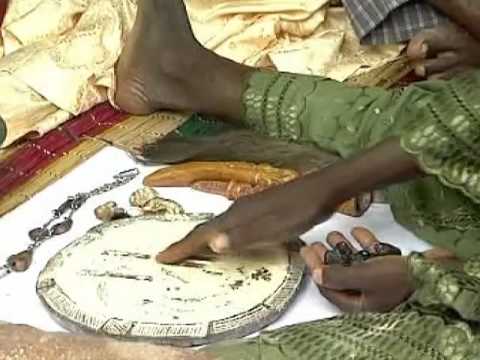
thumb|right|300px|A divination tray (Ọpọ́n Ifá) on which cowrie shells rests, as are used for Ifá divination
Described at
Ifa divination system - UNESCO Intangible Cultural Heritage
ich.unesco.org →The Ifa divination system, which makes use of an extensive corpus of texts and mathematical formulas, is practiced among Yoruba communities and by the African diaspora in the Americas and the Caribbean. The word Ifa refers to the mystical figure Ifa or Orunmila, regarded by the Yoruba as the deity of wisdom and intellectual development. The Ifa literary corpus, called odu, consists of 256 parts subdivided into verses called ese, whose exact number is unknown as they are constantly increasing (there are around 800 ese per odu). Each of the 256 odu has its specific divination signature, which is determined by the babalawo using sacred palm-nuts and a divination chain. The ese, considered the most important part of Ifa divination, are chanted by the priests in poetic language. The ese reflect Yoruba history, language, beliefs, cosmovision and contemporary social issues. The knowledge of Ifa has been preserved within Yoruba communities and transmitted among Ifa priests. Under the influence of colonial rule and religious pressures, traditional beliefs and practices were discriminated against.The Ifa priests, most of whom are quite old, have only modest means to maintain the tradition, transmit their complex knowledge and train future practitioners. As a result, the youth and the Yoruba people are losing interest in practising and consulting Ifa divination, which goes hand-in-hand with growing intolerance towards traditional divination systems in general. 1. Social practices, rituals and festive events (584) 2. Traditional craftsmanship (460)
Excerpt from a page describing this subject · 8,387 chars · not written by Vinony
Wikidata facts
Show 2 more facts
- described at URL
- ich.unesco.org/es/RL/00146
- intangible cultural heritage status
- Masterpieces of the Oral and Intangible Heritage of Humanity
Sources (1)
via Wikidata · CC0
~21 min read
Encyclopedic overview
18 sectionsContents
- Definitions
- Belief
- Theology
- System
- Odù Ifá
- Messenger sign
- Babalawos
- Initiation
- History
- West African origins
- In Cuba
- In the United States
- In Brazil
- Reception
- References
- Citations
- Sources
- Further reading
thumb|right|300px|A divination tray (Ọpọ́n Ifá) on which cowrie shells rests, as are used for Ifá divination
Ifá or Fá is a geomantic system originating from Yorubaland in West Africa. It originates within the traditional religion of the Yoruba people. It is also practiced by followers of West African Vodun and certain African diasporic religions such as Cuban Santería.
Excerpted from Wikipedia’s “Ifá” article, available under the CC BY-SA 4.0 licence.