Also known as JA, Commonwealth of Jamaica
país no mar do Caribe
Jamaica is an island country in the Caribbean that is the third-largest island in the region, located south of Cuba and west of Hispaniola. With millions of people, it is one of the most populous Anglophone countries in the Americas, and its capital is Kingston.
AI-generated from the Wikipedia summary — may contain errors.
via Open-Meteo
With 2.8 million people, Jamaica is the third most populous Anglophone country in the Americas, after the United States and Canada. Like Canada, New Zealand and Australia, Jamaica is a Commonwealth realm (the British monarch is the head of state), but it is an independent sovereign nation.
Jamaica exports coffee, papaya, bauxite, gypsum, limestone and sugar cane.
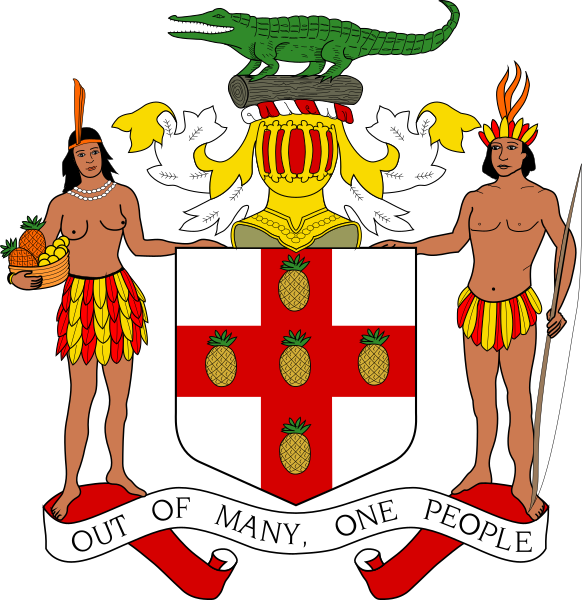
Its motto and nickname for the country is "Out of Many, One People".
thumbnail|Sunny Lodge at Waldersston was built in 1892 by missionaries.
thumb|Visa policy of Jamaica Except for Canada, citizens of Commonwealth countries require a passport valid for at least 6 months, a return ticket, and sufficient funds. Canadian citizens require a passport or a birth certificate and ID card. No visa is required except for citizens of Sri Lanka, Nigeria, Pakistan, and Sierra Leone.
Citizens of the United States, including those visiting by cruise ship, require a passport, but no visa is required for a stay of up to six months. Passports can have expired, as long as they expired less than a year ago.
German citizens can stay for 90 days without a visa. Similar terms probably apply to other countries in the Schengen area.
Japanese citizens can stay for 30 days without a visa.
Since 27 May 2014, Chinese citizens (including Macau) can also stay for 30 days without a visa. However, it's for tourist purposes only; to travel to Jamaica for any other reason, they still need a visa.
Most other nationalities need visas.
thumb|Planes at Sangster International Airport
thumb|Bob Marley mausoleum in Nine Mile Nine Mile - where Bob Marley was born and now buried. The journey up into the mountains lets you experience the heart of the country. Spend a day at Negril 7-Mile Beach and finish off at Rick's Cafe for a spectacular sunset and watch even more fantastic cliff diving.
Hiking, camping, snorkelling, zip-lining, horse back riding, backpacking, swimming, jet skiing, sleeping, scuba diving, kite surfing, visiting the Giddy house, drinking and swimming with dolphins.
Jamaica (pronunciado em inglês: [dʒəˈmeɪkə]) é um país insular situado no mar do Caribe (em português europeu, Mar das Caraíbas) que compreende a terceira maior ilha das Grandes Antilhas. A Jamaica é o quinto maior país insular do Caribe (Caraíbas) Os povos indígenas da ilha, os taínos, chamavam-na de Xaymaca em aruaque, ou seja, a "terra da madeira e da água" ou a "terra dos mananciais". Depois de tornar uma possessão espanhola conhecida como Santiago, em 1655 a ilha passa ao domínio britânico e é nomeada como "Jamaica". O país conseguiu sua completa independência do Reino Unido apenas em 6 de agosto de 1962. Com 2,8 milhões de pessoas, é o terceiro país anglófono mais populoso na América, depois dos Estados Unidos e do Canadá. Kingston é a maior cidade e a capital do país, com uma população que ronda um milhão de habitantes. A Jamaica tem uma grande diáspora em todo o mundo, devido à emigração do país. Sendo um país de renda média alta, com uma economia fortemente dependente do turismo, a Jamaica possui uma média de 4,3 milhões de turistas por ano. O país tem um desempenho favorável nas medidas de liberdade de imprensa e governança democrática, tendo ocupado a primeira posição no Relatório Mundial da Felicidade entre os países do Caribe em 2021. A Jamaica é um reino da Commonwealth, com o rei Carlos III como seu monarca e chefe de Estado. Seu representante designado no país é o governador-geral da Jamaica, atualmente Patrick Allen. O chefe de governo e primeiro-ministro da Jamaica é Andrew Holness. A Jamaica é uma monarquia constitucional parlamentar com o poder legislativo investido no parlamento bicameral nacional, que consiste de um senado e uma câmara composta por representantes eleitos pela população.
Abstract from DBpedia / Wikipedia · CC BY-SA
6 mapped locations
Discovered by embedding cosine similarity (sentence-transformers MiniLM, 384-dim).
via REST Countries
via World Bank Open Data · CC BY 4.0
via Wikimedia Pageviews API
via Wikipedia infobox
via PubMed
via Wikidata · CC0
Dunn's River Falls is a must see and do if visiting Jamaica. It is located in Ocho Rios. The cascading falls are gorgeous. You can actually climb right up the falls. It’s an amazing experience! Give it a try if you're up for a breathtaking challenge.
Mystic Mountain has a bob-sledding ride combined with options for zip-lining, a water slide and an aerial tram. The aerial tram is slower method to learn about the rainforest canopy.
Going zip-lining in the Jamaican jungle is incredibly exhilarating. Most touring companies as well as cruise liners will have companies that they work with regularly.
thumb|Jerk stands along Highway A1 in central Jamaica. Jamaican food is a mixture of Caribbean dishes with local dishes. Although Jamaican food gets a reputation for being spicy, local trends lean towards more versatile food variety. Some of the Caribbean dishes that you'll see in other countries around the region are rice and peas (which is cooked with coconut milk) and patties (which are called empanadas in Spanish speaking countries). The national dish is Ackee and saltfish, and must be tried by anyone visiting the island. It is made with the local fruit called Ackee, which looks like scrambled eggs, but has a unique taste of its own and dried codfish mixed with onions and tomatoes. You probably won't get a chance to try this food anywhere else, and if you really want to say that you did something uniquely Jamaican, then this is your chance. Freshly picked and prepared ackee is 100 times better than tinned ackee, but must be harvested only when the ackee fruits have ripened and their pods opened naturally on the large evergreen tree on which they grow: unripe ackee contains a potent toxin (hypoglycin A) which causes vomiting and hypoglycemia. Don't worry, locals are expert at preparing ackee and will know how to pick it safely.
Another local food is called bammy, which was actually invented by the Arawak (Taino) Indigenous peoples. It is a flat floury cassava pancake normally eaten during breakfast hours that kind of tastes like corn bread. There is also hard-dough bread …
thumb|Jamaican rum There are many drinks in Jamaica. Standards such as Pepsi and Coca-Cola can be found, but if you want to drink local soda, you can try Bigga Cola, Champagne cola or grapefruit soda called "Ting" and also Ginger beer. Also, try any soda by Desnoes & Geddes, typically labelled as "D&G." "Cola champagne" and "pineapple" are popular flavours. Since the turn of the century, the majority of soft drinks are bottled in plastic instead of glass.
You can try the local lager called Red Stripe (which is exported to many countries in the west, so there is a good chance you have already tasted it) and Dragon Stout. Many types of beers are sold in Jamaican pubs and hotels. Guinness is popular and the export 7% has a kick.
Jamaican rum, which is made from sugar cane, is common and is normally drunk with cola or fruit juice. Drink with caution! Most countries have a legal limit for the strength of liquor, usually around 40% alcohol (80 proof). In Jamaica, rum with 50 to 60% alcohol is common and 75% is not unheard of. If you are not used to it and/or misjudge the dosage, this can quickly lead to problems.
Since Jamaica was colonised by Britain, the drinking laws are 18 and over, but they don't generally enforce it as strictly as it would be in the US.
When you speak about accommodation, Jamaica is the right place for great hospitality, staff and a well kept environment. There are many hotels or small inns that can accommodate our tourists and visitors.
Beware of rapists at resorts, as advised by travel advisories. Jamaica has the 2nd highest murder rate in the world. As in any other country, should any emergency situation arise, after calling 119 for the police or 110 for the fire brigade or ambulance, you might want to contact your government's embassy or consulate. Governments usually advise travellers staying in Jamaica for an extended period of time to notify their embassy or consulate so they can be contacted in the case of emergency.
If in need of police, dial 119, just don't expect them to show up on the spot.
Drugs and alcohol are prevalent. Armed men may pose a threat to women in some areas. Inner-city parts of the island such as Spanish Town and some neighbourhoods in Kingston (Trench Town, etc.) should be avoided even during the day. However, those who are interested in visiting the Culture Yard in Trench Town should be safe if they go during daylight hours and with a hired local guide, which should not be terribly expensive. Be sure to ask for advice from locals before going, and avoid going there around elections, when violence flares up.
September, October, and November have fewer tourists as this is hurricane season. As a result, the police are encouraged to take their vacation during this time. This reduction in the police force can cause areas like Montego Bay's hip strip to be less safe than they normally are.
Wearing clothing with a camouflage design or otherwise looking like a military uniform is ill…
Medical facilities on the island are not always up to par with European or American health care standards. Falling ill can sometimes result in major medical fees. Therefore, buy travel insurance, as this will ensure peace of mind in emergency situations. thumb|James Bond Beach, Oracabessa The tap water is generally good and safe to drink. All piped water in Jamaica is treated to international standards, and will be of the same quality you could expect to find in North America or Europe. Water service in rural areas can sometimes go out for several hours at a time. People in rural areas have their own water tanks, which catch water when it rains, so be ready to draw from a tank instead of turning a pipe. Water from these sources should be boiled before being consumed. Bottled water such as Wata (a local brand), Aquafina and Deer Park are widely available.
Be cautious of the water quality at public swimming beaches, such as "Walter Fletcher Beach" in Montego Bay, which some locals call "dump-up beach", situated near the north gully. Large amounts of solid and human waste flush down the gully during storm events. The water flowing down Dunn's River Falls has also been said to contain high amounts of coliform bacteria, indicating faecal contamination.
The country's adult HIV/AIDS prevalence is at nearly 1.6%. This is more than 2½ times that of the USA and 16 times higher than the UK. So while Jamaica has a relatively low infection rate compared to some other developing nations,…
Jamaicans are known for their warmth, laid-back attitude to life, and generosity. It is customary to greet people, including complete strangers, wherever you may go. A simple Hello or Good morning would do just fine.
Religion is a huge deal to many Jamaicans. A church can be found in every nook and corner of the country, and Jamaicans love to talk about it. Criticising religion, speaking about it from an agnostic point of view, or stating that you do not believe in God will most likely be met with bewildered looks.
Jamaicans tend to value their privacy and they generally do not invite people they do not know well to their homes. If you have been invited to a Jamaican home, remove your shoes before entering.
It must also be noted that any person of East Asian descent will almost always be called "Missa/Miss Chin"; this is a common stereotype based on prominent locals bearing the surname. This should not be taken seriously, as it is a form of endearment existing among locals. Caucasians will also be met by stares from numerous people in the less touristy areas. But don't worry. Just smile!
Although most (90-92%) Jamaicans are Afro-Jamaicans, Jamaica is a diverse country and there are long-established communities of Europeans, Chinese, and Indians. It is considered rude to express doubt if someone is truly Jamaican just because they are not black.
Show respect to elders and authority figures. Use the terms "sir" and "ma'am" with them and behave appropriately in front of the…
Travel guide from Wikivoyage (CC BY-SA 4.0)
via Wikidata sitelinks · CC0