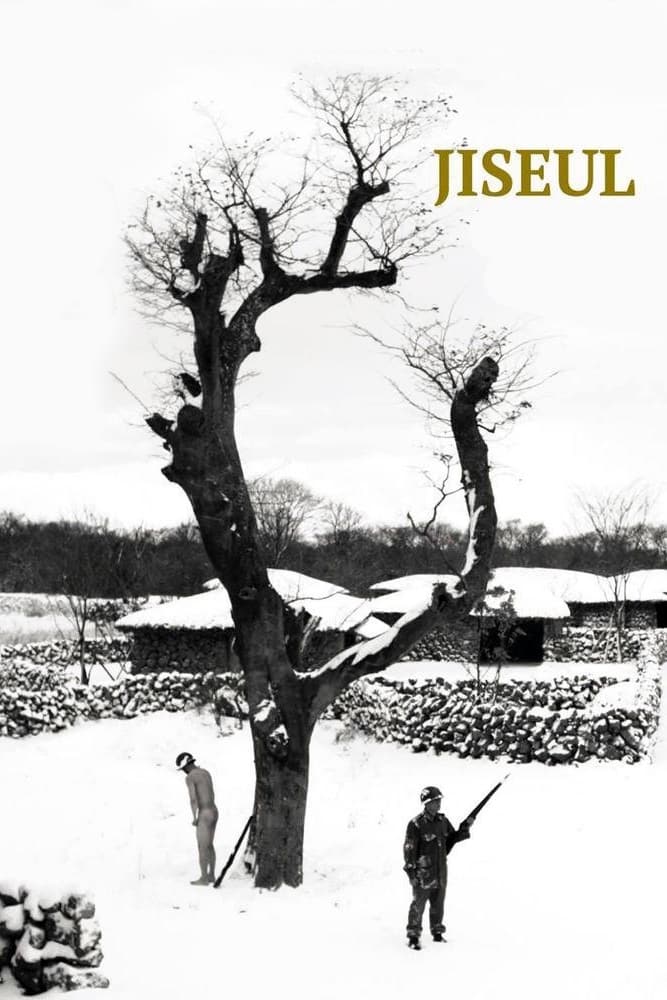
Poster from TMDB
Jiseul
Sign in to saveJiseul () is a 2012 South Korean war drama film written and directed by Jeju Island native O Muel. The film is shot in black and white with the entire cast composed of local actors speaking their natural dialect. "Jiseul" means "potato" in Jeju dialect. O said he picked it as the title of his film because "potatoes are considered a staple food in many countries, often symbolizing survival and hope." Set during the Jeju Uprising on the island in 1948, O said the film does not focus on the large-scale struggle, but on a forgotten true story about a group of villagers who hid in a cave for 60 day
Film · TMDB
7.4The populace of a South Korean island rebels against police brutality. The protesters are labeled as communists, and the army is dispatched.
Cast
- Oh Young-soon as Moo-dong's Mother
- Moon Suk-bum as Won-sik
- Kim Dong-ho as Soon-duk's Father
- Kim Soon-duk as Soon-duk's Mother
- Son Wook as Byung-ho
- Yang Jung-won as Yong-pil
Themes
- jeju uprising
This product uses the TMDB API but is not endorsed or certified by TMDB.
Wikidata facts
- Instance of
- film
- Genre
- historical film
- Country of origin
- South Korea
- Original language
- Korean
- Collection
- Museum of Modern Art
- Narrative location
- South Korea
- Duration
- 108
- FilmAffinity ID
- 274224
- Official website
- www.u-picc.com/Jiseul
Show 3 more facts
- publication date
- 2012-10-06
- color
- black-and-white
- title
- 지슬: 끝나지 않은 세월 2
via Wikidata · CC0
~5 min read
Encyclopedic overview
7 sectionsContents
- Plot
- Cast
- Background
- Filming location
- Box office
- References
- External links
Jiseul () is a 2012 South Korean war drama film written and directed by Jeju Island native O Muel. The film is shot in black and white with the entire cast composed of local actors speaking their natural dialect. "Jiseul" means "potato" in Jeju dialect. O said he picked it as the title of his film because "potatoes are considered a staple food in many countries, often symbolizing survival and hope." Set during the Jeju Uprising on the island in 1948, O said the film does not focus on the large-scale struggle, but on a forgotten true story about a group of villagers who hid in a cave for 60 days to escape from a military attack. They hid underground for months, cold and numb, far too close for comfort—just like the potatoes to which the title refers.
The film had a small budget of (), part of which was raised through crowdfunding. It premiered at the 2012 Busan International Film Festival where it received 3 awards—the CGV Movie Collage Award, the Director's Guild of Korea Award for Best Director, and the NETPAC Jury Award.
Excerpted from Wikipedia’s “Jiseul” article, available under the CC BY-SA 4.0 licence.