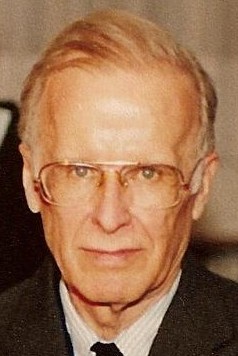
File:John_Backus_2.jpg · Wikimedia Commons · See Wikimedia Commons
John Backus
Sign in to saveAlso known as John Warner Backus, John W. Backus
American computer scientist (1924–2007)
John Backus was an American computer scientist who lived from 1924 to 2007 and made significant contributions to the field of computing. He is best known for his work on early programming languages and computer systems that helped shape how we write software today.
AI-generated from the Wikipedia summary — may contain errors.
Wikidata facts
- Instance of
- human
- Gender
- male
- Citizenship
- United States
- Place of birth
- Philadelphia
- Place of death
- Ashland
- Occupation
- computer scientist
- Employer
- IBM
- Languages spoken
- English language
- Notable work
- FP
- Field of work
- informatics
- Conflict
- World War II
- Military branch
- United States Army
- Image
- John Backus 2.jpg
Show 11 more facts
- date of birth
- 1924-12-03
- date of death
- 2007-03-17
- Erdős number
- 5
- archives at
- Computer History Museum
- streaming media URL
- www.computerhistory.org/collections/catalog/102657954
- Commons category
- John Backus
- place of burial
- San Francisco Columbarium
- birth name
- John Warner Backus
- maintained by WikiProject
- WikiProject Mathematics
- name in native language
- John Warner Backus
via Wikidata · CC0
~7 min read
Encyclopedic overview
John Warner Backus (December 3, 1924 – March 17, 2007) was an American computer scientist. He led the team that invented and implemented FORTRAN, the first widely used high-level programming language, and was the inventor of the Backus–Naur form (BNF), a widely used notation to define syntaxes of formal languages. He also contributed to the design of ALGOL, and later researched the function-level programming paradigm, presenting his findings in his influential 1977 Turing Award lecture "Can Programming Be Liberated from the von Neumann Style?"
The IEEE awarded Backus the W. W. McDowell Award in 1967 for the development of FORTRAN. He received the National Medal of Science in 1975 and the 1977 ACM Turing Award "for profound, influential, and lasting contributions to the design of practical high-level programming systems, notably through his work on FORTRAN, and for publication of formal procedures for the specification of programming languages".
Excerpted from Wikipedia’s “John Backus” article, available under the CC BY-SA 4.0 licence.