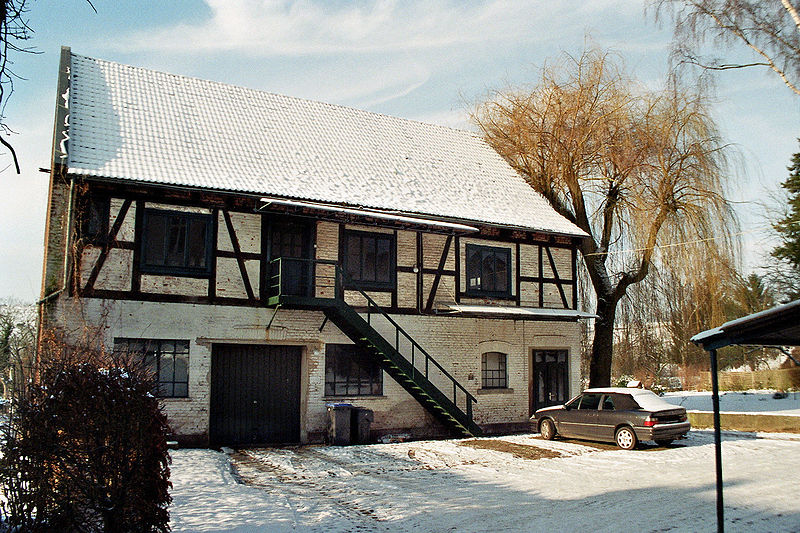
File:Zuse-Werkstatt-Neukirchen-Jan-2010.jpg · Wikimedia Commons · See Wikimedia Commons
Konrad Zuse
Sign in to saveAlso known as Zuse, Konrad Ernst Otto Zuse
German computer scientist and engineer (1910 - 1995)
Konrad Zuse was a German engineer and computer scientist who lived from 1910 to 1995 and made pioneering contributions to the development of early computing technology. His work laid important groundwork for modern computers during a crucial period in the history of computing.
AI-generated from the Wikipedia summary — may contain errors.
Film & TV
Berlin, Germany
Known for
- WDR Computernacht — Self2013
- Pssst ... — self1990
- Zeugen des Jahrhunderts — Self1979
via TMDB
Wikidata facts
- Instance of
- human
- Given name
- Konrad
- Gender
- male
- Citizenship
- Germany
- Place of birth
- Berlin
- Place of death
- Hünfeld
- Child
- Horst Zuse
- Occupation
- civil engineer
- Educated at
- Collegium Hosianum
- Employer
- Siemens
- Languages spoken
- German
- Participant in
- dOCUMENTA (13)
- Field of work
- computer science
- Image
- Konrad Zuse (1992).jpg
- Work location
- Germany
Show 12 more facts
- maintained by WikiProject
- WikiProject Mathematics
- Commons category
- Konrad Zuse
- date of death
- 1995-12-18
- on focus list of Wikimedia project
- Wikipedia:Vital articles/Level/4
- topic's main category
- Category:Konrad Zuse
- date of birth
- 1910-06-22
- Commons gallery
- Konrad Zuse
- name in native language
- Konrad Zuse
- ACM Classification Code (2012)
- 10011404
- birth name
- Konrad Ernst Otto Zuse
- has works in the collection
- ZKM Center for Art and Media Karlsruhe
Sources (7)
via Wikidata · CC0
~17 min read
Encyclopedic overview
Konrad Ernst Otto Zuse (/ˈzuːsə/; German: [ˈkɔnʁaːt ˈtsuːzə]; 22 June 1910 – 18 December 1995) was a German civil engineer, pioneering computer scientist, inventor and businessman. His greatest achievement was the world's first programmable computer; the functional program-controlled Turing-complete Z3 became operational in May 1941. Thanks to this machine and its predecessors, Zuse is regarded by some as the inventor and father of the modern computer.
Zuse was noted for the S2 computing machine, considered the first process control computer. In 1941, he founded one of the earliest computer businesses, producing the Z4, which became the world's first commercial computer. From 1943 to 1945 he designed Plankalkül, the first high-level programming language. In 1969, Zuse suggested the concept of a computation-based universe in his book Rechnender Raum (Calculating Space).
Excerpted from Wikipedia’s “Konrad Zuse” article, available under the CC BY-SA 4.0 licence.
Gallery (9)
Available in 62 languages
- Español
- Français
- Deutsch
- 中文
- 日本語
- Русский
- Português
- Italiano
- العربية
- Armenian
- Asturian
- azb
- Azerbaijani
- Bahasa Indonesia
- Bangla
- Basque
- Bosnian
- Bulgarian
Show 43 more
- Catalan
- Chuvash
- Croatian
- Czech
- Danish
- Egyptian Arabic
- Esperanto
- Estonian
- Filipino
- Finnish
- Galician
- Georgian
- Greek
- Hebrew
- Hungarian
- Ido
- Interlingua
- Irish
- Javanese
- Latvian
- Ligurian
- Lithuanian
- Low German
- Luxembourgish
- Macedonian
- Malagasy
- Malayalam
- Nederlands
- Norwegian
- Polski
- Romanian
- Serbian
- Slovak
- Svenska
- Tajik
- Tiếng Việt
- Türkçe
- Ukrainian
- Western Frisian
- Wu Chinese
- zh_yue
- فارسی
- 한국어
via Wikidata sitelinks · CC0