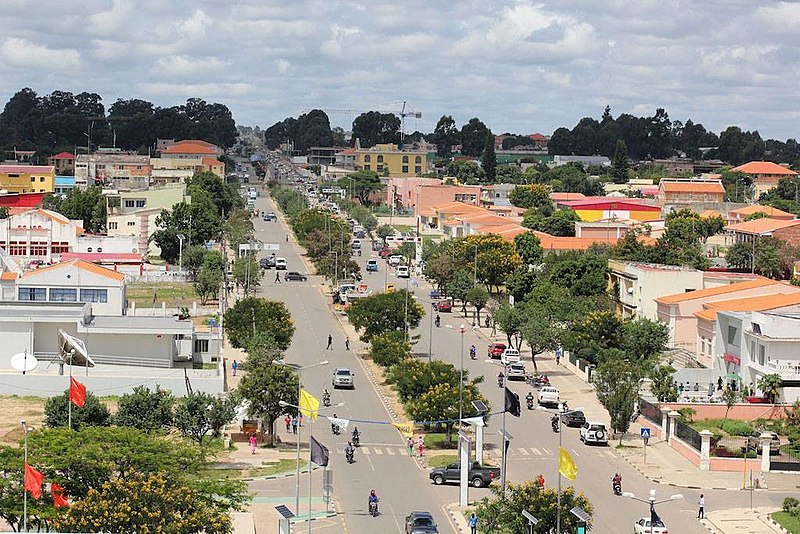
File:Cidade_do_kuito.jpg · Wikimedia Commons · See Wikimedia Commons
Kuito
Sign in to saveCuíto, formerly known as Silva Porto, is a city and municipality in central Angola, capital of Bié Province. The municipality had a population of 450,881 in 2014. The city is projected to be the tenth fastest growing city on the African continent between 2020 and 2025, with a 5.56% growth rate.
Key facts
- Settlement.name
- Cuíto
- Settlement.other_name
- Silva Porto
- Settlement.settlement_type
- Municipality
- Settlement.image_skyline
- Cidade do kuito.jpg
- Settlement.imagesize
- 280px
- Settlement.pushpin_map
- Angola
- Settlement.pushpin_label_position
- right
- Settlement.pushpin_mapsize
- 300
- Settlement.pushpin_map_caption
- Location in Angola
- Settlement.subdivision_type
- Country
- Settlement.subdivision_type1
- Province
- Settlement.subdivision_name1
- Bié Province
- Settlement.established_title
- Founded
- Settlement.established_date
- 1750
- Settlement.unit_pref
- Metric
- Settlement.area_total_km2
- 1560
- Settlement.population_as_of
- 2014 Census
- Settlement.population_total
- 450881
via Wikipedia infobox
Wikidata facts
- Instance of
- municipality of Angola
- Official name
- Kuito
- Country
- Angola
- Located in
- Bié Province
- Official language
- Portuguese
- Population
- 180764
- Area
- 4814
- Elevation
- 1700
- Time zone
- UTC+01:00
- Capital of
- Bié Province
- Image
- Cidade do kuito.jpg
Show 4 more facts
- Commons category
- Kuito
- inception
- 1750-00-00
- native label
- Kuito
- different from
- Quito
Sources (6)
via Wikidata · CC0
~3 min read
Encyclopedic overview
5 sectionsContents
- History
- Climate
- Transportation
- See also
- Notes and references
Cuíto, formerly known as Silva Porto, is a city and municipality in central Angola, capital of Bié Province. The municipality had a population of 450,881 in 2014. The city is projected to be the tenth fastest growing city on the African continent between 2020 and 2025, with a 5.56% growth rate.
==History== The city of Cuíto is built in the historical heart of the Ovimbundu kingdom. The ruler of the Ovimbundu was named Viye and he married a Songo woman named Cahanda. Together they built the city and later the Portuguese would name the Bié Province after the ruler. The Ovimbundu were known for selling captives from neighbouring tribes to the European slave traders which made the area an ideal location for the slave business and brought colonists to the area. The Portuguese "founded" the city in 1750. They later called it Silva Porto after António da Silva Porto who built his home embala Belmonte in the area. The pleasant climate in the Bié Province was attractive to Portuguese settlers and many made their home in Silva Porto in the early 1900s when the Benguela Railway connected the city to the coast.
Excerpted from Wikipedia’s “Kuito” article, available under the CC BY-SA 4.0 licence.
On the map
3 mapped locations