Encyclopedia of Life · EOL (see source)
Leopoldinia
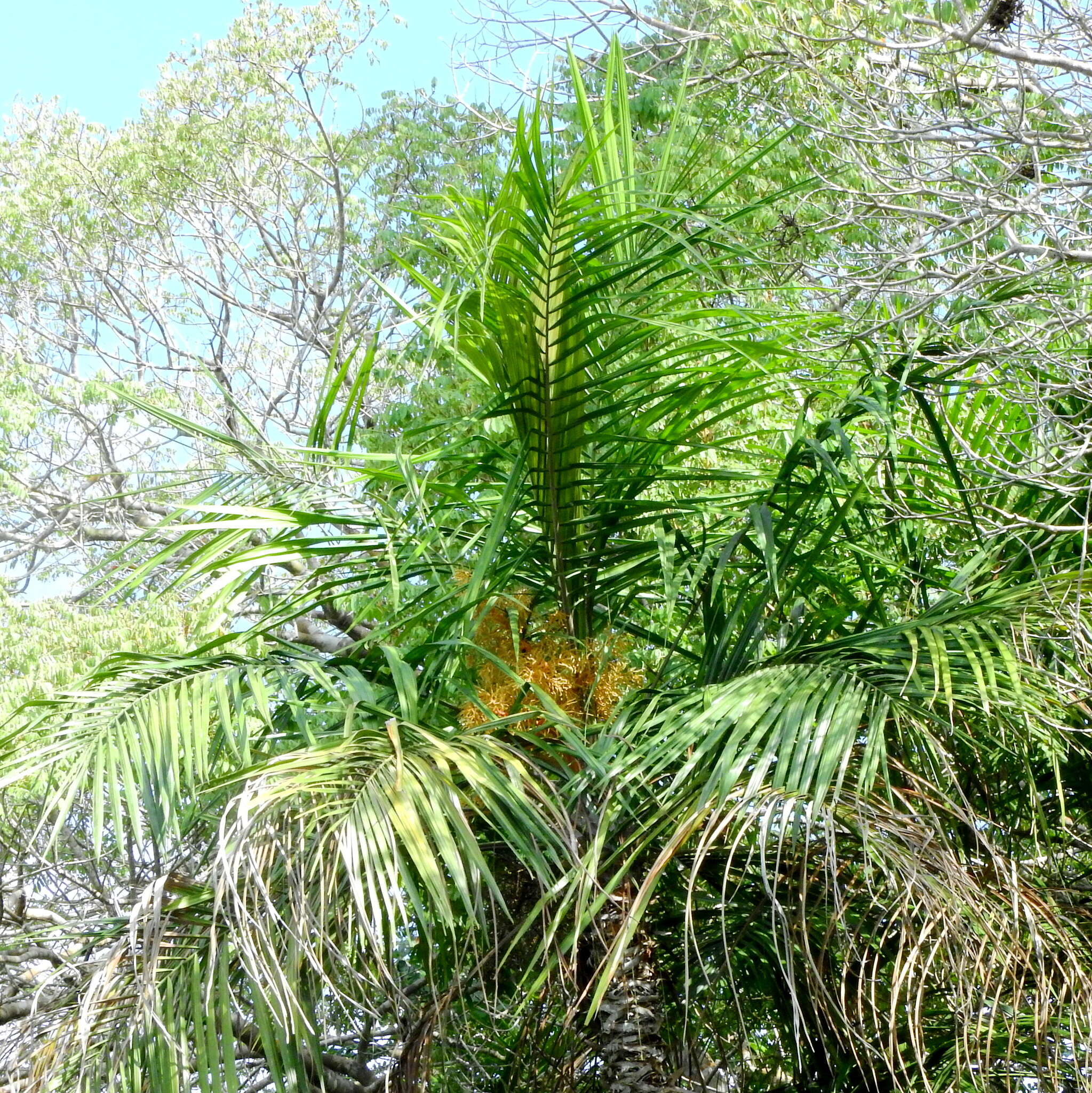
Sign in to saveLeopoldinia is a mostly monoecious genus of flowering plant in the palm family from northern South America (Colombia, Venezuela, northwestern Brazil), where they are known as jará palm or pissava palm. The two known species are commercially important, especially L. piassaba, which yields sustenance and construction material. The genus is named for Maria Leopoldina, archduchess of Austria, and Brazilian empress.
Species
GENUS
- KingdomPlantae
- PhylumTracheophyta
- ClassLiliopsida
- OrderArecales
- FamilyArecaceae
Leopoldinia ist eine in Südamerika heimische Palmengattung. Sie ist der einzige Vertreter der Tribus Leopoldinieae. Ihre auffälligen Blattscheiden und ihr dreifächriges Gynoeceum lassen sie eindeutig von ihren nächsten Verwandten unterscheiden.
via GBIF · Kew POWO
Museum specimens
- Specimen records
- 15
- With media
- 7
- Family
- Arecaceae
- Collections
- US, INSTITUTO NACIONAL DE PESQUISAS DA AMAZÔNIA (INPA), JBRJ, IPA, WIS, B
- Recorded in
- Venezuela, Brasil, Brazil, India
Wikidata facts
- Instance of
- taxon
- Parent taxon
- Q14080
- Named after
- Maria Leopoldina of Austria
- Image
- (Leopoldimia piassaba), da Coleção Brasiliana Iconográfica.jpg
Show 6 more facts
- topic's main category
- Category:Leopoldinia
- taxon rank
- genus
- taxon name
- Leopoldinia
- taxon common name
- leopoldinia
- Commons category
- Leopoldinia
Sources (1)
via Wikidata · CC0
~3 min read
Encyclopedic overview
5 sectionsContents
- Description
- Distribution and habitat
- Cultivation and uses
- References
- External links
Leopoldinia is a mostly monoecious genus of flowering plant in the palm family from northern South America (Colombia, Venezuela, northwestern Brazil), where they are known as jará palm or pissava palm. The two known species are commercially important, especially L. piassaba, which yields sustenance and construction material. The genus is named for Maria Leopoldina, archduchess of Austria, and Brazilian empress.
==Description== The trunks are clustering in L. major, occasionally clustering in L. pulchra, and solitary in L. piassaba; they reach 15 cm wide to 6 m tall, and are usually covered in old, extremely fibrous leaf bases. The pinnate leaves, up to 5 m, are carried on long, hairy petioles which disintegrate into black, fibrous masses against the trunk. The 1 m leaflets are once-folded, linear, regularly arranged, and either acuminate or briefly bifid.
Excerpted from Wikipedia’s “Leopoldinia” article, available under the CC BY-SA 4.0 licence.