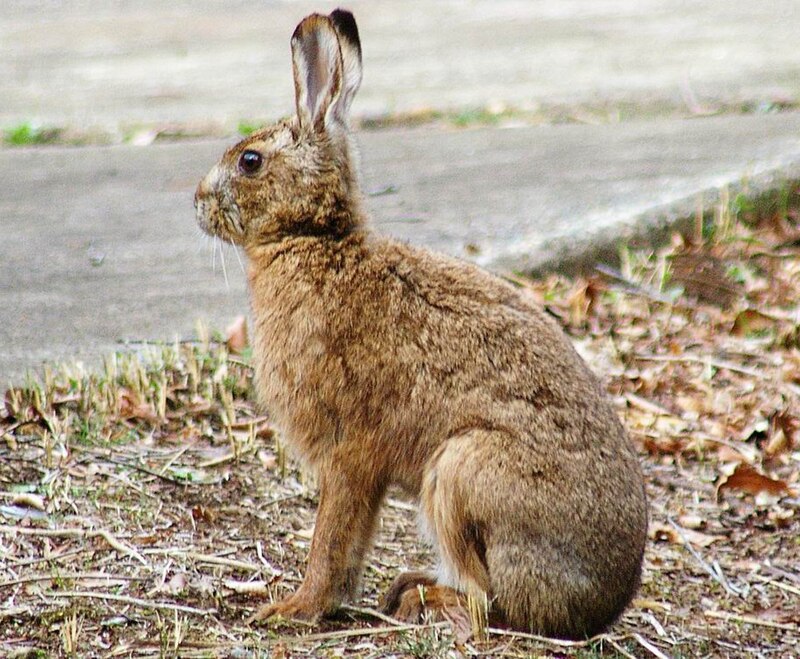
File:Lepus_brachyurus,_March,_Tsukuba,_Japan.jpg · Wikimedia Commons · See Wikimedia Commons
OverviewAI-generated
Lepus brachyurus is a species of hare within the family Leporidae. It belongs to the order Lagomorpha, class Mammalia, phylum Chordata, and kingdom Animalia. The species is endemic to Japan and is known by common names including Japanese Hare, Japanischer Hase, and ノウサギ.
Its IUCN conservation status is Least Concern, a designation recorded in 2019. The longest observed lifespan for this species is 13 years, noted in captivity. Occurrence records from various institutions, including CAS, RBINS-SCIENTIFIC HERITAGE, AMNH, and KU, document its presence in Japan and China.
Synthesized by Vinony from 27 facts across 7 sources: Wikidata, GBIF, IUCN Red List, Gbif Occ, Encyclopedia of Life, iDigBio, Vinony graph. Generated from structured data (not the Wikipedia text) and checked against those facts — may still contain errors.
Species
Least ConcernSPECIES
- KingdomAnimalia
- PhylumChordata
- ClassMammalia
- OrderLagomorpha
- FamilyLeporidae
Maximum longevity: 13 years (captivity)
via GBIF · IUCN
Museum specimens
- Specimen records
- 20
- With media
- 21
- Family
- Leporidae
- Collections
- CAS, RBINS-SCIENTIFIC HERITAGE, AMNH, KU
- Recorded in
- China, Japan
Wikidata facts
Show 8 more facts
- taxon rank
- species
- IUCN conservation status
- Least Concern
- Commons category
- Lepus brachyurus
- taxon name
- Lepus brachyurus
- taxon common name
- Japanischer Hase
- longest observed lifespan
- 13
- short name
- L. brachyurus
- endemic to
- Japan
Sources (1)
via Wikidata · CC0
~4 min read
Encyclopedic overview
The Japanese hare (Lepus brachyurus) is a species of hare endemic to Japan. In Japanese, it is called the Nousagi (Japanese: 野兎), meaning "field rabbit".
Taxonomy
Excerpted from Wikipedia’s “Lepus brachyurus” article, available under the CC BY-SA 4.0 licence.