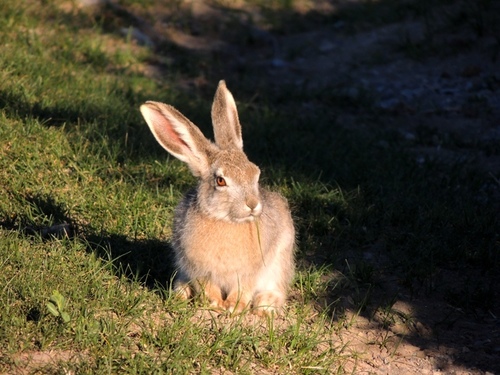
(c) Vladimir Yu. Arkhipov, some rights reserved (CC BY-NC), uploaded by Vladimir Yu. Arkhipov · cc-by-nc
OverviewAI-generated
The Tolai hare, scientifically named *Lepus tolai*, is a species of mammal. It is also referred to by the common names Zając tolaj, Заяц-толай, and Tolai-Hase. This taxon is classified within the class Mammalia and inhabits forest environments.
The species is currently listed with a conservation status of Least Concern by the IUCN Red List, a designation recorded in 2019. The Tolai hare has been documented in 720 observations on iNaturalist.
Synthesized by Vinony from 16 facts across 4 sources: Wikidata, iNaturalist, IUCN Red List, Vinony graph. Generated from structured data (not the Wikipedia text) and checked against those facts — may still contain errors.
Species
Least ConcernTolai Hare
species
У этого термина существуют и другие значения, см. Толай. Царство: Животные Подцарство: Эуметазои Без ранга: Двусторонне-симметричные Без ранга: Вторичноротые Тип: Хордовые Подтип: Позвоночные Инфратип: Челюстноротые Надкласс: Четвероногие Класс: Млекопитающие Подкласс: Звери Инфракласс: Плацентарные Надотряд: Euarchontoglires Грандотряд: Грызунообразные Отряд: Зайцеобразные Семейство: Зайцевые Род: Зайцы Вид: Заяц-толай Международное научное название Lepus tolai Pallas, 1778 Ареал Охранный статус Вызывающие наименьшие опасенияIUCN 3.1 Least Concern: 41308 Систематикана ВикивидахИзображенияна Викискладе ITIS 625355NCBI 283924EOL 355415 За́яц-тола́й[1] (лат. Lepus tolai) — млекопитающее рода зайцев отряда зайцеобразных. Иногда как подвид включается в состав капского зайца (Lepus capensis). Содержание 1 Внешний вид 2 Распространение 3 Места обитания 4 Образ жизни 4.1 Питание 5 Размножение 6 Подвиды 7 Численность и значение для человека 8 Примечания 9 Литература 10 Ссылки Внешний вид Некрупный заяц, по внешнему виду напоминающий мелкого русака: длина тела 39-55 см, масса 1,5-2,8 кг. Уши и ноги длинные, по относительным размерам даже длиннее, чем у русака. Длина клиновидного хвоста 7,5-
via IUCN
Wikidata facts
- Instance of
- taxon
- Image
- Lepus tolai; Baikonur 01.jpg
Show 7 more facts
- taxon rank
- species
- IUCN conservation status
- Least Concern
- Commons category
- Lepus tolai
- taxon name
- Lepus tolai
- taxon common name
- Tolaihaas
- habitat
- forest
- short name
- L. tolai
Sources (1)
via Wikidata · CC0
~9 min read
Encyclopedic overview
The tolai hare (Lepus tolai) is a species of hare native to Central Asia, including much of Mongolia, eastern Iran, Afghanistan, southern Kazakhstan, Turkmenistan, Uzbekistan, Kyrgyzstan, and North and Central China. It inhabits semi-desert, steppes, rocky habitats, grasslands, and river valleys. A yellow, brown or grey-furred hare with long, black tipped ears, the adult tolai hare weighs between 1.7 and 2.7 kilograms (3.7 and 6.0 pounds) and measures between 40 and 59 centimetres (16 and 23 inches). It is mainly active at dusk and night but is occasionally active during the day to forage for seeds, roots, and other plant matter. Young hares are often more active in daylight hours.
A widespread, fairly common species, the tolai hare has a stable population. It breeds often, two to three times per year, and is hunted for its meat, fur, and for use in traditional medicine. Hustai National Park is one of several protected areas where the hare can be found. Authorities in China and Mongolia, as well as the International Union for Conservation of Nature, consider it a least-concern species.
Excerpted from Wikipedia’s “Tolai hare” article, available under the CC BY-SA 4.0 licence.