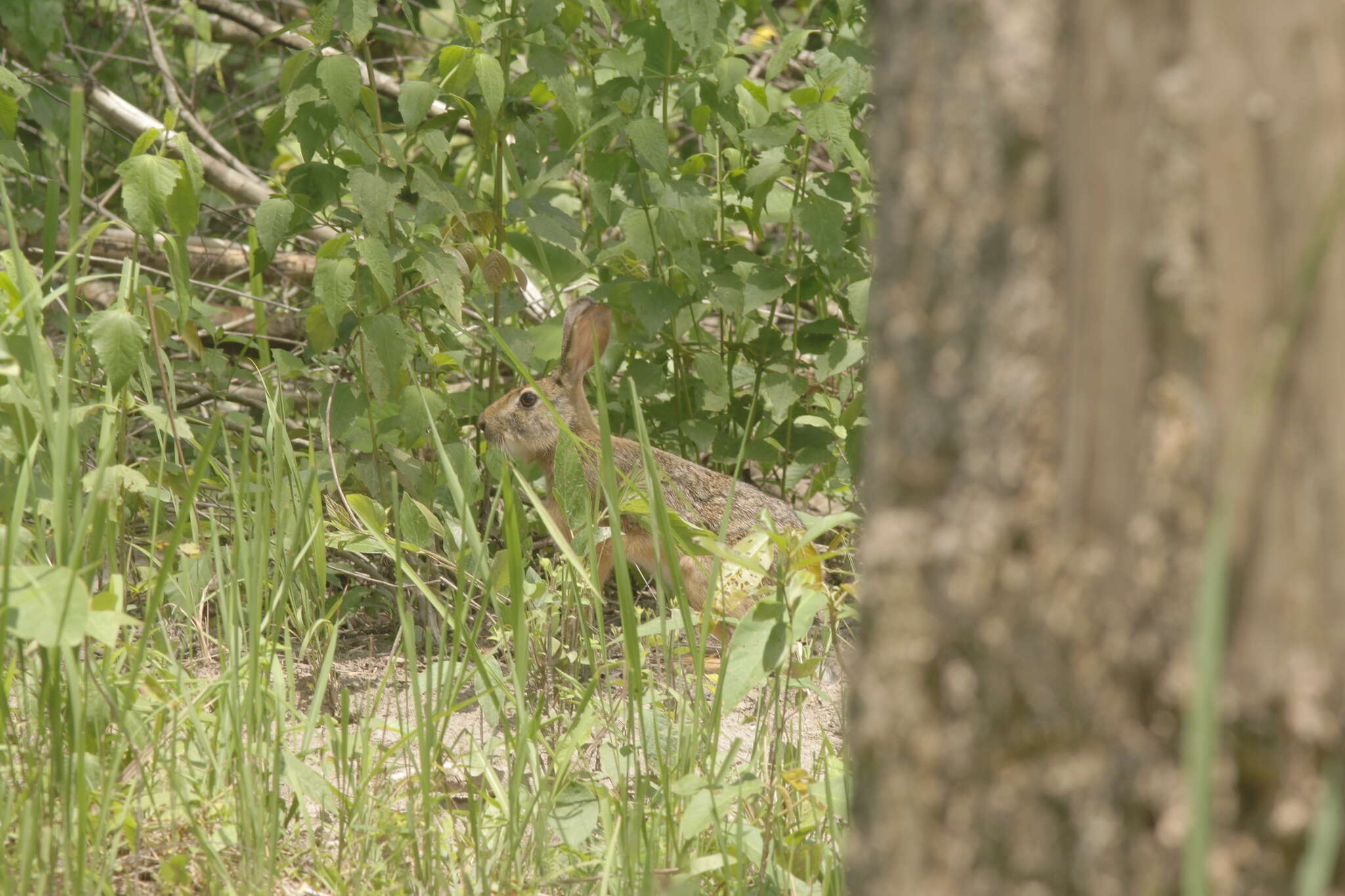
Encyclopedia of Life · EOL (see source)
Species
緬甸野兔为兔科兔属的哺乳动物。分布于中国大陆以南(邊境)、越南、泰國、寮國、緬甸、柬埔寨等中南半島地區。
via
Wikidata facts
- Instance of
- taxon
- Image
- Siamese Hare, Lepus peguensis, in Kui Buri national park.jpg
Show 6 more facts
- taxon rank
- species
- IUCN conservation status
- Least Concern
- taxon name
- Lepus peguensis
- Commons category
- Lepus peguensis
- taxon common name
- Siamese Hare
- short name
- L. peguensis
Sources (1)
via Wikidata · CC0
~8 min read
Encyclopedic overview
The Burmese hare (Lepus peguensis), also known as the Siamese hare, is a species of medium-sized hare found in Cambodia, Laos, Myanmar, Thailand, and Vietnam. It is typically found in forest clearings, croplands, wastelands, and sandy areas along coasts and rivers. Some populations have been found in the mountains of Thailand, though it is more often found at lower elevations below 800 metres (2,600 feet). The Burmese hare's closest relative is the Hainan hare, though it is more similar in appearance to the Indian hare.
The Burmese hare is identifiable by its reddish-grey body and white underbody fur. It is distinguished from the similar-looking Indian hare by its tail, which is black on top. The Burmese hare is most active during the night and at twilight, and is herbivorous, feeding upon grass, twigs, and bark. It is also territorial. It reproduces several times a year, with each litter yielding one to seven young. The hares live up to six years on average. Though hunting and expanding rice farming threaten Burmese hare populations, the species is generally common throughout its wide distribution. Some populations are thought to be increasing in size due to logging operations creating favourable hare habitats. The International Union for Conservation of Nature considers it to be a least-concern species.
Excerpted from Wikipedia’s “Burmese hare” article, available under the CC BY-SA 4.0 licence.