
Libéria
Also known as Republic of Liberia, lr, Liber
país na África
AI overview
Liberia is a West African nation on the Atlantic coast, bordered by Sierra Leone, Guinea, and Ivory Coast, with a population of around 5.5 million people who speak English as the official language along with over 20 indigenous languages. The country matters as a significant part of West Africa's cultural and linguistic diversity, with its capital Monrovia serving as the nation's largest city.
AI-generated from the Wikipedia summary — may contain errors.
Weather now
cached 7h ago22°overcast clouds
99% 0.7 m/s OpenWeatherMap
7-day forecast
via Open-Meteo
Country
- Capital
- Monrovia
- Population
- 5,248,621
- Region
Travel guide
Understand
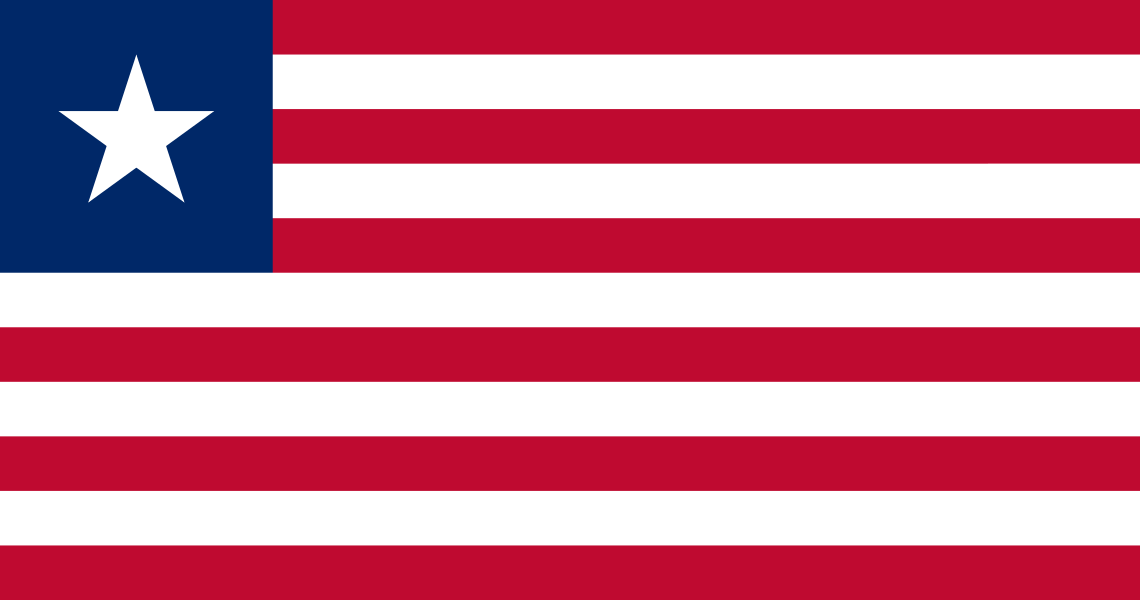
Liberia is a country with historical ties to the United States since it was founded by freed black slaves before the Underground Railroad, American Civil War era of the nineteenth century. The capital, Monrovia, was named after James Monroe. Liberia's flag closely resembles the American flag, reflecting the historical ties between the two countries.
Get in
thumb|375px|A map showing the visa requirements of Liberia, with countries in dark blue having visa-free access
See
thumb|300px|Downtown Monrovia
'Blo Degbo' Human face rock in Paynesville, near Monrovia (Note: this is not a developed tourist destination, so make sure it is a safe place to visit) Rain forests are usually found in remote areas, most are unique and have many attractive features, but on the other hand some are risky because of their wildlife.
There are plenty of beaches around Monrovia. Out towards the airport after ELWA junction is ELWA beach. Set inside a compound there is a marked safe swimming area, a clean beach and plenty of families at the weekends, though without facilities. Further on is Thinkers (pronounced Tinkers) with a food and drinks service, though the waves are a bit rough here, and it is not safe to walk up or down the beach too far. CE CE beach out the other way, over the bridge out to Hotel Africa is very well set up with palm umbrellas, drinks service and a buffet, and a well protected swimming area.
For an interesting day trip, Robertsport offers a glimpse of Liberia's cultural history as well as clean, beautiful beaches. A group of South Africans has set up a tent camp for those wishing to spend the night on the beach and the UN also offers accommodations on a first-come basis. Beware the strong tides.
The city of Buchanan, a several hour car ride from Monrovia, also offers sublime beaches and a selection of restaurants and guest houses.
Do
Liberia has several nightclubs. While places like Deja Vu cater to a largely expat crowd, explore places more popular with locals. 146 on Carey Street features Liberian music, freestyle sessions, and live performances from Liberia's most popular musicians.
Eat
Eating Liberian food can be enjoyable and inexpensive. Liberian meals like palm butter, cassava leaf, potato greens, chock rice, and jollof's rice will barely leave a dent in your budget (US$2-3 with a non-alcoholic drink). Portions are usually enormous. Another popular local dish is fufu (fermented dough made from the cassava plant) and soup (the most common are goat soup and pepper soup). And for those who like to eat on the go, fruit and snacks can be bought from street vendors throughout Monrovia. Peanuts, fried plantain chips, roasted ears of corn or plantains, bananas, mangos, and other fruits cost L$5-20 (or US$0.10-0.30). Especially delicious are the various breads sold freshly baked in the morning. Some breads resemble banana bread, other breads are more like corn bread. All are delicious although somewhat oily.
Article · Português
A Libéria, oficialmente República da Libéria, é uma república presidencialista localizada na África Ocidental. Faz fronteira ao norte com a Serra Leoa e Guiné, a leste com a Costa do Marfim e a sul e oeste com o Oceano Atlântico. Segundo o censo de 2008, a população do país é de 3 955 000 habitantes, divididos em uma área de 111 369 quilômetros quadrados. A cidade de Monróvia é sua capital. A Libéria possui um clima quente equatorial, com chuvas intensas na estação chuvosa e ventos na estação seca. A vegetação é composta, na maior parte, por florestas de mangue, enquanto o interior é escassamente povoado de florestas, com predominância de pastagens secas. A história da Libéria é única entre as nações africanas. É um dos dois únicos países da África Subsaariana, juntamente com a Etiópia, sem raízes na colonização europeia. Foi fundada e colonizada por escravos americanos libertos com a ajuda de uma organização privada chamada American Colonization Society, entre 1821 e 1822, na premissa de que os ex-escravos americanos teriam maior liberdade e igualdade nesta nova nação. Escravos libertos dos navios negreiros também foram enviados para a Libéria, em vez de serem repatriados para seus países de origem. Estes colonos criaram um grupo de elite da sociedade da Libéria, e, em 1847, fundaram a República da Libéria, que instituiu um governo inspirado nos Estados Unidos, nomeando Monróvia como sua capital, homenageando James Monroe, o quinto presidente dos Estados Unidos e um proeminente defensor da colonização. Um golpe militar liderado em 1980 derrubou o então presidente William Richard Tolbert, Jr., marcando o início de um período de instabilidade que levou a duas guerras civis no país, deixando milhares de mortos e devastando a economia do país. Hoje, a Libéria está a recuperar dos efeitos nefastos da guerra civil e as perturbações económicas conexas, e que está rapidamente se recuperando como Mali e Etiópia.
Abstract from DBpedia / Wikipedia · CC BY-SA
Gallery (59)
On the map
3 mapped locations
Connections
Categories
1847 establishments in LiberiaAmerican colonization movementCountries and territories where English is an official languageCountries in AfricaCountries in West AfricaEconomic Community of West African StatesLanguage articles citing Ethnologue 25Least developed countriesLiberiaMember states of the African UnionMember states of the United Nations