
File:Effigy_mounds_lidar.jpg · Wikimedia Commons · See Wikimedia Commons
lidar
Sign in to saveAlso known as LADAR, 3-D laser scanning, 3D laser scanning, light detection and ranging, colidar
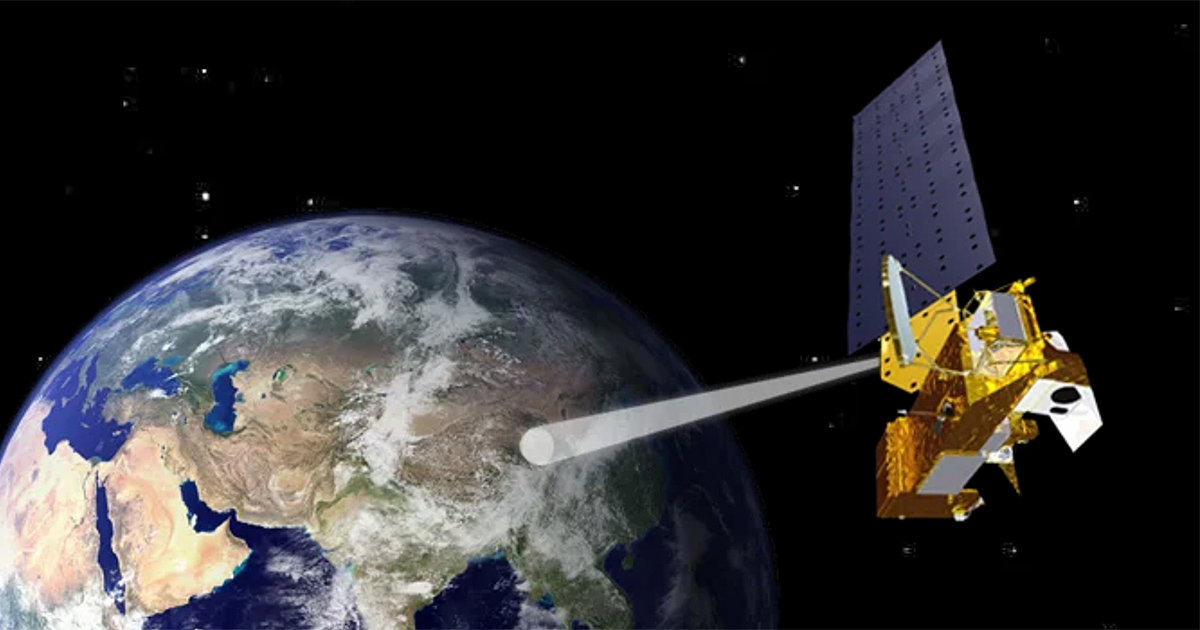
Lidar (, an acronym of light detection and ranging or laser imaging, detection, and ranging, often stylized LiDAR) is a method for determining ranges by targeting an object or a surface with a laser and measuring the time for the reflected light to return to the receiver. Lidar may operate in a fixed direction (e.g., vertical) or it may scan directions, in a special combination of 3D scanning and laser scanning.
Described at
LIDAR - Lexikon der Fernerkundung
fe-lexikon.info →Engl. Akronym für Light Detection and Ranging ; ein als aktives System ganztägig einsetzbares Fernerkundungsverfahren , das oft etwas ungenau als "Laser-Radar" bezeichnet wird. Es arbeitet vergleichbar einem Mikrowellen -Radar, benutzt aber den optischen Teil des elektromagnetischen Spektrums zwischen dem ultravioletten und dem nahen Infrarot -Bereich. Lidar ist eine Methode zur Entfernungsmessung, bei der reflektiertes Laserlicht verwendet wird, um 3D-Geodatenkarten eines Zielgebiets zu erstellen. Lidar findet terrestrische Anwendungen, darunter 3D-Scanning und autonome Fahrzeugführung, sowie Anwendungen in der Fernerkundung der Erde, darunter die Erstellung hochauflösender topografischer Karten. Die Entfernungsmessung beruht dabei auf der Messung der Zeitspanne, die zwischen dem Aussenden des Lichtimpulses und der Reflexion des zurückkommenden Impulses verstreicht. Fernerkundungs-Lidar-Beobachtungen werden in der Regel mit luft- oder satellitengestützten Instrumenten durchgeführt. Lidar-Systeme bestehen gewöhnlich aus einem Laser , der Strahlung in Pulsen oder kontinuierlich durch eine fokussierende Optik aussendet. Ein weiteres optisches System fokussiert die vom beobachteten Objekt reflektierte Strahlung auf einen Detektor . Weitere Akronyme werden benutzt, die leicht unterschiedliche Bedeutungen haben: LaDAR ( La ser Detection and Ranging ) beinhaltet, dass Laserlicht zur Entfernungsmessung herangezogen wird. In einem LIDAR-System hingegen kann zum Beispiel auch sehr starkes Xenonlicht benutzt werden. ALS (Airborne Laserscanning ) konkretisiert, dass ein Laserstrahl von einem Flugzeug aus die Oberfläche scannt. Gerade diese Technik, die zur Erstellung von digitalen Oberflächenmodellen dient, hat in der Geoinformatik eine große Bedeutung erhalten. Lidar-Systeme zur räumlichen Erfassung von Stoffen in der Atmosphäre und im Meer (Umwelt-Lidar). Laserstrahlen reagieren sehr empfindlich auf Wolken , Aerosole , Luftschadstoffe, Ölteppiche usw. Daher werden Lidar-Verfahren auf unterschiedliche Weise für die Atmosphärenforschung, Meteorologie, Ozeanographie u.w. eingesetzt. So kann das emittierte und zurückgestreute Laser-Licht zur Bestimmung von Wolkenobergrenzen, zur Erstellung von Vertikalprofilen der Verteilung von Aerosolen und in besonderen Fällen auch von Spurengasen (z.B. Ozon ) in der Atmosphäre nutzen. Schadstoffe können von Lidar-Geräten kontinuierlich bis in die höchste Atmosphäre gemessen werden. Bei einer Auswertung der Dopplerverschiebung des rückgestreuten Lichts ist auch eine Messung der Windgeschwindigkeit möglich. Ein solches Gerät wird als Laser-Doppler-Anemometer bezeichnet und z.B. auf Flughäfen zur Detektion von Scherwinden im Anflugbereich von Flugzeugen eingesetzt. Lidar-Messungen eignen sich auch zur Berechnung atmosphärischer Temperaturprofile. Daneben werden Lidare zur Bestimmung der Vertikalverteilung von Phytoplankton im Ozean verwendet. Man misst dabei das vom Phytoplankton emittierte fluoreszierende Licht. Zuvor war mit einem starken Laserpuls das Chlorophyll des pflanzlichen Planktons zu dessen Aussendung angeregt worden. Für die verschiedenen Anwendungen werden unterschiedliche Arten der Streuung genutzt, meist die Rayleigh -, die Mie oder die Dopplerverschiebung -Streuung, auch die Fluoreszenz. Lidar-Systeme, die Distanzen mit hoher Genauigkeit messen und der Erfassung von topographischen Daten dienen. Dieses Airborne Laserscanning (ALS) ist eine relativ junge Technik zur Erfassung der Topographie der Erde (u.a. zur Generierung von DHM ), die erst durch die Verfügbarkeit von Lasern mit besonderen Eigenschaften sowie des Global Positioning System (GPS) möglich wurde. Bei diesem Verfahren wird der Abstand zwischen einem Fluggerät und der Erdoberfläche durch Ermittlung der Laufzeit eines Lichtimpulses gemessen. Zusätzlich wird der Laserstrahl durch eine optomechanische Einrichtung für jede Messung seitlich in eine geringfügig andere Richtung abgelenkt, wodurch in Kombination mit der Vorwärtsbew
Excerpt from a page describing this subject · 19,343 chars · not written by Vinony
Wikidata facts
- Subclass of
- optical instrument
- Has part
- pulsed laser
- Image
- Lidar P1270901.jpg
- Has use
- remote sensing
Show 8 more facts
- Commons category
- LIDAR
- topic's main category
- Category:Lidar
- Commons gallery
- Lidar
- short name
- lidar
- native label
- Light Detection And Ranging
- time of discovery or invention
- 1961-00-00
- discoverer or inventor
- Hughes Aircraft Company
- described at URL
- www.fe-lexikon.info/lexikon/lidar
via Wikidata · CC0
~61 min read
Encyclopedic overview
39 sectionsContents
- History and etymology
- Theory
- Components
- Laser
- Scanner and optics
- Photodetector and receiver electronics
- Position and navigation systems
- Sensor
- Classification
- Applications
- Agriculture
- Airport Operations
- Archaeology
- Autonomous vehicles
- Ecology and conservation
- Forestry
- Geology and soil science
- Atmosphere
- Flood forecasting
- Military
- Mining
- Physics and astronomy
- Rock mechanics
- THOR
- Robotics
- Spaceflight
- Surveying
- Transport
- Wind farm optimization
- Solar photovoltaic deployment optimization
- Video games
- Physical security
- Other uses
- Variants
- Alternative technologies
- See also
- References
- Further reading
- External links
Lidar (, an acronym of light detection and ranging or laser imaging, detection, and ranging, often stylized LiDAR) is a method for determining ranges by targeting an object or a surface with a laser and measuring the time for the reflected light to return to the receiver. Lidar may operate in a fixed direction (e.g., vertical) or it may scan directions, in a special combination of 3D scanning and laser scanning.
thumb|Lidar-derived image of Marching Bears Mound Group, Effigy Mounds National Monument, [[United States]] thumb|upright|A frequency addition source of optical radiation (FASOR) used at the [[Starfire Optical Range for lidar and laser guide star experiments is tuned to the sodium D2a line and used to excite sodium atoms in the upper atmosphere.]] thumb|upright|This lidar may be used to scan buildings, rock formations, et cetera, to produce a 3D model. The lidar can aim its laser beam in a wide range: its head rotates horizontally; a mirror tilts vertically. The laser beam is used to measure the distance to the first object on its path.
Excerpted from Wikipedia’s “lidar” article, available under the CC BY-SA 4.0 licence.