Lipoblepharis · Kew POWO · Kew Plants of the World Online
Lipoblepharis
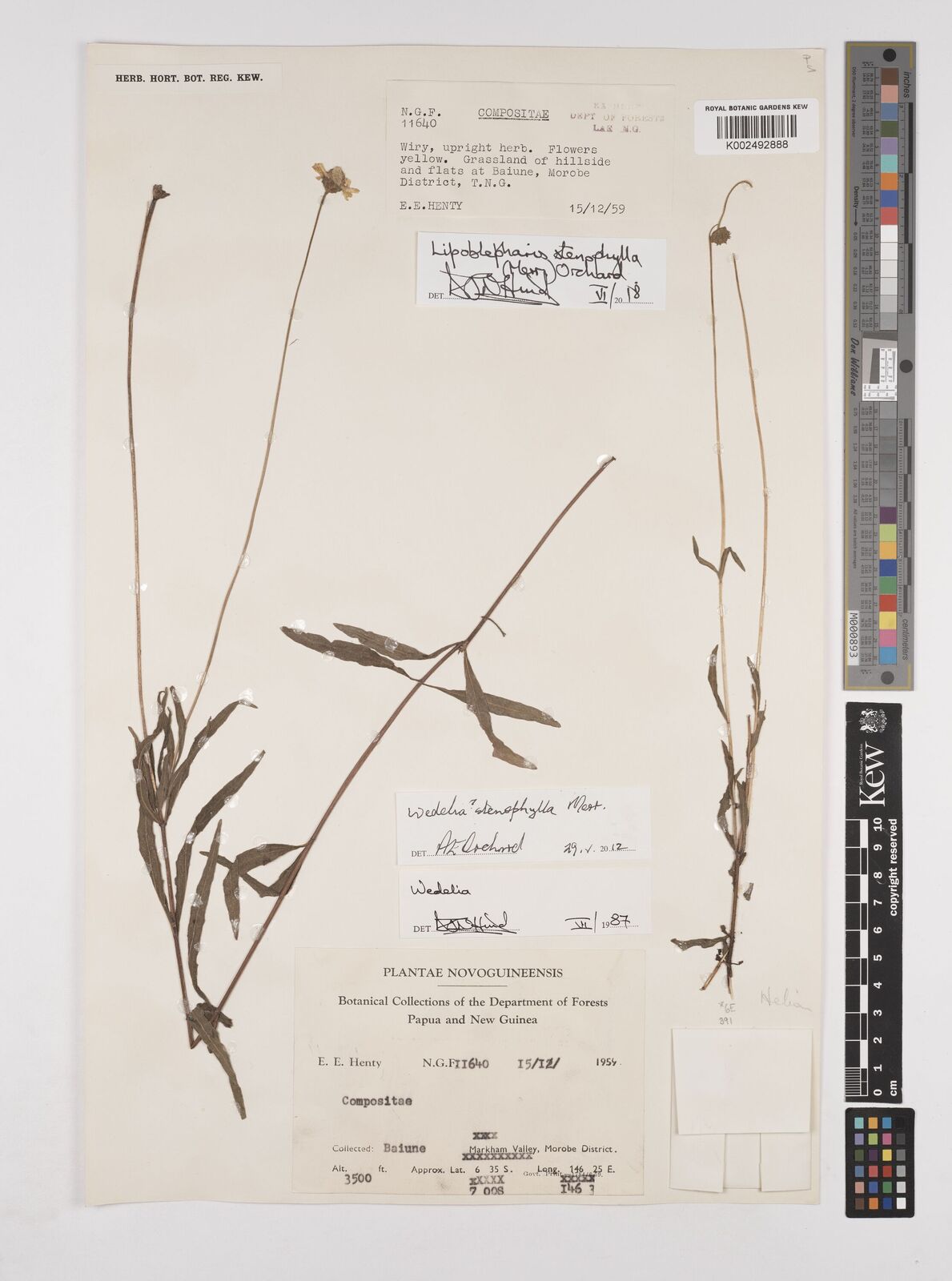
Sign in to saveLipoblepharis is a genus consisting of five species of flowering plants in the family Asteraceae. It is native to Tropical Asia, Subtropical Asia and Vanuatu. Most of these species were once classified under the genus Wedelia and were only re-classified as Lipoblepharis in 2013 by A.E. Orchard. The species are perennial or annual, having yellow flowers and awns on their pappus.
Species
GENUS
- KingdomPlantae
- PhylumTracheophyta
- ClassMagnoliopsida
- OrderAsterales
- FamilyAsteraceae
via GBIF · Kew POWO
Wikidata facts
- Instance of
- taxon
- Parent taxon
- Ecliptinae
Show 3 more facts
- taxon name
- Lipoblepharis
- taxon rank
- genus
- Commons category
- Lipoblepharis
Sources (1)
via Wikidata · CC0
~2 min read
Encyclopedic overview
6 sectionsContents
- Description
- Taxonomy
- Species
- Distribution
- References
- External links
Lipoblepharis is a genus consisting of five species of flowering plants in the family Asteraceae. It is native to Tropical Asia, Subtropical Asia and Vanuatu. Most of these species were once classified under the genus Wedelia and were only re-classified as Lipoblepharis in 2013 by A.E. Orchard. The species are perennial or annual, having yellow flowers and awns on their pappus.
==Description== Like other genera in the family Asteraceae, Lipoblepharis have yellow flowers. These flowers consist of staminate discs in the centre, surrounded by fertile, pistillate ray florets. Their pappus has up to 2 awns that resemble stiff bristles. Despite what its name suggests, Lipoblepharis awns, while fragile, do not detach easily. Species in Lipoblepharis also have hairy leaves which differ in shape, ranging from ovate to lanceolate and linear.
Excerpted from Wikipedia’s “Lipoblepharis” article, available under the CC BY-SA 4.0 licence.