Maastunnel
thumb|210px|Euromast and Maastunnel ventilation (centre) thumb|right|210px|Cyclist section of the Maastunnel thumb|right|210px|Pedestrian section of the Maastunnel thumb|right|210px|Cross-section of the tunnel from :File:TUNNELBOUW-PGM4011510.webm|a 1938 video (full video on Commons) The Maastunnel is a tunnel in Rotterdam, the Netherlands, connecting the banks of the Nieuwe Maas. About 75,000 motor vehicles and a large number of cyclists and pedestrians use the tunnel daily, making the Maastunnel an important part of Rotterdam's road network. Building commenced in 1937 and finished in 1942. T
Described at
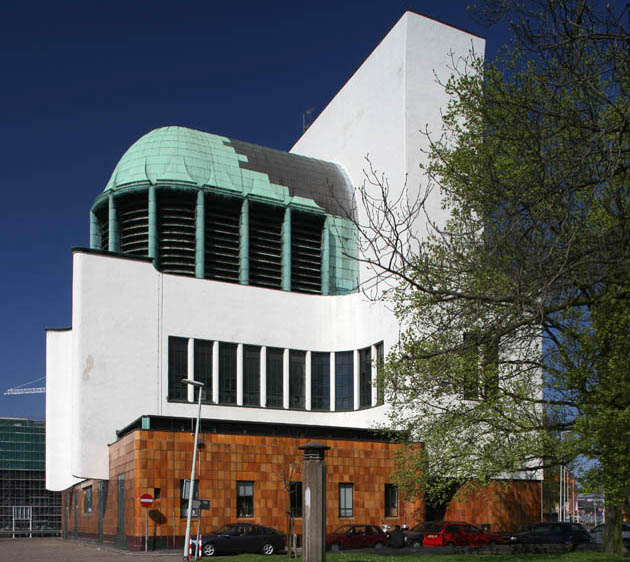
De Maastunnel, Rotterdam, A. van der Steur | Architectuurgids
De Maastunnel, Rotterdam, A. van der Steur - Architectuurgids op Architectuur.ORG
architectuur.org →Link to a page describing this subject · 4,499 chars · not written by Vinony
Wikidata facts
- Image
- Fietstunnel van de Maastunnel Rotterdam.jpg
Show 5 more facts
- date of official opening
- 1942-00-00
- street address
- tussen Parkkade en Oud-Charlois te Rotterdam
- inception
- 1942-00-00
- described at URL
- www.architectuur.org/bouwwerk/40/De_Maastunnel.html
- Commons category
Article · Polski
Tunel pod Mozą Maastunnel w Rotterdamie, Holandii (architekci: J.P. van Bruggen, Ad van der Steur) jest najstarszym tunelem budowanym metodą zanurzeniową w kraju. Połączył on brzegi Nowej Mozy, północ i południe miasta Rotterdam. Tunel składa się z czterech rur: dwóch dla ruchu samochodowego i po jednej do komunikacji pieszej i rowerowej. Budowę tunelu rozpoczęto w roku 1937 i zakończono w czasach okupacji hitlerowskiej w 1942 (właściwie już w 1941, jednakże oficjalne otwarcie odbyło się na początku 1942). Długość tunelu wynosi 1373 metry, wliczając wjazdy. Zamknięty tunel ma długość 1070 metrów. Najgłębszy punkt tunelu znajduje się na głębokości około 20 metrów poniżej poziomu morza. Na powierzchni tunel może być rozpoznany przez dwie charakterystyczne wieże wentylacyjne na brzegach rzeki Mozy. Każdego dnia korzysta z niego około 60000 pojazdów, wielu cyklistów oraz piesi. To sprawia, że Tunel pod Mozą jest ważnym elementem w systemie komunikacyjnym Rotterdamu.
Abstract from DBpedia / Wikipedia · CC BY-SA
On the map
2 mapped locations