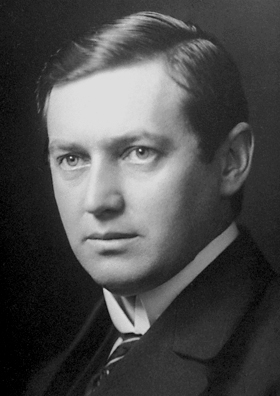
File:1924_Karl_Manne_Siegbahn.jpg · Wikimedia Commons · See Wikimedia Commons
Manne Siegbahn was a Swedish physicist who won the Nobel Prize in Physics in 1924 for his discoveries in X-ray spectroscopy, a technique that studies the properties of X-rays produced by atoms. His work was important because it helped scientists understand the structure of atoms and led to practical applications in fields like materials science and medicine.
AI-generated from the Wikipedia summary — may contain errors.
Nobel Prize
- The Nobel Prize in Physics1924
“for his discoveries and research in the field of X-ray spectroscopy”
Wikidata facts
- Instance of
- human
- Gender
- male
- Citizenship
- Sweden
- Place of death
- Engelbrekt church parish
- Occupation
- university teacher
- Employer
- Uppsala University
- Languages spoken
- Swedish
- Notable work
- X-ray spectroscopy
- Doctoral student
- Hannes Alfvén
- Field of work
- physics
- Image
- 1924 Karl Manne Siegbahn.jpg
Show 10 more facts
- member of
- Romanian Academy
- Commons category
- Manne Siegbahn
- date of birth
- 1886-12-03
- date of death
- 1978-09-24
- name in native language
- Karl Siegbahn
- birth name
- Karl Manne Georg Siegbahn
- significant person
- Lise Meitner
- maintained by WikiProject
- WikiProject Mathematics
- P8168
- Macedonia
- interested in
- physics
via Wikidata · CC0
~3 min read
Encyclopedic overview
Karl Manne Georg Siegbahn ( Swedish: [ˈmanːɛ ˈsiːgbɑːn]; 3 December 1886 – 26 September 1978) was a Swedish physicist who received the Nobel Prize in Physics in 1924 "for his discoveries and research in the field of X-ray spectroscopy."
Education and career
Excerpted from Wikipedia’s “Manne Siegbahn” article, available under the CC BY-SA 4.0 licence.
Gallery (5)
Available in 79 languages
- Español
- Français
- Deutsch
- 中文
- 日本語
- Русский
- Português
- Italiano
- العربية
- Afrikaans
- Aragonese
- Armenian
- azb
- Azerbaijani
- Bahasa Indonesia
- Bangla
- Basque
- Belarusian
Show 60 more
- Bosnian
- Bulgarian
- Catalan
- Central Kurdish
- Croatian
- Czech
- Danish
- Egyptian Arabic
- Esperanto
- Estonian
- Filipino
- Finnish
- Galician
- Georgian
- Greek
- Haitian Creole
- Hakka Chinese
- Hebrew
- Hungarian
- Ido
- Iloko
- Irish
- Kazakh
- Kurdish
- Latin
- Latvian
- Low German
- Macedonian
- Malay
- Malayalam
- Marathi
- Mazanderani
- Mingrelian
- Nederlands
- Newari
- Norwegian
- Norwegian Nynorsk
- Occitan
- Polski
- Romanian
- Scots
- Scottish Gaelic
- Serbian
- Slovak
- Slovenian
- Svenska
- Swahili
- Tamil
- Tatar
- Tiếng Việt
- Türkçe
- Ukrainian
- Urdu
- Uzbek
- Western Panjabi
- Wu Chinese
- Yoruba
- zh_min_nan
- فارسی
- 한국어
via Wikidata sitelinks · CC0