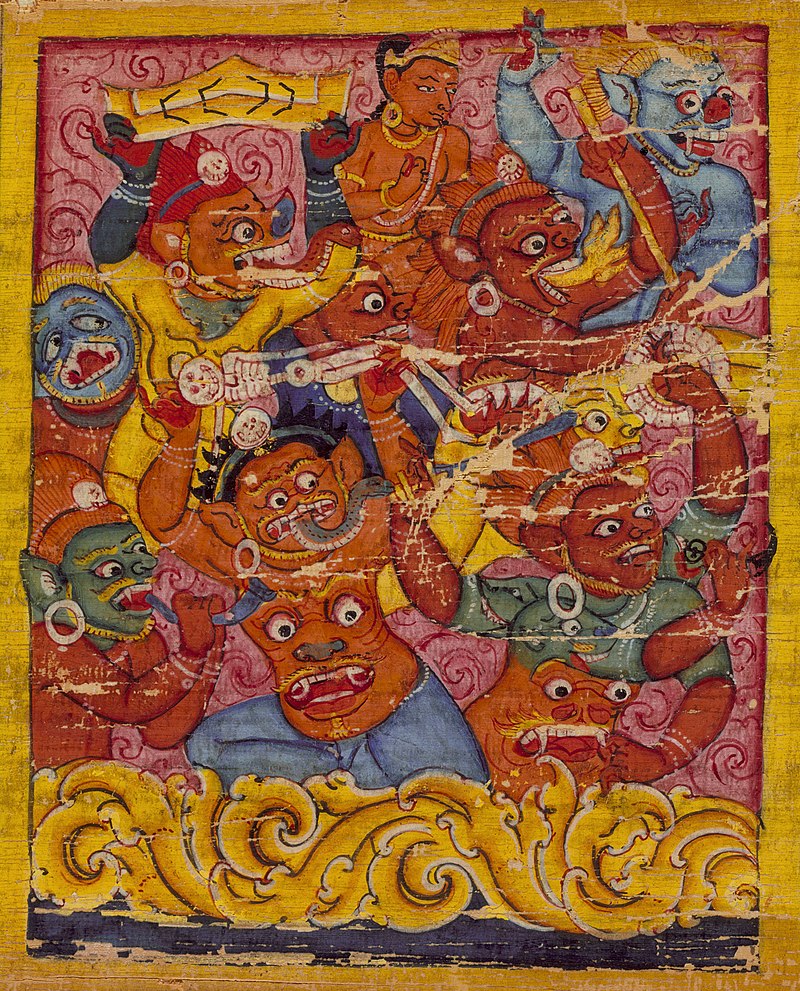
File:Astasahasrika_Prajnaparamita_Mara_Demons.jpeg · Wikimedia Commons · See Wikimedia Commons
Māra Pāpīyān
Sign in to saveAlso known as Varsavarti, Namuci, Kāmadhāturāja, Kṛṣṇa, Piṣuna, Pāpīyān, Pramādabandhu, Māra
God of death and sin. Ruler of the 6th heaven in the Kāmadhātu
Key facts
- English
- Mara; Demon
- Sanskrit
- मार, Māra
- Pali
- Māra
- Burmese
- မာရ်နတ် , ( MLCTS : Marnat )
- Chinese
- 天魔; 魔羅; 魔罗 , ( Pinyin : Tiānmó; Móluó; Móluó )
- Indonesian
- Mara; Setan; Iblis
- Japanese
- 魔羅; マーラ; 天魔 , ( Rōmaji : Mara; Māra; Tenma )
- Khmer
- មារ , ( UNGEGN : Méru )
- Korean
- 마라 , ( RR : Mara )
- Sinhala
- මාරයා , ( Mārayā )
- Tibetan
- བདུད , ( Wylie : bdud )
- Thai
- มาร , ( RTGS : Māra )
- Vietnamese
- Thiên Ma
via Wikipedia infobox
Wikidata facts
- Instance of
- demon
- Image
- Māra.JPG
Show 3 more facts
- Commons category
- Māra Pāpīyān
- facet of
- Buddhism
- described by source
- Brockhaus and Efron Encyclopedic Dictionary
Sources (1)
via Wikidata · CC0
~11 min read
Encyclopedic overview
Mara, in Buddhism, refers to any form of malicious force hindering enlightenment. Both demonic as well as celestial beings are part of Saṃsāra and hence, considered to be under Māra's influence, if they do not follow the message of the Buddha.
In the story of the Awakening of Prince Siddhartha Māra appears as a powerful deva, trying to seduce him with his celestial army and a vision of beautiful maidens (accharā) who, in various legends, are often said to be Mara's daughters. In other iterations, Māra is inspired by Hindu myths about asuras, a class of titans or lesser deities.
Excerpted from Wikipedia’s “Māra Pāpīyān” article, available under the CC BY-SA 4.0 licence.