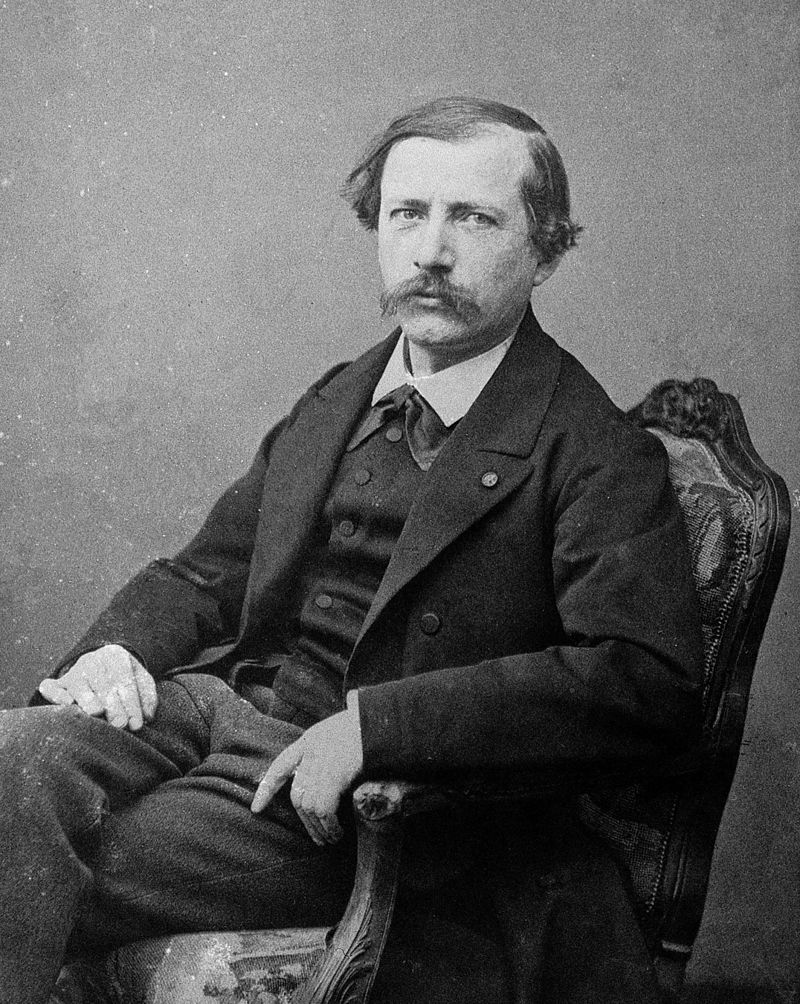
Marcellin Berthelot
Also known as Pierre Eugène Marcellin Berthelot, Pierre Eugene Marcellin Berthelot, Pierre Eugène Berthelot
French chemist and politician (1827-1907)
AI overview
Marcellin Berthelot was a French chemist and politician who lived from 1827 to 1907 and made significant contributions to the study of chemistry during the 19th century. His work helped advance the field of chemistry while he also played an active role in French political life.
AI-generated from the Wikipedia summary — may contain errors.
Person · Open Library
- Born
- 1827
- Died
- 1907
- Works
- 90
Top works
- Notice historique sur Joseph Decaisne
- The life and works of Brown-Séquard
- Dissociation, eq́uilibres chimiques
- Traité pratique de calorimétrie chimique
- La synthèse chimique
via Open Library + Wikidata
Recent publications · Crossref
5 total works indexed
Article
Pierre Eugène Marcellin Berthelot ( French: [bɛʁtəlo]; 25 October 1827 – 18 March 1907) was a French chemist and Republican politician noted for the Thomsen–Berthelot principle of thermochemistry. He synthesized many organic compounds from inorganic substances, providing a large amount of counter-evidence to the theory of Jöns Jakob Berzelius that organic compounds required organisms in their synthesis. Berthelot was convinced that chemical synthesis would revolutionize the food industry by the year 2000, and that synthesized foods would replace farms and pastures. "Why not", he asked, "if it proved cheaper and better to make the same materials than to grow them?"
He was considered "one of the most famous chemists in the world." Upon being appointed to the post of Minister of Foreign Affairs for the French government in 1895, he was considered "the most eminent living chemist" in France. In 1901, he was elected as one of the "Forty Immortals" of the Académie française. He gave all his discoveries not only to the French government but to humanity.
Gallery (4)
Connections
Categories
1827 births1907 deaths19th-century French chemistsAcademic staff of the Collège de FranceBurials at the Panthéon, ParisCorresponding members of the Saint Petersburg Academy of SciencesFellows of the American Academy of Arts and SciencesForeign associates of the National Academy of SciencesForeign members of the Royal SocietyFrench atheistsFrench fellows of the Royal Society