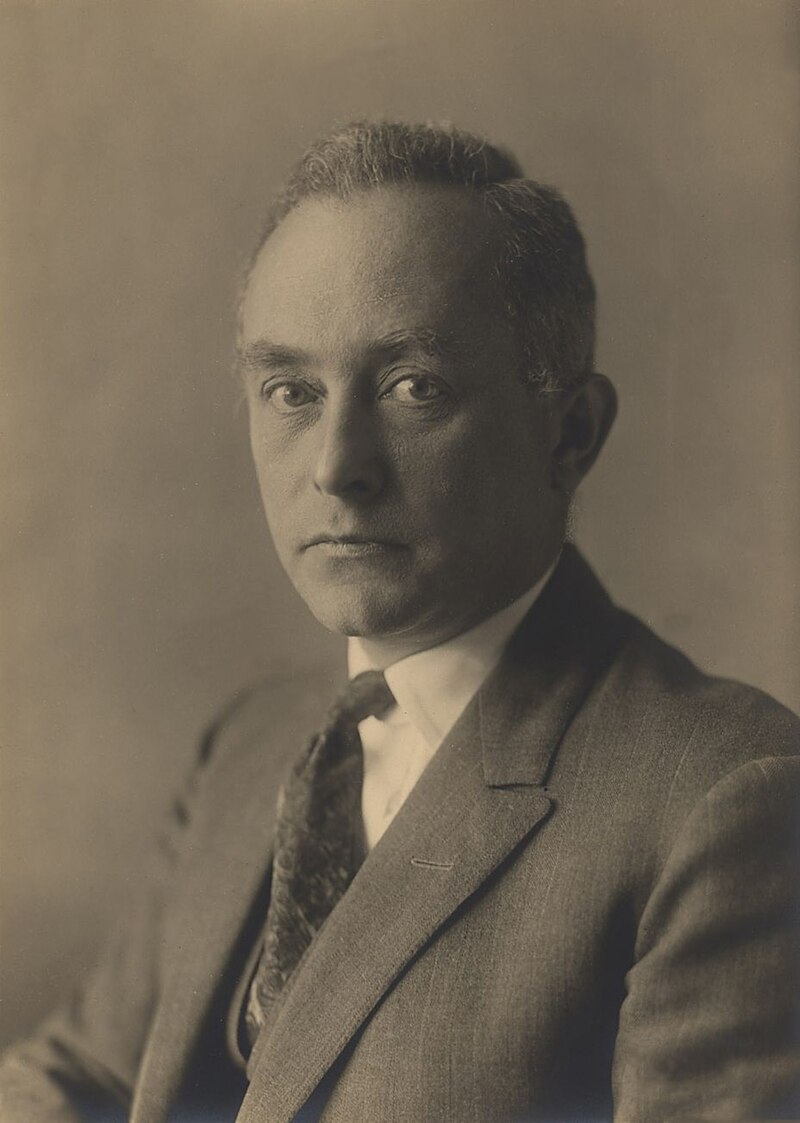
File:Max_Born.jpg · Wikimedia Commons · See Wikimedia Commons
OverviewAI-generated
Max Born was a physicist born on December 11, 1882, and died on January 5, 1970. He was recognized in the Royal Society collection, the Nobel Laureates collection, the Nobel Physics collection, and the American Academy Arts Sciences collection.
Born received one Nobel Prize. He had an Erdős number of 3.
Synthesized by Vinony from 9 facts across 3 sources: Wikidata, Nobel Prize, Vinony collections. Generated from structured data (not the Wikipedia text) and checked against those facts — may still contain errors.
Nobel Prize
- The Nobel Prize in Physics1954
“for his fundamental research in quantum mechanics, especially for his statistical interpretation of the wavefunction”
Shared · 1/2 portion
Wikidata facts
- Instance of
- human
- Given name
- Jacob
- Gender
- male
- Citizenship
- United Kingdom of Great Britain and Ireland
- Place of birth
- Wrocław
- Place of death
- Göttingen
- Father
- Gustav Born
- Occupation
- theoretical physicist
- Position held
- professor
- Educated at
- Gonville and Caius College
- Languages spoken
- English language
- Religion
- Lutheranism
- Notable work
- Born-Oppenheimer approximation
- Doctoral advisor
- Carl David Tolmé Runge
- Student of
- J. J. Thomson
- Doctoral student
- Otto Friedrich Bollnow
- Field of work
- quantum mechanics
- Conflict
- World War I
- Military branch
- Imperial German Army
- Image
- Max Born.jpg
- Work location
- Göttingen
- Residence
- Bad Pyrmont
Show 17 more facts
- topic's main category
- Category:Max Born
- member of
- National Academy of Sciences
- place of burial
- Göttingen City Cemetery
- Commons category
- Max Born
- date of birth
- 1882-12-11
- date of death
- 1970-01-05
- Erdős number
- 3
- student
- Wolfgang Pauli
- Commons gallery
- Max Born
- nominated for
- Nobel Prize in Physics
- ethnic group
- Jewish people
- on focus list of Wikimedia project
- Wikipedia:Vital articles/Level/4
- interested in
- physics
- P8168
- MX
- name in native language
- Max Born
- maintained by WikiProject
- WikiProject Mathematics
- archives at
- Berlin State Library
Sources (13)
via Wikidata · CC0
Article · Português
Max Born (Breslávia, 11 de dezembro de 1882 — Göttingen, 5 de janeiro de 1970) foi um físico e matemático alemão, que foi fundamental para o desenvolvimento da mecânica quântica. Também fez contribuições à física do estado sólido e óptica e supervisionou o trabalho de vários físicos notáveis nas décadas de 1920 e 1930. Ganhou em 1954 o Prêmio Nobel de Física por sua "investigação fundamental na Mecânica Quântica, especialmente na interpretação estatística da função de ondas". Entrou na Universidade de Göttingen, em 1904, onde conheceu três matemáticos de renome, Felix Klein, David Hilbert e Hermann Minkowski. Escreveu sua tese sobre o tema "Estabilidade de Elástico em um Plano e Espaço", vencedor do Prêmio da Faculdade de Filosofia da Universidade. Em 1905, ele começou a pesquisar a relatividade especial com Minkowski, e, posteriormente, escreveu sua tese de habilitação sobre o modelo atômico de Thomson. Um encontro ao acaso com Fritz Haber em Berlim, em 1918, levou à discussão da maneira pela qual um composto iônico é formado quando um metal reage com um átomo de halogênio, o qual é atualmente conhecido como ciclo de Born-Haber. Em 1921, Born voltou para Göttingen, arranjando outra cadeira para o seu amigo e colega de longa data James Franck. Nos termos de Born, Göttingen tornou-se um dos centros mais importantes do mundo para a física. Em 1925, Born e Werner Heisenberg formularam a representação da mecânica matricial da mecânica quântica. No ano seguinte, ele formulou a interpretação hoje padrão da função de densidade de probabilidade para ψ*ψ na equação de Schrödinger, pela qual ele foi agraciado com o Prêmio Nobel em 1954. Sua influência se estendeu muito além de sua própria pesquisa. Max Delbrück, Siegfried Flügge, Friedrich Hund, Pascual Jordan, Maria Goeppert-Mayer, Lothar Wolfgang Nordheim, Robert Oppenheimer e Victor Weisskopf, todos receberam seu doutorado sob a orientação de Born em Göttingen, e seus assistentes incluíam Enrico Fermi, Werner Heisenberg, Gerhard Herzberg, Friedrich Hund, Pascual Jordan, Wolfgang Pauli, Léon Rosenfeld, Edward Teller e Eugene Wigner. Em janeiro de 1933, o Partido Nazista chegou ao poder na Alemanha, e Born, que era judeu, foi suspenso. Ele emigrou para a Grã-Bretanha, onde trabalhou no Colégio de de St John, Cambridge, e escreveu um popular livro de ciência, The Restless Universe, assim como Atomic Physics, que logo se tornou um livro de texto padrão. Em outubro de 1936, ele se tornou o Professor Tait de Filosofia Natural na Universidade de Edimburgo, onde, trabalhando com os assistentes de origem alemã E. Walter Kellermann e Klaus Fuchs, continuou a sua investigação sobre a física. Max Born tornou-se um cidadão britânico naturalizado em 31 de agosto de 1939, um dia antes da Segunda Guerra Mundial eclodir na Europa. Permaneceu em Edimburgo até 1952. Aposentou-se em Bad Pyrmont, na Alemanha Ocidental. Morreu no hospital em Göttingen, em 5 de janeiro de 1970.
Abstract from DBpedia / Wikipedia · CC BY-SA
Gallery (7)
Available in 100 languages
- Español
- Français
- Deutsch
- 中文
- 日本語
- Русский
- Português
- Italiano
- العربية
- हिन्दी
- Afrikaans
- Armenian
- Asturian
- azb
- Azerbaijani
- Bahasa Indonesia
- Balinese
- Bangla
Show 81 more
- Basque
- Belarusian
- Bosnian
- Bulgarian
- Buriat
- Catalan
- Central Kurdish
- Croatian
- Czech
- Danish
- Egyptian Arabic
- Esperanto
- Estonian
- Filipino
- Finnish
- Galician
- Georgian
- Greek
- Haitian Creole
- Hakka Chinese
- Hebrew
- Hungarian
- Ido
- Interlingua
- Irish
- Javanese
- Kannada
- Kazakh
- Kurdish
- Kyrgyz
- Latin
- Latvian
- Lithuanian
- Macedonian
- Malagasy
- Malay
- Malayalam
- Marathi
- Mazanderani
- Mingrelian
- Mongolian
- Nederlands
- Newari
- Norwegian
- Norwegian Nynorsk
- Occitan
- Pashto
- Piedmontese
- Polski
- Punjabi
- Quechua
- Romanian
- Scots
- Scottish Gaelic
- Serbian
- Serbian (Latin)
- simple
- Slovak
- Slovenian
- Svenska
- Swahili
- Tajik
- Tamil
- Tatar
- Telugu
- Tiếng Việt
- Türkçe
- Ukrainian
- Urdu
- Uzbek
- Waray
- Welsh
- Western Panjabi
- Wu Chinese
- Yoruba
- Zaza
- zh_min_nan
- zh_yue
- فارسی
- ไทย
- 한국어
via Wikidata sitelinks · CC0