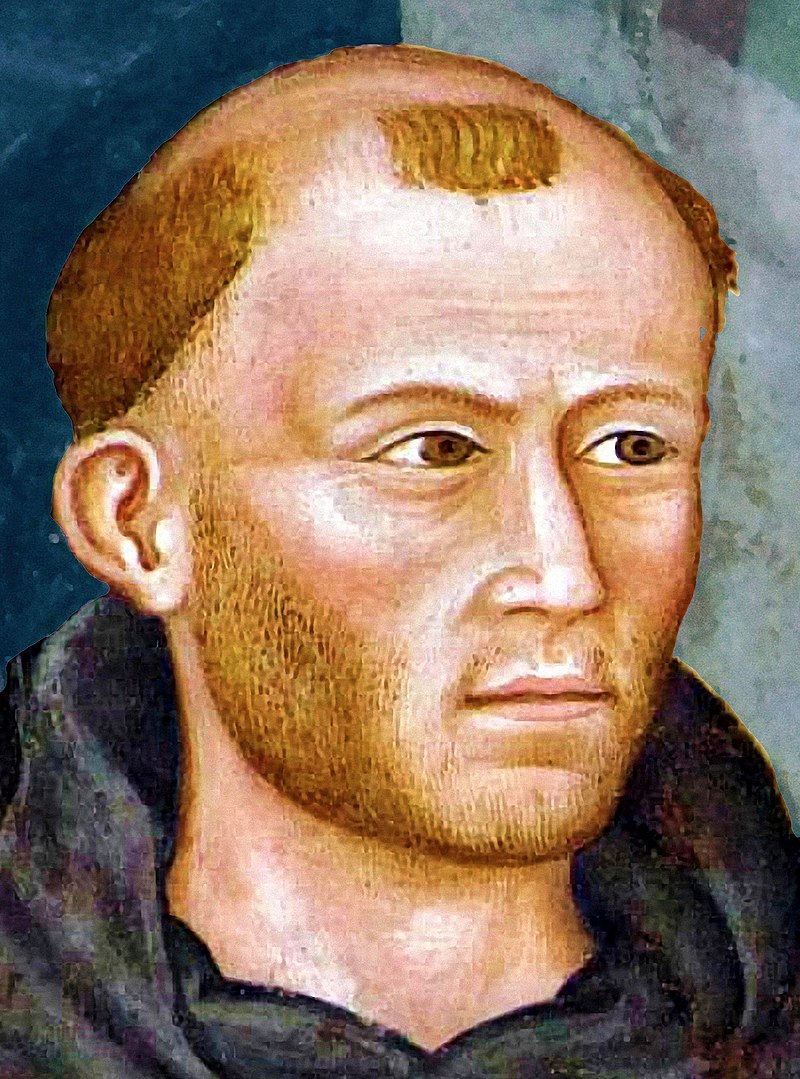
File:Meister_Eckhart_base_copie.jpg · Wikimedia Commons · See Wikimedia Commons
Meister Eckhart was a German philosopher and theologian whose ideas bridged medieval religious thought and early modern philosophy. His work continues to influence both Christian theology and Western philosophical traditions, though some of his teachings were controversial during his lifetime.
AI-generated from the Wikipedia summary — may contain errors.
Wikidata facts
- Instance of
- human
- Given name
- Johannes
- Gender
- male
- Citizenship
- Germany
- Place of birth
- Tambach-Dietharz
- Place of death
- Avignon
- Occupation
- mystic
- Position held
- vicar general
- Educated at
- University of Paris
- Employer
- University of Paris
- Languages spoken
- Middle High German
- Religion
- Catholic Church
- Field of work
- theology
- Image
- Eckharts wirtschaft.jpg
- Work location
- Erfurt
- Residence
- Erfurt
- Convicted of
- heresy
- Religious order
- Dominican Order
Show 11 more facts
- Commons category
- Meister Eckhart
- date of birth
- 1260-01-01
- birth name
- Eckhart
- name in native language
- Meister Eckhart
- described by source
- The Catholic Encyclopedia
- lifestyle
- mysticism
- student
- Johannes Tauler
- different from
- Eckhart Tolle
- hashtag
- meistereckhart
- Commons Creator page
- Meister Eckhart
- date of death
- 1328-01-01
Sources (6)
via Wikidata · CC0
~40 min read
Encyclopedic overview
Eckhart von Hochheim OP (c. 1260 – c. 1328), commonly known as Meister Eckhart ( German: [ˈmaɪstɐ ˈʔɛkaʁt]), Master Eckhart or Eckehart, claimed original name Johannes Eckhart, was a German Catholic priest, theologian, philosopher and mystic. He was born near Gotha in the Landgraviate of Thuringia (now Thuringia in central Germany) in the Holy Roman Empire.
Eckhart came into prominence during the Avignon Papacy at a time of increased tensions between monastic orders, diocesan clergy, the Franciscan Order, and Eckhart's Dominican Order. In later life, he was accused of heresy and brought up before the local Franciscan-led Inquisition, and tried as a heretic by Pope John XXII with the bull In Agro Dominico of March 27, 1329. In the trial, excerpts of his Book of Divine Consolation were used against Eckhart. He seems to have died before his verdict was received.
Excerpted from Wikipedia’s “Meister Eckhart” article, available under the CC BY-SA 4.0 licence.