
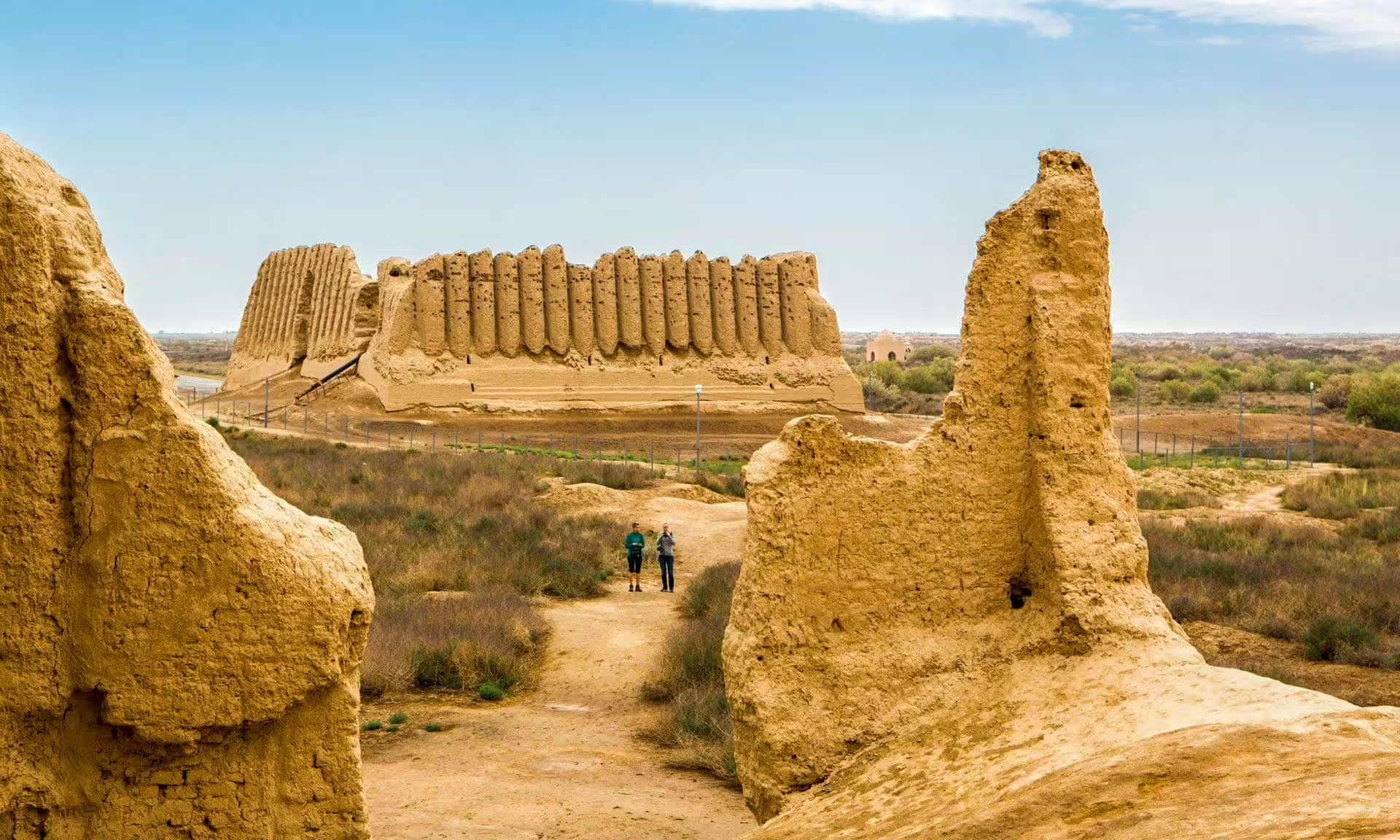
File:Turkmenistan_Merv_city.jpg · Wikimedia Commons · See Wikimedia Commons
Merv
Sign in to saveAlso known as Merve Oasis, Marv, Merw, Marw, Margush
Merv ( ; ), also known as the Merve Oasis, was a major Iranian city in Central Asia, located on the historical Silk Road, near today's Mary, Turkmenistan. Human settlements on the site of Merv existed from the 3rd millennium BC until the 18th century AD. It changed hands repeatedly throughout history. Under the Achaemenid Empire, it was the center of the satrapy of Margiana. It was subsequently ruled by Hellenistic Kings, Parthians, Sasanians, Arabs, Ghaznavids, Seljuqs, Khwarazmians and Timurids, among others.
Merv was a major Central Asian city on the Silk Road (in present-day Turkmenistan) that was continuously inhabited from the 3rd millennium BC until the 18th century AD, serving as an important center under numerous empires including the Achaemenids, Parthians, Sasanians, and various Islamic dynasties. Its long history and strategic location made it a significant hub of trade, culture, and power as different rulers controlled the region across thousands of years.
AI-generated from the Wikipedia summary — may contain errors.
Key facts
- Ancient site.name
- Merv
- Ancient site.native_name
- ''''
- Ancient site.alternate_name
- AlexandriaAntiochia in MargianaMarw al-Shāhijān
- Ancient site.image
- Turkmenistan Merv city.jpg
- Ancient site.alt
- Photograph of the ruins of the city of Marv
- Ancient site.caption
- Ruins of the city of Merv: the Great Kyz Kala.
- Ancient site.map_type
- West Asia#Turkmenistan
- Ancient site.relief
- yes
- Ancient site.region
- Central Asia
- Ancient site.type
- Settlement
- Ancient site.abandoned
- 1789
- Ancient site.cultures
- Persian, Buddhist, Arab, Seljuk, Mongol, Turkmen
- Ancient site.condition
- In ruins
- Ancient site.designation1
- WHS
- Ancient site.designation1_offname
- State Historical and Cultural Park "Ancient Merv"
- Ancient site.designation1_date
- 1999 (23rd session)
- Ancient site.designation1_number
- 886
- Ancient site.designation1_criteria
- ii, iii
via Wikipedia infobox
Described at
Starobylý Merv - Turkmenistan - PlaceMania
Táto slávna oáza Hodvábnej cesty bola jedným z najväčších miest na svete, než ju zničila mongolská armáda.
placemania.sk →Merv, jedno z najznámejších miest, o ktorom ste (pravdepodobne) nikdy nepočuli, slúžilo počas svojej viac ako 4 000 rokov dlhej histórie ako hlavné mesto viacerých ríš a kráľovstiev. Vďaka bohatým zásobám vody a mimoriadne strategickej polohe medzi Afganskou vysočinou a nížinou púšte Karakum bol Merv vyhľadávanou geografickou korisťou Peržanov, Arabov, Turkov aj Grékov – vrátane Alexandra Veľkého, ktorý podľa starorímskeho autora Plínia Staršieho mesto založil ako prvý. Či už je to pravda alebo nie, je nesporné, že Merv sa nakoniec z obyčajného oázového mesta stal administratívnym, obchodným a náboženským centrom politických dynastií, ktoré sa rozprestierali od dnešného Turecka až po Strednú Áziu, Perzský záliv a ďalšie krajiny. Tolui okamžite nariadil svojim vojakom, aby zabili všetkých obyvateľov Mervu okrem 400 remeselníkov, ktorí mali relatívne šťastie a boli zajatí. Celkovo sa uvádza, že pri zničení Mervu Mongolmi zahynulo 700 000 až 1 milión ľudí vrátane niekoľkých stotisíc utečencov, ktorí hľadali útočisko v okolí a boli pochytaní pri krviprelievaní. Útok znamenal koniec vlády Mervu ako významnej obchodnej stanice na Hodvábnej ceste a ceneného hlavného mesta. Dnes však sláva Mervu opäť žiari vďaka úsiliu turkménskej vlády, zanietených vedcov a UNESCO, ktoré v roku 1999 vyhlásilo starobylý Merv za svetové dedičstvo (vôbec prvá takáto pocta v Turkménsku). Výsledkom tohto úsilia je odhalenie tisícročnej histórie, ktorá bola kedysi stratená v čase, vrátane osídlenia z doby bronzovej, ktoré sa datuje až do roku 2500 pred n. l., ako aj početných pevností, stredovekých hradieb, mauzóleí, mešít a ďalších objektov, ktoré sú v rôznom štádiu dochovanosti. Samotná veľkosť mesta a jeho ruín radí Merv medzi najpôsobivejšie a najkomplexnejšie archeologické náleziská na Zemi a prináša nové uznanie pre kedysi slávne hlavné mesto sveta. Zakladateľ projektu PlaceMania.sk a zodpovedá za jeho obsah, technické fungovanie a dlhodobý rozvoj. Cestovné zápisky na webe vychádzajú z vlastnej skúsenosti z ciest; faktografické záznamy o miestach vznikajú kombináciou verejných zdrojov, automatizovaného spracovania dát a redakčného overovania. Zameriava sa na netradičné lokality, ich historický a geografický kontext a menej známe súvislosti. Things to do near Starobylý Merv, Merv, Merw, Antiochia Margiańska, Мерв, مرو الشاهجان, メルブ遺跡, Lokalita, Politická oblasť, locality, political, Mary, Türkmenistan, Turkmenistan, TM, TKM. Find tours, guided tours, local activities, attractions, tickets, excursions, sightseeing, day trips and travel experiences nearby. Coordinates: 37.664426, 62.1747186. Pozostatky stredovekého mesta sa nachádzajú v jednej z najizolovanejších púštnych oblastí Turkménska. Pozrite si ďalšie zaujímave miesta vo svete, ktoré stoja za naplánovanie ďalšej cesty. Pozostatky stredovekého mesta sa nachádzajú v jednej z najizolovanejších púštnych oblastí Turkménska. Toto starobylé útočisko na Hodvábnej ceste s výhľadom na údolie Wakhan ako zázrakom stále stojí. Opustená mongolská pevnosť, kde piesok lezie po hradbách a rieka, ktorá ju kedysi živila, dnes skôr pripomína mýtus než istotu.… Chcete vidieť ďalšie úchvatné miesta ako Starobylý Merv? Nájdeš ich u nás na mape. Objav s nami ďalšie úžasné miesta na zemi.
Excerpt from a page describing this subject · 16,496 chars · not written by Vinony
Wikidata facts
- Named after
- Alexander the Great
- Country
- Turkmenistan
- Located in
- Baýramaly District
- Area
- 883.3
- Capital of
- Margiana
- Image
- Merv City Walls (10) (44747325714).jpg
- Significant event
- Siege of Merv
Show 7 more facts
- Commons category
- Merv
- twinned administrative body
- Istanbul
- topic's main category
- Category:Merv
- heritage designation
- World Heritage Site
- category of associated people
- Category:People from Merv
- different from
- Mary
- described at URL
- www.placemania.sk/svetova-zaujimavost/starobyly-merv
via Wikidata · CC0
~36 min read
Encyclopedic overview
28 sectionsContents
- History
- Hellenistic era
- Parthian era
- Sasanian era
- Arab conquest and influence
- Turkmens in Merv
- Mongols in Merv
- Uzbeks in Merv and its final destruction
- Nineteenth century
- Remains
- Organization of remains
- Erk Gala
- Gäwürgala
- Soltangala
- Shaim Kala
- Abdyllahangala
- Demographics
- Economy
- Geography
- International relations
- Twin towns – sister cities
- Gallery
- See also
- Notes
- References
- Citations
- Sources
- External links
Merv ( ; ), also known as the Merve Oasis, was a major Iranian city in Central Asia, located on the historical Silk Road, near today's Mary, Turkmenistan. Human settlements on the site of Merv existed from the 3rd millennium BC until the 18th century AD. It changed hands repeatedly throughout history. Under the Achaemenid Empire, it was the center of the satrapy of Margiana. It was subsequently ruled by Hellenistic Kings, Parthians, Sasanians, Arabs, Ghaznavids, Seljuqs, Khwarazmians and Timurids, among others.
Merv served as the capital of several polities throughout its history. In the beginning of the 9th century, Merv was the seat of the caliph al-Ma'mun and the capital of the entire Islamic caliphate. It served later as the seat of the Tahirid governors of Khorasan. In the 11th–12th centuries, Merv was the capital of the Great Seljuk Empire and remained so until its ultimate fall. Around this time, Merv turned into a chief centre of Islamic science and culture, attracting as well as producing renowned poets, musicians, physicians, mathematicians and astronomers. The great Persian polymath Omar Khayyam, among others, spent a number of years working at the observatory in Merv. As Persian geographer and traveller al-Istakhri wrote of Merv: "Of all the countries of Iran, these people were noted for their talents and education." Arab geographer Yaqut al-Hamawi counted as many as 10 giant libraries in Merv, including one within a major mosque that contained 12,000 volumes.
Excerpted from Wikipedia’s “Merv” article, available under the CC BY-SA 4.0 licence.
Gallery (42)
On the map
3 mapped locations
Available in 65 languages
- Español
- Français
- Deutsch
- 中文
- 日本語
- Русский
- Português
- Italiano
- العربية
- हिन्दी
- Armenian
- azb
- Azerbaijani
- Bahasa Indonesia
- Bangla
- Bashkir
- Basque
- Bulgarian
Show 46 more
- Catalan
- Croatian
- Czech
- Danish
- Egyptian Arabic
- Esperanto
- Finnish
- Galician
- Georgian
- Greek
- Hebrew
- Hungarian
- Kazakh
- Kyrgyz
- Latin
- Latvian
- Lithuanian
- Maithili
- Malay
- Malayalam
- Maltese
- Mazanderani
- Moksha
- Nederlands
- Nepali
- Norwegian
- Polski
- Punjabi
- Romanian
- Serbian
- Serbian (Latin)
- Slovenian
- Svenska
- Tajik
- Tiếng Việt
- Türkçe
- Turkmen
- Tuvinian
- Ukrainian
- Urdu
- Uzbek
- Waray
- Western Frisian
- Wu Chinese
- فارسی
- 한국어
via Wikidata sitelinks · CC0