File:Human_carbonic_anhydrase_II_PDB=6LUX.png · Wikimedia Commons · See Wikimedia Commons
mineral (nutrient)
Sign in to saveAlso known as mineral nutrition, dietary mineral
chemical element required as an essential nutrient by organisms to perform functions necessary for life
Minerals are chemical elements that your body needs to get from food and water to stay healthy and function properly. They're essential because they help your body do important jobs like building bones, making energy, and keeping your heart beating.
AI-generated from the Wikipedia summary — may contain errors.
Wikidata facts
- Subclass of
- bioelement
- Image
- Periodic table of the chemical elements (1-118)Dietary minerals.PNG
Show 4 more facts
- topic's main category
- Category:Dietary minerals
- Commons category
- Dietary minerals
- partially coincident with
- essential nutrient
- topic has template
- Template:Mineral supplements
via Wikidata · CC0
~10 min read
Encyclopedic overview
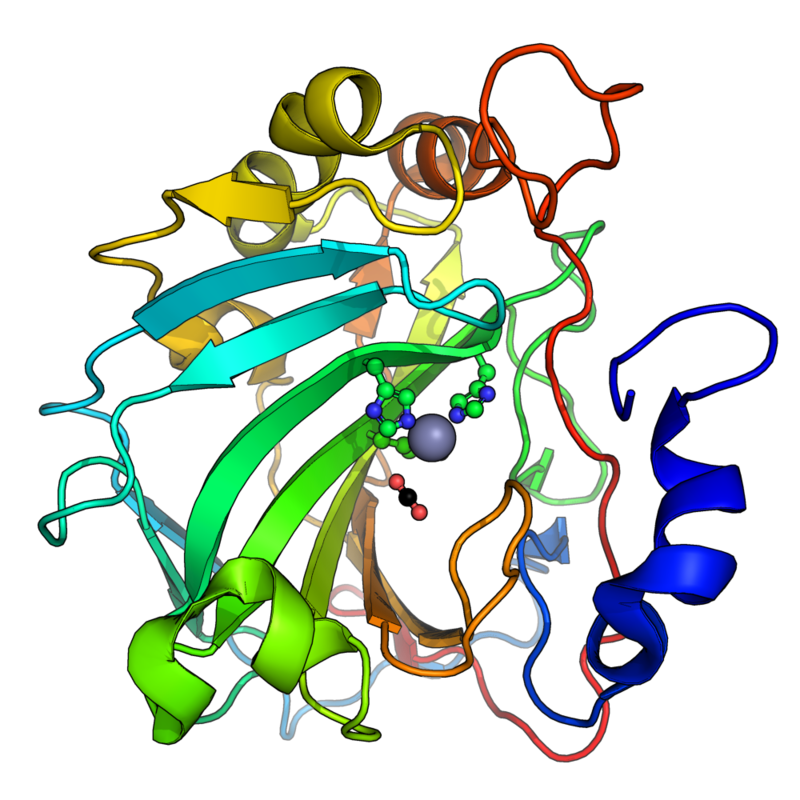
Carbonic anhydrase, an enzyme that requires zinc (gray sphere near the center of this image), is essential for exhalation of carbon dioxide.
In the context of nutrition, a mineral is a chemical element. Some "minerals" are essential for life, but most are not. Minerals are one of the four groups of essential nutrients; the others are vitamins, essential fatty acids, and essential amino acids. The five major minerals in the human body are calcium, phosphorus, potassium, sodium, and magnesium. The remaining minerals are called "trace elements". The generally accepted trace elements are iron, chlorine, cobalt, copper, zinc, manganese, molybdenum, iodine, selenium, and bromine; there is some evidence that there may be more.
Excerpted from Wikipedia’s “mineral (nutrient)” article, available under the CC BY-SA 4.0 licence.