Described at
Mobile | Tate
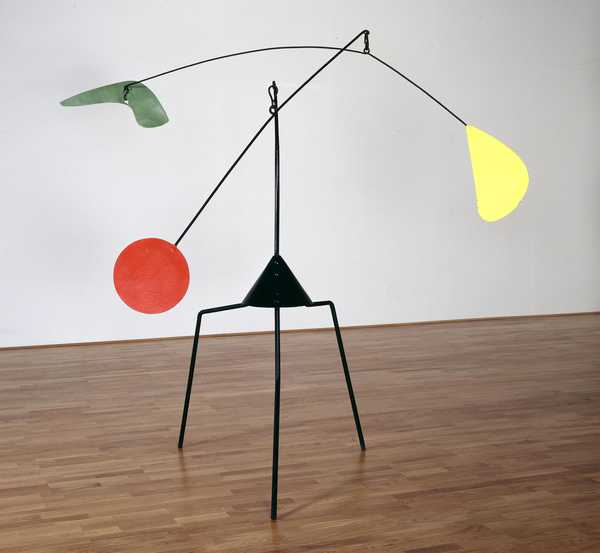
Tate glossary definition for mobile: A type of sculpture that is formed of delicate components which are suspended in the air and move in response to air currents or motor power
tate.org.uk →Artist Alexander Calder was the originator of the mobile. By suspending forms that move with the flow of air, Calder revolutionised sculpture. It was Marcel Duchamp who dubbed these works ‘mobiles’. Rather than a solid object of mass and weight, they continually redefine the space around them as they move. Calder’s subtle balance of form and colour resulted in works that suggest an animated version of paintings by friends such as Joan Miró . Does this text contain inaccurate information or language that you feel we should improve or change? We would like to hear from you.
Excerpt from a page describing this subject · 6,313 chars · not written by Vinony
Wikidata facts
Show 3 more facts
- discoverer or inventor
- Alexander Calder
- described at URL
- www.tate.org.uk/art/art-terms/m/mobile
- Commons category
- Mobiles
Sources (1)
via Wikidata · CC0
Article · Français
Un mobile est un ensemble d'éléments construits en matériaux légers et disposés de telle façon qu'ils prennent des dispositions variées sous l'influence du vent ou de tout autre moteur. Le sculpteur Alexander Calder est connu pour ses mobiles. On lui attribue l'invention du mobile artistique en 1931, bien que l'objet fut nommé par Marcel Duchamp et que Bruno Munari ait proposé la macchina aerea en 1930. Les mobiles sont très appréciés dans les chambres de bébé, et souvent placés au-dessus du lit du nourrisson. Ils sont utilisés pour les divertir et stimuler leur vue. Certains compositeurs ont transposé le concept de Calder à la création musicale. Les œuvres les plus connues sont celles de Morton Feldman et Earle Brown.
Abstract from DBpedia / Wikipedia · CC BY-SA