Pietà (Michelangelo)
Also known as Pieta
sculpture by Michelangelo
AI overview
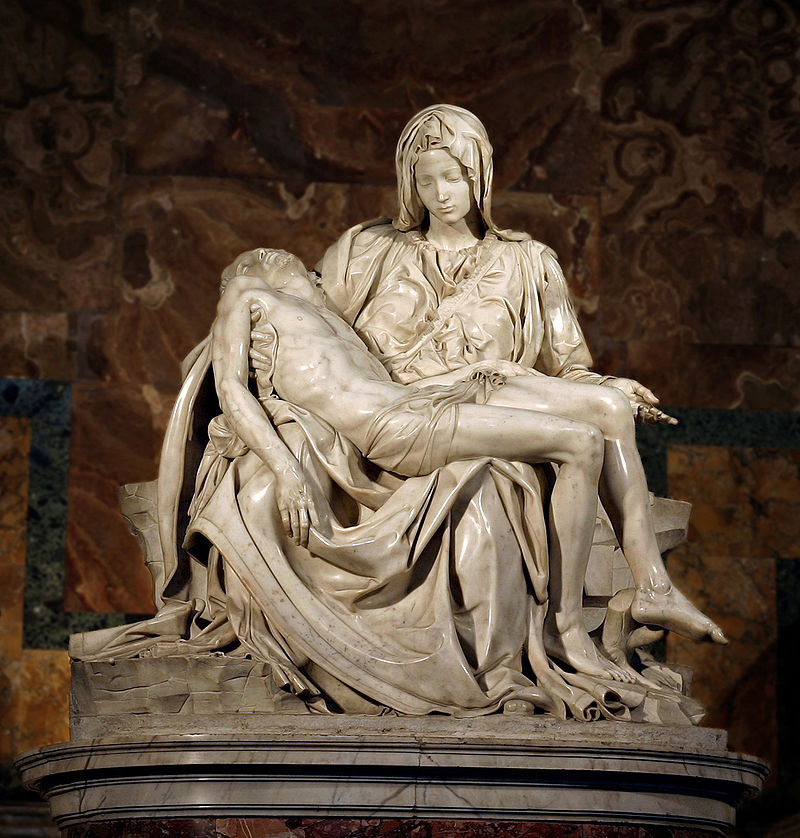
Pietà is a marble sculpture by Michelangelo depicting Mary mourning over the body of Jesus Christ after his crucifixion. Created in the late 15th century, it is considered one of the greatest masterpieces of Renaissance art and is housed in St. Peter's Basilica in Vatican City.
AI-generated from the Wikipedia summary — may contain errors.
Wikidata facts
- Image
- The Pietà by Michelangelo (48135182552).jpg
Sources (7)
via Wikidata · CC0
Article
The Pietà (Madonna della Pietà, Italian: [maˈdɔnna della pjeˈta]; '[Our Lady of] Pity'; 1498–1499) is a Carrara marble sculpture of Jesus and Mary at Mount Golgotha representing the "Sixth Sorrow" of the Virgin Mary by Michelangelo Buonarroti, in Saint Peter's Basilica, Vatican City, for which it was made. It is a key work of Italian Renaissance sculpture and often taken as the start of the High Renaissance.
The sculpture captures the moment when Jesus, taken down from the cross, is given to his mother Mary. Mary looks younger than Jesus; art historians believe Michelangelo was inspired by a passage in Dante Alighieri's Divine Comedy: "O virgin mother, daughter of your Son [...] your merit so ennobled human nature that its divine Creator did not hesitate to become its creature" (Paradiso, Canto XXXIII). Michelangelo's aesthetic interpretation of the Pietà is unprecedented in Italian sculpture because it balances early forms of naturalism with the Renaissance ideals of classical beauty.
Gallery (5)
On the map
2 mapped locations