
Mudiyettu
Sign in to saveAlso known as Mudiyett
right|thumb|Mudiyettu thumb|250px|right|kooli - a character who helps Kali appear as a comedian Mudiyettu is a traditional ritual theatre and folk dance drama from Kerala that enacts the mythological tale of a battle between the goddess Kali and the demon Darika. The ritual is a part of the Bhagavathi or Bhadrakali cult. The dance is performed in Bhadrakali temples, the temples of the Mother Goddess, between February and May after the harvesting season.
Key facts
- Performing art.name
- Mudiyettu
- Performing art.image
- Mudiyettu at Kezhoor kavu 02-02-2013 2-04-33.JPG
- Performing art.caption
- Mudiyettu at Keezhoor shrine in 2013
- Performing art.medium
- Ritual theatre and folk dance
- Performing art.culture
- Kerala
- Intangible heritage.ICH
- Mudiyettu, ritual theatre and dance drama of Kerala
- Intangible heritage.State Party
- India
- Intangible heritage.ID
- 00345
- Intangible heritage.Region
- APA
- Intangible heritage.Year
- 2010
- Intangible heritage.Session
- 5th
- Intangible heritage.List
- Representative
via Wikipedia infobox
Described at
Mudiyettu, ritual theatre and dance drama of Kerala - UNESCO Intangible Cultural Heritage
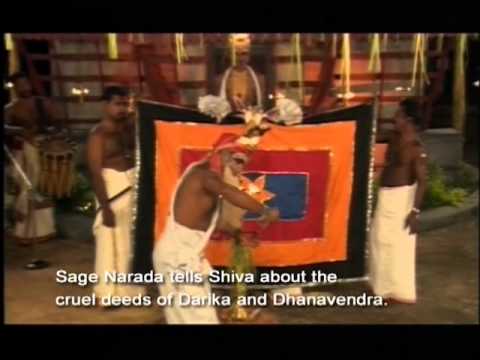
ich.unesco.org →Mudiyettu is a ritual dance drama from Kerala based on the mythological tale of a battle between the goddess Kali and the demon Darika. It is a community ritual in which the entire village participates. After the summer crops have been harvested, the villagers reach the temple in the early morning on an appointed day. Mudiyettu performers purify themselves through fasting and prayer, then draw a huge image of goddess Kali, called as kalam , on the temple floor with coloured powders, wherein the spirit of the goddess is invoked. This prepares the ground for the lively enactment to follow, in which the divine sage Narada importunes Shiva to contain the demon Darika, who is immune to defeat by mortals. Shiva instead commands that Darika will die at the hand of the goddess Kali. Mudiyettu is performed annually in ‘Bhagavati Kavus’, the temples of the goddess, in different villages along the rivers Chalakkudy Puzha, Periyar and Moovattupuzha. Mutual cooperation and collective participation of each caste in the ritual instils and strengthens common identity and mutual bonding in the community. Responsibility for its transmission lies with the elders and senior performers, who engage the younger generation as apprentices during the course of the performance. Mudiyettu serves as an important cultural site for transmission of traditional values, ethics, moral codes and aesthetic norms of the community to the next generation, thereby ensuring its continuity and relevance in present times. 1. Knowledge and practices concerning nature and the universe (308) 2. Oral traditions and expressions (384) 3. Performing arts (411) 4. Social practices, rituals and festive events (584) 5. Traditional craftsmanship (460)
Excerpt from a page describing this subject · 9,449 chars · not written by Vinony
Wikidata facts
- Country
- India
- Image
- Mudiyettu at Kezhoor kavu 02-02-2013 2-02-23.JPG
Show 2 more facts
- Commons category
- Mudiyett
- described at URL
- ich.unesco.org/es/RL/00345
via Wikidata · CC0
~4 min read
Encyclopedic overview
6 sectionsContents
- Kali-Darika myth
- Features of Mudiyettu
- The role of the community
- Transmitting and conserving Mudiyettu
- See also
- References
right|thumb|Mudiyettu thumb|250px|right|kooli - a character who helps Kali appear as a comedian Mudiyettu is a traditional ritual theatre and folk dance drama from Kerala that enacts the mythological tale of a battle between the goddess Kali and the demon Darika. The ritual is a part of the Bhagavathi or Bhadrakali cult. The dance is performed in Bhadrakali temples, the temples of the Mother Goddess, between February and May after the harvesting season.
In 2010 Mudiyettu was inscribed in the UNESCO’s Representative List of the Intangible Cultural Heritage of Humanity, becoming the second art form from Kerala after Koodiyattam.
Excerpted from Wikipedia’s “Mudiyettu” article, available under the CC BY-SA 4.0 licence.