lakalaka
Sign in to saveThe lakalaka (walking briskly) is a Tongan group dance where the performers are largely standing still and make gestures with their arms only. It is considered as the national dance of Tonga and part of the intangible human heritage. It is the ideal dance at formal occasions, like the birthday of the king or the opening of a church.
In the Vinony graph
Within Vinony's link graph, lakalaka is referenced by 111 other articles, and connects out to Sālote Tupou III of Tonga, Luvale people and Spring procession of Ljelje/Kraljice.
It is catalogued under topics including Culture of Tonga, Dances of Tonga and Group dances.
Its subject is documented across 21 Wikipedia language editions.
Key facts
- Dance.name
- Lakalaka
- Dance.image
- lakalaka.jpg
- Dance.caption
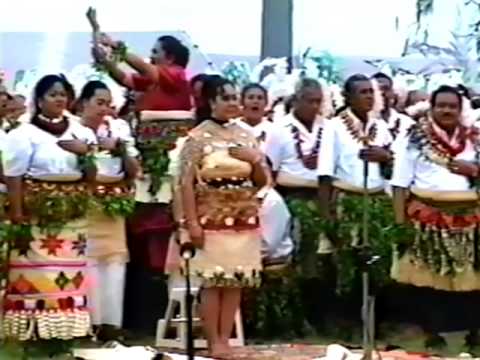
- The lakalaka from Kanokupolu for the 70th birthday of the king of Tonga. Princess Pilolevu Tuita as vāhenga
- Dance.genre
- Group dance
- Dance.origin
- Tonga
- Intangible heritage.ICH
- Lakalaka, dances and sung speeches of Tonga
- Intangible heritage.State Party
- Tonga
- Intangible heritage.ID
- 00072
- Intangible heritage.Region
- APA
- Intangible heritage.Year
- 2008
- Intangible heritage.Session
- 3rd
- Intangible heritage.List
- Representative
via Wikipedia infobox
Described at
Lakalaka, dances and sung speeches of Tonga - UNESCO Intangible Cultural Heritage
ich.unesco.org →The Tonga archipelago lies in the South Pacific approximately 2,000 kilometres north-east of New Zealand. It is the only constitutional monarchy in the Pacific region. Often considered Tonga’s national dance, Lakalaka is a blend of choreography, oratory, and vocal and instrumental polyphony. This cultural expression is practised by communities throughout the islands and features prominently at important celebrations such as the coronation of the monarch and anniversaries of the constitution.The term lakalaka means “to step briskly or carefully” in the Tongan language, and its origins can be traced to a dance known as the me’elaufola. The tradition developed in the nineteenth century and, thanks to the continuous transmission and the patronage of the royal family, it underwent a revival in the twentieth century. Performances last approximately thirty minutes and involve large groups of up to several hundred people. Participants are aligned in rows, men on the right and women on the left.The men dance in rapid and energetic movements, while the women execute graceful dance steps co-ordinated with elegant hand gestures. Both groups clap and sing as they move, and a chorus often provides vocal accompaniment.The polyphonic singing coupled with the synchronized movements of hundreds of dancers offers an impressive spectacle.The creative force behind the performance is the punake who is at the same time poet, composer, choreographer and performance director. Punakes are expected to continually renew the Lakalaka repertory, by exploring themes related to Tongan history, legends, values and social structure. However, over the past few decades, the number of performances has, diminished and young composers tend to recycle the existing repertory rather than create new compositions. 1. Oral traditions and expressions (384) 2. Performing arts (411) 3. Social practices, rituals and festive events (584)
Excerpt from a page describing this subject · 8,634 chars · not written by Vinony
Wikidata facts
- Country of origin
- Tonga
Show 2 more facts
- described at URL
- ich.unesco.org/es/RL/00072
- intangible cultural heritage status
- Masterpieces of the Oral and Intangible Heritage of Humanity
Sources (1)
via Wikidata · CC0
~7 min read
Encyclopedic overview
6 sectionsContents
- History
- Choreography
- Performers
- Dress
- References
- Bibliography
The lakalaka (walking briskly) is a Tongan group dance where the performers are largely standing still and make gestures with their arms only. It is considered as the national dance of Tonga and part of the intangible human heritage. It is the ideal dance at formal occasions, like the birthday of the king or the opening of a church.
==History== The current lakalaka seems to be quite equal to the ancient meelaufola (outstretched arms dance), of which descriptions exist from early European explorers, but the dance was forbidden by the missionaries for being too 'heathen'. This was confirmed in the 1850 code of King Tāufaāhau Tupou I. Notably, an article to that effect was absent from the 1862 code, although it was reinserted by 1885. In any case, none of these laws specified exactly what was meant by 'heathen dance'. There are reports of some huge dance festivals during these times, and no reports of any arrests. Admittedly, the pre-missionary pōmee (night dances), after which couples disappeared into the bushes, did not occur anymore.
Excerpted from Wikipedia’s “lakalaka” article, available under the CC BY-SA 4.0 licence.