
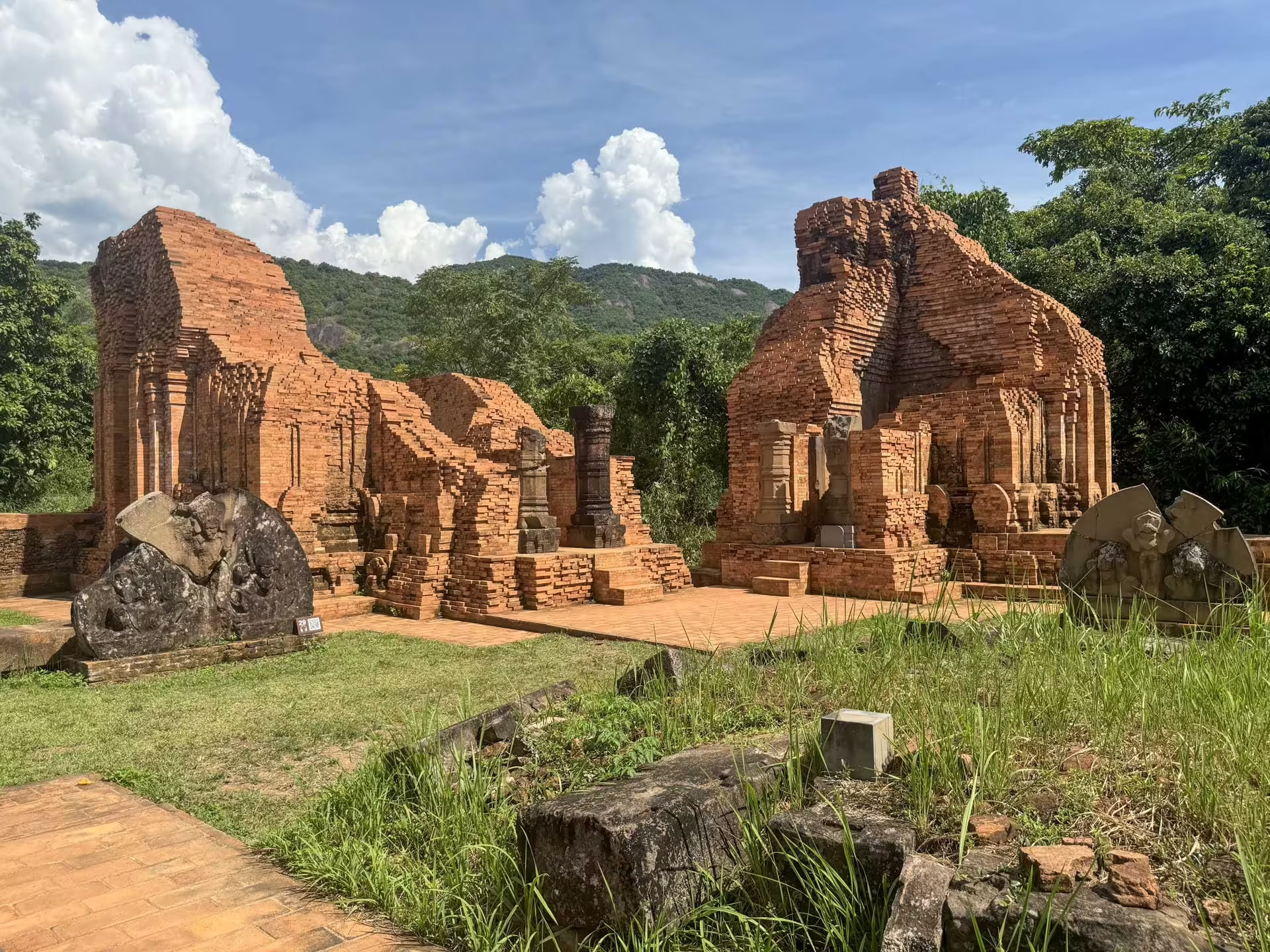
File:2024_-_Mỹ_Sơn_Group_B,_C_and_D_-_img_23.jpg · Wikimedia Commons · See Wikimedia Commons
Mỹ Sơn
Sign in to saveAlso known as My Son sanctuary, Monuments Čams De L'Annam, My Son Santuary
Vietnamese world heritage site with over 100 Cham Hindu monument ruins
Mỹ Sơn is a Vietnamese archaeological site containing the ruins of over 100 temples and structures built by the Cham people, who practiced Hinduism in Southeast Asia centuries ago. It is recognized as a UNESCO World Heritage Site because these monuments are exceptional examples of Hindu-influenced architecture and represent an important but largely disappeared civilization in the region's history.
AI-generated from the Wikipedia summary — may contain errors.
Key facts
- Affiliation
- Hinduism
- Deity
- Śiva , Bhadresvara
- Location
- Thu Bồn, Da Nang
- Country
- Vietnam
- Type
- Cham
- Completed
- 4th century AD
- Official name
- My Son Sanctuary
- Criteria
- Cultural: (ii), (iii)
- Inscription
- 1999 (23rd Session )
- Area
- 142 ha (0.55 sq mi)
- Buffer zone
- 920 ha (3.6 sq mi)
via Wikipedia infobox
Described at
Mỹ Sơn Santuary - Vietnam - PlaceMania
Komplex šivaitských chrámových veží kráľovstva Champa v strednom Vietname, budovaný medzi 4. a 13. storočím
placemania.sk →Svätyňa Mỹ Sơn (vyslovuje sa Mee Sahn) predstavuje pozostatky dnes už zaniknutého indicko-hinduistického kráľovstva Cham, ktoré osídlilo južný a stredný Vietnam medzi 4. a 13. storočím. Toto miesto bolo po väčšinu svojej existencie náboženským a politickým hlavným mestom tejto civilizácie. Napriek tomu, že svätyňa Mỹ Sơn je menej známa, ponúka historické a kultúrne poznatky na úrovni Angkor Wat. V Mỹ Sơn sa nachádza 71 chrámových veží, postavených pre hinduistické božstvá, ako sú Krišna a Višnu, ale predovšetkým Šiva. Vežové chrámy boli postavené počas desiatich storočí nepretržitého vývoja. Zručnosť murárov je dodnes obdivuhodná, pretože presné techniky, ktoré používali, nie sú dodnes známe. Pôvodné tehly sú pozoruhodne dobre zachované, napriek tomu, že boli spustošené vojnou a 15 storočiami času. V centre mnohých najstarších chrámov ležala Linga a Yoni, ktoré symbolizujú rovnováhu medzi mužským a ženským pohlavím. Chrám linga je najstarším príkladom vládnucej teokratickej moci v juhovýchodnej Ázii. Francúzski archeológovia našli toto miesto v 20. storočí a začali sa snažiť o jeho zachovanie, hoci treba spomenúť, že viaceré hlavy sôch boli ukradnuté a odvezené do Francúzska. Počas vietnamskej vojny používal Vietkong Mỹ Sơn ako vojenskú základňu a následne ho bombardovali americkí vojaci, pričom lokalita utrpela najväčšie škody v dôsledku bojov. Zakladateľ projektu PlaceMania.sk a zodpovedá za jeho obsah, technické fungovanie a dlhodobý rozvoj. Cestovné zápisky na webe vychádzajú z vlastnej skúsenosti z ciest; faktografické záznamy o miestach vznikajú kombináciou verejných zdrojov, automatizovaného spracovania dát a redakčného overovania. Zameriava sa na netradičné lokality, ich historický a geografický kontext a menej známe súvislosti. Things to do near Mỹ Sơn Santuary, Mỹ Sơn, Thánh địa Mỹ Sơn, My Son, Sanctuaire de Mỹ Sơn, Santuario Mi-Sön, Santuário de Mi-sön, Мишон, Pamiatka, Historické miesto, Historická pamiatka, Turistická atrakcia, Da Nang, Duy Xuyên District, Quảng Nam, Socialist Republic of Vietnam. Find tours, guided tours, local activities, attractions, tickets, excursions, sightseeing, day trips and travel experiences nearby. Coordinates: 15.7687821, 108.1193154. Prírodovedná zbierka z čias francúzskej koloniálnej éry je vystavená teraz v hlavnom mieste Vietnamu. Tichá čajovňa, ktorá sa nachádza mimo rušnej ulice, zamestnáva pracovníkov so sluchovým alebo rečovým postihnutím. Pozrite si ďalšie zaujímave miesta vo svete, ktoré stoja za naplánovanie ďalšej cesty. Hang Son Doong, najväčšia sprístupnená jaskyňa sveta, objavená v roku 1991 v národnom parku Phong Nha–Kẻ Bàng. Chrám zasvätený bohu Slnka, kde prvý lúč dopadá do svätyne počas rovnodennosti. Svätyňa Yasukuni a múzeum Yushukan v Tokiu sú kontroverzné miesta, ktoré predstavujú dôležitú súčasť japonskej histórie a kultúry. Ich prezentácia… Svätyňa Itsukushima je ikonická japonská šintoistická pamiatka známa torii bránou stojacou v mori. Chcete vidieť ďalšie úchvatné miesta ako Mỹ Sơn Santuary? Nájdeš ich u nás na mape. Objav s nami ďalšie úžasné miesta na zemi.
Excerpt from a page describing this subject · 17,162 chars · not written by Vinony
Wikidata facts
- Instance of
- archaeological site
- Country
- Vietnam
- Located in
- Da Nang
- Area
- 920
- Image
- 2024 - Mỹ Sơn Sanctuary Temple E7 - img 01.jpg
Show 5 more facts
- Commons category
- My Son
- heritage designation
- World Heritage Site
- native label
- Mỹ Sơn
- culture
- Champa
- described at URL
- www.placemania.sk/svetova-zaujimavost/my-son-santuary
Sources (1)
via Wikidata · CC0
~23 min read
Encyclopedic overview
Mỹ Sơn ( Vietnamese pronunciation: [mǐˀ səːn]) is a cluster of abandoned and partially ruined Shaiva Hindu temples in central Vietnam, constructed between the 4th and the 13th century by the Kings of Champa, an Indianized kingdom of the Cham people. The temples are dedicated to the veneration of God in accordance with Shaivism, wherein God is named Shiva, or The Auspicious One. In this particular complex, he is venerated under various local names, the most important of which is Bhadreshvara.
Mỹ Sơn is located in the commune of Thu Bồn, in Da Nang city in Central Vietnam, 68 km southwest of the city centre, 36 km south of Hội An and approximately 10 km from the historic Champa capital of Trà Kiệu. The temples are in a valley roughly two kilometres wide that is surrounded by two mountain ranges.
Excerpted from Wikipedia’s “Mỹ Sơn” article, available under the CC BY-SA 4.0 licence.