
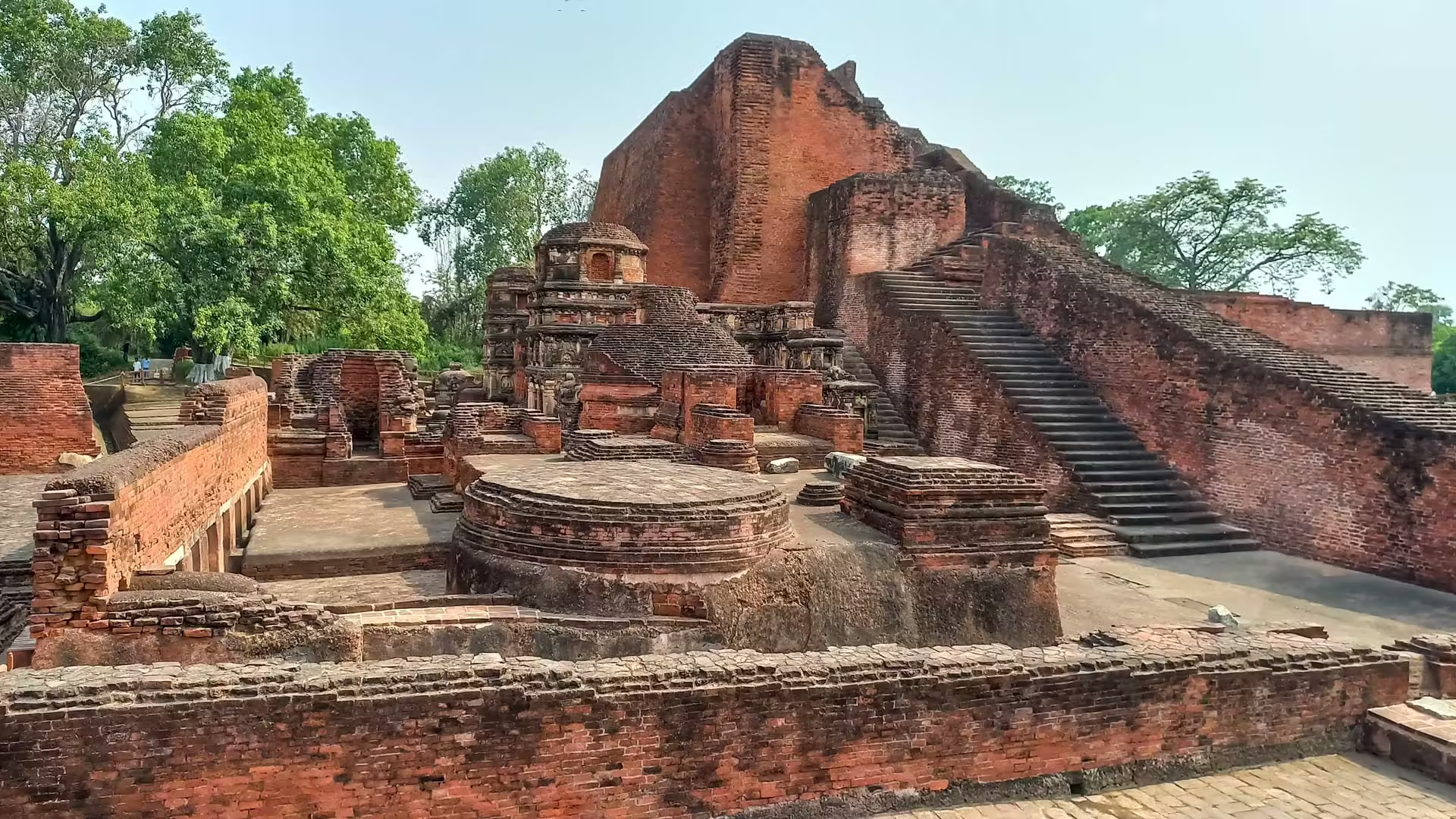
File:Temple_No.-_3,_Nalanda_Archaeological_Site.jpg · Wikimedia Commons · See Wikimedia Commons
Nalanda Mahavihara
Sign in to saveAlso known as Nālandā Mahāvihāra, Mahavihara of Nalanda
ancient Hindu-Buddhist monastery in present-day Bihar, India
Nalanda Mahavihara was an ancient monastery located in what is now Bihar, India, that served as a major center for Buddhist learning and practice. It was historically significant as one of the world's earliest universities, attracting scholars from across Asia who came to study Buddhist philosophy and other subjects.
AI-generated from the Wikipedia summary — may contain errors.
Described at
Staroveká univerzita Nalanda - India - PlaceMania
Ruiny Nalandy, starovekej kláštornej univerzity v Indii, považovanej za prvú rezidenčnú univerzitu na svete.
placemania.sk →Nalandská mahávihára, považovaná za prvú rezidenčnú univerzitu v histórii, bola kedysi jedným z najväčších centier vzdelanosti v staroveku. Univerzitný komplex prekvital počas vlády dynastie Pala a jeho sláva sa rozšírila po celej Ázii. Niekedy okolo roku 1200 n. l. však moslimský dobyvateľ Muhammad Bakhtiyar Khalji viedol svoje vojská, ktoré na toto miesto zaútočili, a nechali ho zničiť; mnísi, ktorí prežili, utiekli do Tibetu. Ruiny boli opustené a zabudnuté až do rokov 1811 – 1812, keď škótsky geodet Francis Buchanan-Hamilton objavil v tejto oblasti rozsiahle archeologické nálezisko a neskôr ho identifikoval ako slávny kláštorno-univerzitný komplex Nalanda. V roku 2010 bola v Rajgir založená moderná univerzita Nalanda v snahe vlády oživiť starobylú školu. Archeologická lokalita bola v roku 2016 vyhlásená za svetové dedičstvo UNESCO. Zakladateľ projektu PlaceMania.sk a zodpovedá za jeho obsah, technické fungovanie a dlhodobý rozvoj. Cestovné zápisky na webe vychádzajú z vlastnej skúsenosti z ciest; faktografické záznamy o miestach vznikajú kombináciou verejných zdrojov, automatizovaného spracovania dát a redakčného overovania. Zameriava sa na netradičné lokality, ich historický a geografický kontext a menej známe súvislosti. Things to do near Staroveká univerzita Nalanda, Ruins of Nalanda University Bihar, Nālanda, Archeologické nálezisko, Turistická atrakcia, Záhrada, Mohanpur, Nalanda, Patna Division, Bihar, India, IN, IND, Nalanda University Site Rd, Mohanpur, Bargaon, Bihar 803111, India, Ruins of Nalanda University, Nalanda University Site Road, Mohanpur, Bihár, India, Nalanda University Site Road. Find tours, guided tours, local activities, attractions, tickets, excursions, sightseeing, day trips and travel experiences nearby. Coordinates: 25.1366455, 85.4422745. Vstupnú halu tohto starého kultúrneho inštitútu zdobí umelecké dielo Azulejo zobrazujúce cestu Vasca da Gamu do Indie. Pozrite si ďalšie zaujímave miesta vo svete, ktoré stoja za naplánovanie ďalšej cesty. Samouk vybudoval počas 36 rokov tajne a bez povolenia honosný sochársky park. Chcete vidieť ďalšie úchvatné miesta ako Staroveká univerzita Nalanda? Nájdeš ich u nás na mape. Objav s nami ďalšie úžasné miesta na zemi.
Excerpt from a page describing this subject · 17,205 chars · not written by Vinony
Wikidata facts
- Instance of
- university
- Country
- India
- Area
- 57.88
- Time zone
- UTC+05:30
- Image
- Nalanda The Great Stupa.jpg
Show 3 more facts
- heritage designation
- World Heritage Site
- Commons category
- Nalanda Mahavihara
via Wikidata · CC0
~40 min read
Encyclopedic overview
Nalanda (IAST: Nālandā, pronounced [naːlən̪d̪aː]) was a renowned Buddhist mahavihara (great monastery) in medieval Magadha (modern-day Bihar), eastern India. Widely considered to be among the greatest centres of learning in the ancient world and often referred to as "the world's first residential university", it was located near the city of Rajagriha (now Rajgir), roughly 90 kilometres (56 mi) southeast of Pataliputra (now Patna). Operating for almost a thousand years from 427 CE until around 1400 CE, Nalanda mahavihara played a vital role in promoting the patronage of arts, culture and academics during the 5th and 6th century CE, a period that has since been described as the "Golden Age of India" by scholars. The characterisation of Nalanda as a "university" in the modern sense has been challenged by scholars. They argue that while it was undoubtedly a major centre of learning, comparing it directly to a modern university is historically imprecise.
Nalanda was established by emperor Kumaragupta I of the Gupta Empire around 427 CE, and was supported by numerous Indian and Javanese patrons – both Buddhists and non-Buddhists. Nalanda continued to thrive with the support of the rulers of the Pushyabhuti dynasty (r. 500–647 CE) and the Pala Empire (r. 750–1161 CE). After the fall of the Palas, the monks of Nalanda were patronised by the Pithipatis of Magadha. Nalanda was attacked by Huns under Mihirakula in the 5th century and again sustained severe damage from an invasion by the Gauda king of Bengal in the 8th Century. During the final invasion it was burnt down by Muhammad Bakhtiyar Khilji (c. 1200), but it managed to remain operational for decades (or possibly even centuries) following his raids.
Excerpted from Wikipedia’s “Nalanda Mahavihara” article, available under the CC BY-SA 4.0 licence.
Gallery (12)
On the map
Available in 69 languages
- Español
- Français
- Deutsch
- 中文
- 日本語
- Русский
- Português
- Italiano
- العربية
- हिन्दी
- Albanian
- Assamese
- Awadhi
- Bahasa Indonesia
- Balinese
- Bangla
- Basque
- Belarusian
Show 50 more
- Bhojpuri
- Bulgarian
- Catalan
- Cebuano
- Croatian
- Czech
- Danish
- Egyptian Arabic
- Esperanto
- Estonian
- Finnish
- Georgian
- Greek
- Hausa
- Hebrew
- Hungarian
- Kannada
- Kazakh
- Latin
- Latvian
- Lithuanian
- Maithili
- Malay
- Malayalam
- Maltese
- Marathi
- Nederlands
- Nepali
- Newari
- Norwegian
- Odia
- Pashto
- Polski
- Romanian
- Sanskrit
- Sardinian
- Sinhala
- Slovak
- Svenska
- Tamil
- Telugu
- Tibetan
- Tiếng Việt
- Türkçe
- Ukrainian
- Urdu
- Wu Chinese
- فارسی
- ไทย
- 한국어
via Wikidata sitelinks · CC0